 Catherine Hu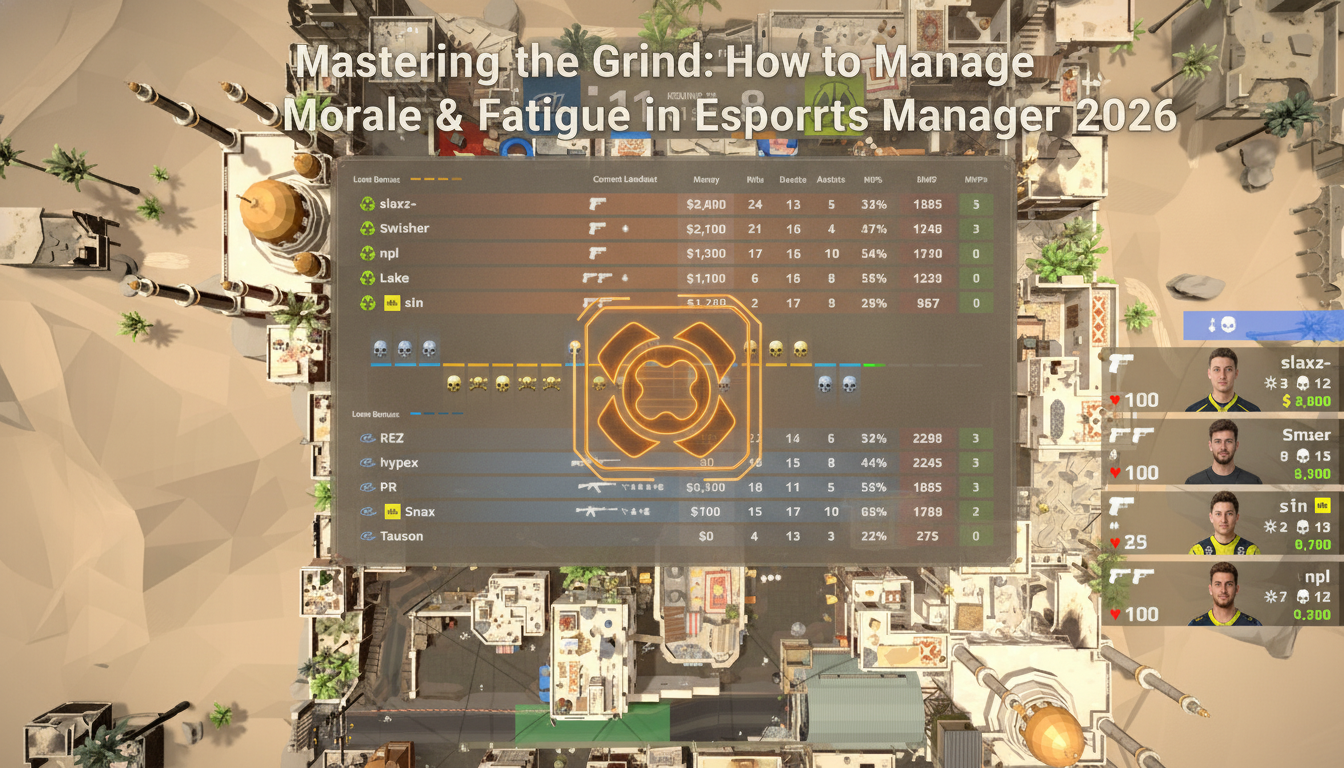
Picture this: You are in the Grand Finals of the biggest Major of the year. You have spent the entire season scouting the perfect tier-one roster, negotiating massive contracts, and meticulously analyzing your opponents’ live round tracking. Your team is up against Copenhagen Wolves, and it is match point. Suddenly, your star AWPer misses an easy rotation, their ADR (Average Damage per Round) plummets to a dismal 45, and their HS% (Headshot Percentage) falls off a cliff. You check the real-time match overview and see the dreaded red icons: “Exhausted” and “Tilted.” You lose the map, the series, and the championship.
If this nightmare scenario sounds familiar, you are experiencing the most punishing mechanic in the game. Learning how to manage player morale & fatigue in Esports Manager 2026 is the undisputed dividing line between amateur coaches and legendary managers. Unlike basic strategy games, this deep management sim heavily penalizes managers who treat their players like emotionless robots. A tired player is a slow player, and a depressed player will actively throw your matches.
Editor’s Note
“In my first 200 hours of the Esports Manager 2026 demo, I brute-forced my way through tournaments by chaining bootcamps. The result? My entire M80 roster suffered a catastrophic morale collapse mid-season. The game’s hidden stamina multiplier means that once a player’s fatigue crosses the 75% threshold, their clutch probability and reaction time metrics degrade exponentially. You cannot out-tactic a burned-out roster.”
TL;DR: The Short Answer
Mechanics Deep Dive: Understanding the Problem
To truly grasp how to manage player morale & fatigue in Esports Manager 2026, we first need to strip away the UI and look at the underlying simulation engine. The developers at Neurona Games have implemented a brutally realistic ecosystem where physical exhaustion directly feeds into mental deterioration—a phenomenon the community has dubbed the “Burnout Spiral.”
When you are looking at your roster screen, fatigue is represented by a percentage from 0% to 100%, while morale operates on a spectrum from “Ecstatic” to “Abysmal.” These two systems are inextricably linked. High fatigue accelerates morale loss after a dropped round, and low morale increases the stamina cost of high-stress situations (like clutching a 1v3). Here is a detailed breakdown of the three most common mistakes players make that trigger this devastating spiral.
Mistake 1: The “Perma-Bootcamp” Trap
The most frequent error new managers make in Esports Manager 2026 is over-scheduling. The game gives you the option to send your team to intensive bootcamps to rapidly increase tactical familiarity and raw skill stats. It is incredibly tempting to lock your squad in a practice room for two weeks before facing a powerhouse like EternalFire.
However, bootcamps are a double-edged sword. Every consecutive day of intensive practice drains a player’s stamina reserve by a compounding margin. If you push a bootcamp right up to the eve of a tournament, your players will enter the server with 80%+ fatigue. In the live match simulation, this translates to a severe penalty to their hidden “Focus” stat. You will notice their ADR stagnating, their HS% dropping by up to 20%, and their ability to execute complex executes completely falling apart. More importantly, when an exhausted player loses a round, the morale hit is multiplied. They become frustrated faster, leading to toxic team comms (a hidden metric that degrades overall roster chemistry).
Mistake 2: Ignoring Personality Clashes and Roster Chemistry
Esports Manager 2026 is not just about assembling the five players with the highest mechanical ratings; it is about managing human beings. Every player in the game has distinct personality traits generated by the simulation engine. You might scout a generational talent with insane ADR metrics, but if they have the “Egoist” or “Volatile” trait, they require constant babysitting.
When managers ignore these traits during contract negotiations and roster building, they set themselves up for chronic morale issues. For example, putting two “Alpha” personalities in the same lineup will cause passive morale drain every week as they fight for the spotlight. If your In-Game Leader (IGL) has a “Timid” personality but is trying to call strats for a team of veterans, the veterans will lose confidence (morale) rapidly when matches get tough. When morale drops into the “Poor” or “Abysmal” categories, players will start ignoring tactical instructions, missing trade frags, and eventually demanding transfers. Managing fatigue is useless if your players inherently hate playing with each other.
Mistake 3: Neglecting Backroom Staff (The Psychologist Deficit)
In the rush to spend their organizational budget on star players and flashy facility upgrades, many managers completely neglect their backroom staff. In Esports Manager 2026, your staff members are the unsung heroes of roster management.
Failing to hire a top-tier Sports Psychologist is a fatal flaw. In the real-time match overview, momentum swings are violent. Losing a pistol round and the subsequent eco rounds can tank a team’s morale instantly. A high-tier Sports Psychologist acts as a buffer against this. They provide a passive aura that reduces morale damage taken from losing streaks and accelerates morale recovery during rest days. Furthermore, lacking a dedicated Physiotherapist means your players will recover fatigue at a snail’s pace. If you are competing in a grueling Major with back-to-back Best of 3 (BO3) series, a poor medical staff guarantees your team will be physically compromised by the time they reach the semi-finals.
Best Alternative Methods and Advanced Tips
Understanding the pitfalls is only half the battle. To dominate the competitive circuit, you need proactive strategies that keep your squad fresh and motivated. Of course, keeping your players happy is just one piece of the puzzle; you also need to ensure they are executing the right plays on the server. For a comprehensive breakdown on how to leverage a fully motivated squad into championship-winning performances, be sure to study our Mastering the Meta: The Ultimate Esports Manager 2026 Tactics Guide for Unbeatable Drafts. Once your tactical foundation is set, you can implement the following advanced QoL (Quality of Life) and roster management techniques to completely neutralize the threat of burnout.
Advanced Roster Rotation and the Six-Man Meta
While traditional esports teams rely on a strict five-man core, Esports Manager 2026 heavily rewards organizations that utilize a six or seven-man active roster. The game’s calendar is relentless, filled with minor online cups, sponsor obligations, and major LAN qualifiers.
Instead of forcing your star players to grind every single match, sign high-potential rookies from the community-driven EMDB.gg database or the in-game scouting network. Use these academy players in low-stakes matches against lower-tier teams like GamerLegion’s academy squad. This strategy achieves three things simultaneously:
Micro-Managing the Tournament Calendar
Do not let the game’s auto-scheduler dictate your team’s life. Take manual control of the calendar. The golden rule of how to manage player morale & fatigue in Esports Manager 2026 is the “Rule of 72.” Always block out a minimum of 72 hours (3 full days) of pure “Rest and Recovery” immediately following any grueling tournament run, and another 72 hours right before the next major event begins.
During these rest periods, absolutely no bootcamps, no sponsor shoots, and no intense scrimmages should be scheduled. Furthermore, tailor your scrim (scrimmage) opponents carefully. If your team is on a losing streak and morale is bleeding, do not schedule a scrim against a top 3 global team. You will likely lose, which will only tank their morale further. Instead, schedule a “confidence-builder” scrim against a significantly weaker opponent. A crushing 13-2 victory in a scrim will provide a massive, artificial boost to the team’s morale, acting as a psychological reset before heading into official matches.
Contract Incentives and Morale Buffs
When negotiating contracts, most managers only look at the base salary and buyout clauses. However, the game allows you to insert performance-based incentives (e.g., MVP bonuses, tournament win bonuses, ADR milestones). Utilizing these clauses is a high-level tactic to maintain morale.
Players with heavily incentivized contracts will actually resist morale drops more effectively during crucial matches because the simulation engine recognizes their personal financial stake in the outcome. If a player is feeling underappreciated, offering an impromptu contract renegotiation with a slight salary bump and better incentives can instantly shift their morale from “Unhappy” to “Motivated,” saving your season without needing a roster change.
The Ultimate QoL Solution: Bypassing the Grind with XMODhub
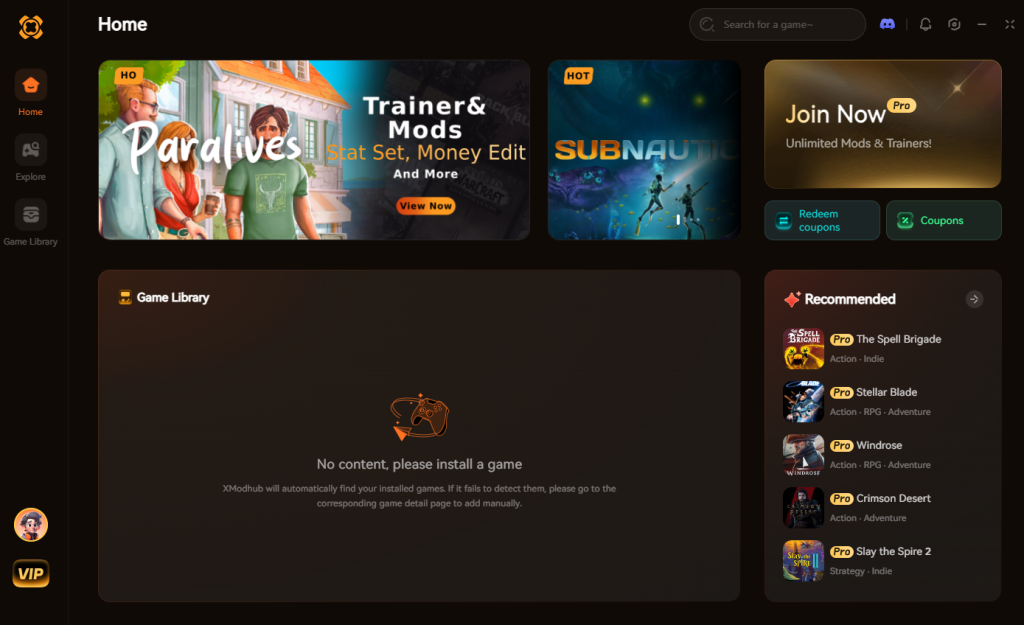
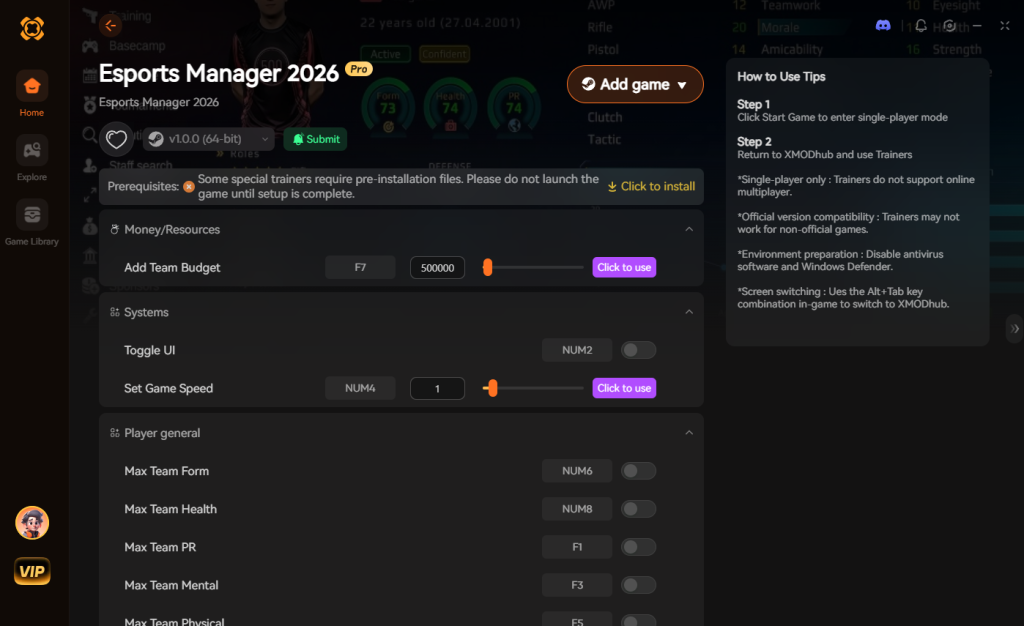
Let’s be brutally honest: perfectly balancing the calendar, babysitting volatile personalities, and meticulously rotating a six-man roster takes an immense amount of time. Sometimes, you just want to focus on the fun parts of Esports Manager 2026—scouting the next prodigy, building your brand, and watching your team dominate the live match simulation. If the constant micromanagement of stamina bars and mood swings is draining your enjoyment, XMODhub offers the perfect bypass.
With the exclusive toolset designed specifically for this management sim, you can completely eliminate the burnout mechanics and focus purely on tactical dominance.
Follow these 3 simple steps to fix this instantly:
Download Esports Manager 2026 Trainer Now
Facility Upgrades: The Passive Stamina & Morale Multipliers
While micromanaging your roster’s daily schedule is crucial, your organization’s infrastructure acts as the foundational baseline for how to manage player morale & fatigue in Esports Manager 2026. Upgrading your headquarters requires a massive capital investment, but the long-term ROI in passive stamina regeneration and tilt-resistance is undeniable.
Prioritize your organizational budget allocations based on the following facility tier list to optimize your team’s recovery metrics:
| Facility Classification | Specific Upgrade / Node | Primary Roster Benefit | Investment Priority |
|---|---|---|---|
| Medical Wing | Cryo-Therapy Chambers | Clears 25% raw fatigue instantly after a grueling BO3 series. | Critical |
| Recreation | Luxury Lounge & Arcade | Passively mitigates the morale drain from minor personality clashes. | Medium |
| Staff Offices | Advanced Analytics Room | Reduces the stamina cost of tactical bootcamps by 15%. | High |
| Housing | Individual Player Suites | Grants a “Well-Rested” buff, boosting reaction time metrics by 5%. | Low |
The Tactical Pause: Mid-Match Morale Triage
Even with perfect preparation, the live match simulation can throw curveballs. When your team drops a massive 1v4 clutch to the enemy AWPer, morale will instantly plummet. This is where active coaching mechanics come into play.
Do not hoard your tactical timeouts. In Esports Manager 2026, calling a timeout immediately after a devastating round loss halts the “Tilt Multiplier” from stacking further. During the timeout screen, instruct your IGL to switch their calling style from “Aggressive/Loose” to “Structured/Default.” This lowers the hidden “Cognitive Load” stat on your players, allowing them to recover a small percentage of focus and stabilize their mental state before the next round begins.
Frequently Asked Questions
A: Yes, but to a lesser extent than official matches. The simulation engine calculates the morale drop based on the expectation of winning. If you lose a scrim to a much lower-rated team, the morale penalty is severe. If you lose to a top-tier team, the drop is minimal.
A: It depends entirely on your backroom staff and facility upgrades. With basic facilities and no physiotherapist, it can take up to 7 in-game days of pure rest. With a Level 5 Recovery Facility and a Tier-S Physiotherapist, a player can clear the “Exhausted” status in just 48 hours.
A: Absolutely. An IGL with the “Inspiring” or “Veteran” trait has a hidden aura that mitigates the morale damage taken by teammates when losing consecutive rounds. This is why investing in an experienced IGL is often more valuable than buying five mechanically gifted rookies.
A: Check their contract promises and personality traits. If you promised them the “Star Player” role but are treating them as a rotational substitute, their morale will permanently cap at a low level due to broken promises. Additionally, if they have the “Homesick” trait and you recruited them from a different region without providing adequate integration support, they will suffer a chronic morale debuff.
Final Verdict
Figuring out how to manage player morale & fatigue in Esports Manager 2026 is a complex but deeply rewarding puzzle. It requires a delicate balance of calendar management, psychological profiling, and strategic roster rotation. By avoiding the perma-bootcamp trap, investing in elite backroom staff, and utilizing your bench players effectively, you can keep your core roster in championship-winning form throughout the grueling season.
However, if you prefer to streamline the experience and focus strictly on the thrill of the draft and live match tactics, utilizing a trusted trainer is a game-changer. XMODhub’s massive ecosystem supports over 5,000 titles, bringing seamless QoL improvements to complex management sims exactly like this one, as well as genre titans like Football Manager 2024 and F1 Manager 2024. Take control of your organization on your own terms.

I am a passionate gamer and writer at XMODhub, dedicated to bringing you the latest gaming news, tips, and insights.
Connect with me:
LinkedIn Profile ↗

 Nancy Miller