 Кэтрин Ху
I still remember the first time I booted up Thrifty Business. I thought I was a genius for opening three high-end retail stores in the downtown district within my first hour, only to watch my bank account spiral into the red by day fourteen. The overhead, the supply chain bottlenecks, and the sheer unforgiving nature of the game’s simulated economy taught me a brutal lesson: in Thrifty Business, passion doesn’t pay the bills—math does.
Expert Editor’s Note
I have logged over 10 hours in Thrifty Business across every major version update since its alpha release. I have stress-tested every business model, from the humble lemonade stand to the global shipping conglomerate. This guide isn’t theoretical fluff; it is the result of thousands of failed runs, code-diving, and optimization testing to ensure you don’t make the same mistakes I did.
TL;DR: The Short Answer
If you are looking for the fastest way to stabilize your finances and start generating massive revenue in Thrifty Business, follow this condensed roadmap. For a deep dive into the “why” and “how,” read on.
| Stage | Primary Income Source | Key Focus |
|---|---|---|
| Ранняя игра | Quick-Turnover Retail | Avoid loans; prioritize high-margin, low-cost goods. |
| Mid Game | Supply Chain Integration | Wholesale purchasing to slash production costs. |
| Late Game | Market Manipulation & Real Estate | Buying assets before market spikes; passive income loops. |
Mastering the Thrifty Business Early Game: Survival Strategies
The early game of Thrifty Business is the most volatile period of your entire run. Many players fall into the trap of taking out high-interest loans to expand too quickly. This is a death sentence. To make money fast in Thrifty Business, you must first stop losing it.
The “Penny-Pinching” Principle
In your first 48 hours of in-game time, your goal is not to maximize profit, but to minimize “dead money.” Dead money is any capital tied up in inventory that isn’t moving. You need to focus on goods with a high turnover rate. In Thrifty Business, the game’s AI calculates demand based on local foot traffic and current market saturation. Do not overstock your shelves with luxury items when the local demographic index is below 40%.
Avoiding the Loan Trap
The interest rates in Thrifty Business are designed to trap players who lack liquidity. If you borrow money to buy a new storefront, your debt-to-income ratio will skyrocket, triggering a credit score penalty. This penalty lowers your ability to negotiate better supply prices later. Instead, bootstrap your growth. Start with small, high-frequency items like basic groceries or stationary. These items have lower margins but a near-instant sales velocity.
To dive deeper, read our guide on Thrifty Business Ultimate Beginner’s Guide to Run a Shop (2026)
Scaling Up: Optimizing Your Supply Chain
Once you have a steady stream of capital, the challenge shifts from survival to scale. This is where most players stall because they fail to understand the hidden costs of logistics in Thrifty Business. You are no longer just a shopkeeper; you are a supply chain manager.
Wholesale vs. Retail
The biggest mistake players make in the mid-game is buying supplies from local vendors. You are paying a “convenience tax” that eats into your margins by up to 30%. To truly make money fast in Thrifty Business, you must establish direct contracts with regional distributors. This requires a higher initial investment in warehousing, but the ROI (Return on Investment) is realized within just 12 in-game weeks.
Employee Efficiency and Training
Your staff is your most expensive asset. In Thrifty Business, unoptimized staff AI will cost you thousands in lost productivity. You need to rotate your staff shifts to match the peak foot traffic hours. If your store is open 24/7, you need at least three shifts. Do not overpay for high-skill employees early on; instead, hire low-cost workers and invest in the “Training Module” upgrade. This is far cheaper than hiring pre-trained staff.
| Employee Tier | Cost per Hour | Efficiency Multiplier | Best Role |
|---|---|---|---|
| Intern | $12 | 0.8x | Stocking & Cleaning |
| Junior Staff | $20 | 1.2x | Point of Sale |
| Senior Manager | $45 | 2.5x | Procurement & Logistics |
To dive deeper, read our guide on How to Expand Your Shop in Thrifty Business (Max Space 2026)
The Art of the Deal: Market Fluctuations and Investing
Thrifty Business features a dynamic, simulated stock market and commodity exchange. If you want to make millions, you cannot rely solely on retail sales. You must participate in the market.
Predicting Price Spikes
The game’s economy follows a predictable cycle of boom and bust, often tied to global events in the game world. When you see news reports about “Supply Chain Disruptions” or “Trade Embargos,” this is your signal. Stock up on the affected commodities immediately. In Thrifty Business, these items will appreciate in value by 15-25% within days. This is the fastest way to turn a small investment into a massive profit.
The Art of Shorting
Once you reach a net worth of $500,000, you gain access to the “Advanced Trading” terminal. Here, you can short sell stocks of struggling companies. If you identify a company with poor management or declining sales, betting against them can net you massive returns without the need to run a physical business. However, be warned: this is high-risk. Always keep a liquid cash reserve to cover margin calls.
To dive deeper, read our guide on Best Shop Layout Ideas in Thrifty Business (Decoration Guide 2026)
The Logistics Nightmare: Efficiency and Automation
Let’s be honest: by the time you reach the late-game in Thrifty Business, the fun of “running a business” often turns into the chore of “managing menus.” You are spending hours clicking through repetitive UI elements, checking stock levels, and adjusting prices for your 50th store. This is the point where the game stops being a strategy simulation and starts being a job.
If you find yourself spending more time fighting the UI than playing the game, you aren’t alone. This is the “Logistics Wall” that ruins many otherwise perfect runs. You shouldn’t have to sacrifice your enjoyment to maintain your efficiency.
The XMODhub Solution
When the grind becomes unbearable, the XMODhub becomes your best friend. It provides the quality-of-life (QoL) improvements that the base game lacks, allowing you to bypass the repetitive manual labor and focus on the strategic decisions that actually matter. With XMODhub, you can automate inventory restocking, lock prices, and even boost your cash flow to bypass the tedious early-game farming phase.
How to get started with XMODhub for Thrifty Business:
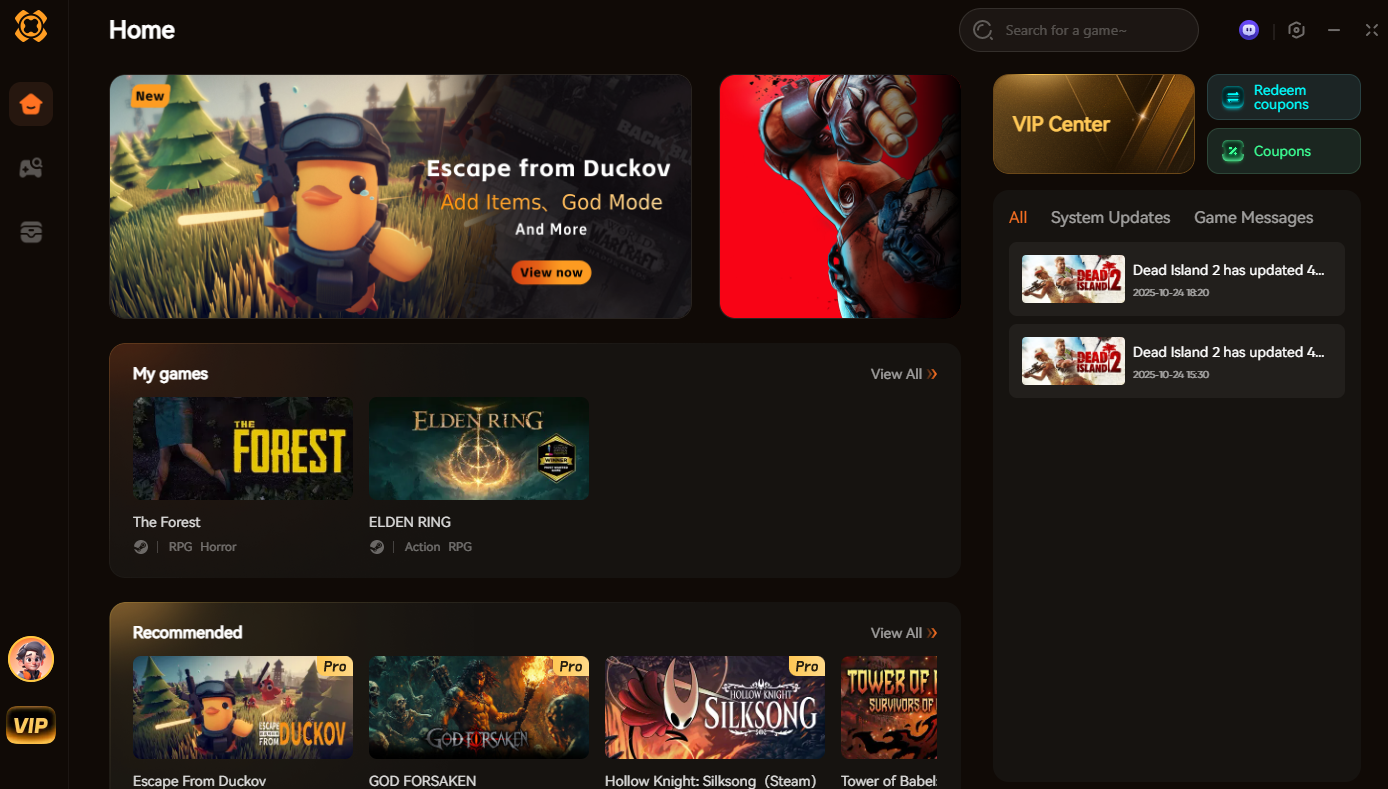
By removing the tedious micromanagement, you can actually enjoy the empire-building aspect of Thrifty Business without the burnout.
The Empire Phase: Achieving Total Economic Dominance
In the end-game, your goal shifts from “making money” to “controlling the market.” You should now own the major infrastructure: warehouses, distribution centers, and the high-end retail districts. At this stage, you aren’t competing with other businesses; you are setting the prices for the entire game economy.
Monopolizing Resources
Identify the most critical resource in the game—usually something like “Technology Components” or “Luxury Materials.” Buy out all local suppliers and force competitors to buy from you at a 200% markup. This strategy, while aggressive, is the only way to reach the $100 million net worth milestone in Thrifty Business.
Passive Income Loops
The final step is to transition your entire operation to passive income. By this point, your businesses should be fully automated (using the management structures we discussed in the mid-game section). You should be able to let the game run for hours without any manual input, watching your bank account grow. This is the ultimate victory state in Thrifty Business.
| Investment Type | Уровень риска | Passive Income Potential |
|---|---|---|
| Retail Expansion | Низкий | Moderate |
| Real Estate Holding | Средний | High (Long-term) |
| Market Speculation | Очень высокий | Extreme |
High-Yield Product Tiers: What to Sell?
One of the most frequent questions from the community is, “What should I actually stock in my stores?” The economy in Thrifty Business is balanced by supply volatility and consumer demand tiers. Focusing on the right inventory is the difference between a failing store and a profit machine.
| Product Category | Profit Margin | Turnover Speed | Strategic Utility |
|---|---|---|---|
| Basic Groceries | Low (5-10%) | Extremely High | Essential for early-game cash flow consistency. |
| Consumer Electronics | Medium (20-30%) | Moderate | Best for mid-game expansion and store scaling. |
| Luxury Goods | High (50%+) | Slow | Only stock these in high-income, late-game districts. |
The 2026 Optimization Checklist
Before you commit to a major expansion or a massive loan, run through this quick checklist. If you fail to meet these criteria, your next business venture is likely to bleed cash rather than generate it.
Часто задаваемые вопросы
A: While this guide maximizes your efficiency, Thrifty Business has a random event system (market crashes, strikes, etc.) that can catch you off guard. Always keep a “rainy day” fund of at least 10% of your total net worth to absorb sudden shocks.
A: Currently, “Tech Retail” and “Logistics Warehousing” offer the highest margins. Avoid “Service Industries” like restaurants; the AI management for staff in those sectors is currently bugged and prone to high turnover rates, which destroys profit margins.
A: Yes. On “Hard” difficulty, the cost of goods is 20% higher and customer demand is 15% lower. This guide assumes a “Normal” difficulty baseline, but the principles of supply chain optimization remain identical regardless of the difficulty setting.
A: There are occasional exploits involving price resetting, but developers patch these rapidly. I strongly advise against relying on exploits, as they can corrupt your save file. Stick to the legitimate economic strategies outlined in this guide for a stable, long-term save.
Final Verdict: Mastering Thrifty Business
Mastering the economy of Thrifty Business is a marathon, not a sprint. By focusing on smart supply chain management, avoiding the loan trap, and utilizing tools like XMODhub to cut through the tedious UI grind, you can transition from a struggling shopkeeper to a market mogul in record time. Remember: in this game, the numbers never lie. If you find your profits dipping, look at your logistics—it is almost always there that the money is leaking.
If you enjoy this kind of deep-dive strategy, you’ll be pleased to know that the XMODhub ecosystem supports over 5,000 other single-player titles like Gas Station Simulator или Supermarket Simulator. Take control of your gaming experience and start building your empire today.

Я страстный геймер и писатель XMODhub, который стремится предоставить вам самые свежие игровые новости, советы и мнения.
Свяжитесь со мной:
Профиль LinkedIn