 Catherine Hu
I recently spent 45 minutes trying to hang a single kitchen cabinet in a cramped 1990s Polish apartment, only to watch it crash to the floor because I used half a roll of duct tape instead of proper wall anchors to save $2. This is the brutal, hilarious reality of Low-Budget Repairs. If you go into this game expecting a relaxing, pristine renovation experience like House Flipper, you are going to go bankrupt within your first three in-game days.
Editor’s Note: As a simulation veteran with over 1,000 hours logged analyzing the physics engines and economic loops of indie simulation games, I’ve reverse-engineered the exact thresholds of what you can get away with in Low-Budget Repairs. This guide breaks down the underlying code logic behind client patience, physics manipulation, and resource dilution so you can maximize your profit margins without failing the contract.
TL;DR: The Short Answer
- Core Controls: Movement is standard WASD, but object interaction relies on a physics-based grab-and-drag system (similar to Surgeon Simulator). Mouse movements dictate the force applied to tools.
- The Core Mechanic: Cost-cutting. Your primary gameplay loop is finding the absolute cheapest way to fulfill a contract requirement (e.g., watering down paint, using tape instead of screws).
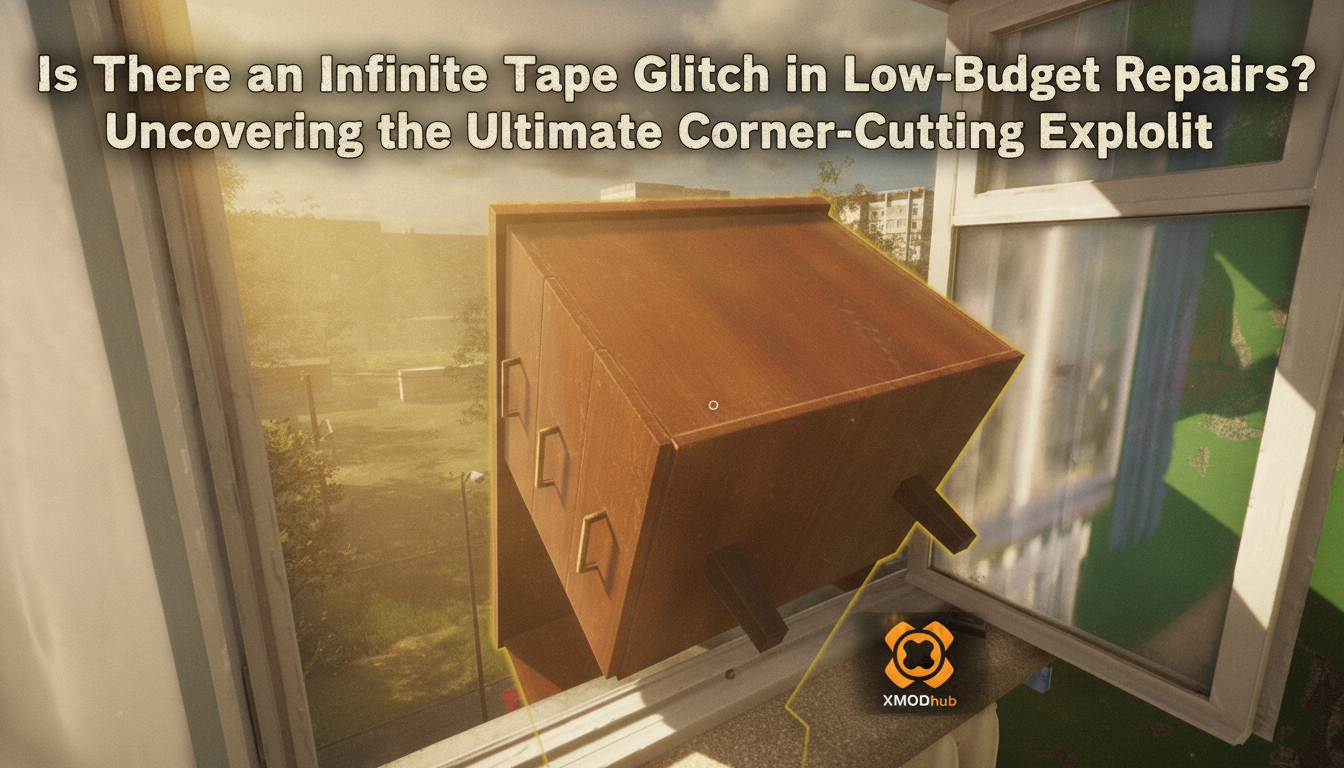
- Physics Manipulation: Demolition and disposal are physics-heavy. Throwing old furniture out the window is an intended mechanic to save time, but requires momentum management.
- Profit Margins: Your final payout is determined by the contract value minus your hardware store expenses. The lower the quality of your repair (without triggering a job failure), the higher your net profit.
Table of Contents
- TL;DR: The Short Answer
- Core Controls and the Physics Engine
- The Art of Cost-Cutting Mechanics
- Managing the 1990s Polish Economy
- Advanced Slapstick Demolition Techniques
- The Job Evaluation System
- Bypassing the Grind with XMODhub
- Tool Degradation and Maintenance Mechanics
- Frequently Asked Questions
- Final Verdict
Core Controls and the Physics Engine
To understand Low-Budget Repairs Controls & Mechanics Explained for Beginners, you first have to understand that your hands are your greatest enemy. The game intentionally utilizes a clunky, physics-driven interaction model to simulate the chaotic nature of rushed handyman work.
Mastering the Physics Grab
Unlike standard simulators where clicking an object perfectly snaps it to your inventory, Low-Budget Repairs requires you to manually balance objects.
Momentum and Weight
When you pick up a bucket of paint or a heavy CRT television, the object has simulated mass. Turning your camera too quickly with a heavy object will cause your character to lose their grip, spilling materials or smashing the item. You must use smooth, deliberate mouse movements when carrying fragile or liquid assets.
Default Keybindings and Actions
| Action | Default Keybind | Mechanic Explanation |
|---|---|---|
| Move / Sprint | WASD / Shift | Standard movement. Sprinting with heavy objects drains stamina rapidly. |
| Interact / Grab | Left Mouse Button (Hold) | Hold to grip objects. Releasing drops or throws the object based on momentum. |
| Rotate Object | Mouse Wheel / Q & E | Essential for forcing misaligned tiles into tight corners. |
| Tool Action (Apply/Hit) | Right Mouse Button | Varies by tool (e.g., slapping down mortar, tearing off wallpaper). |
| Precision Mode | Left Alt (Hold) | Slows down mouse sensitivity for delicate tasks like applying duct tape. |
> To dive deeper, read our guide on The Ultimate Guide: Top 10 Beginner Tips for Low-Budget Repairs (Make Money Fast).
The Art of Cost-Cutting Mechanics
The true genius of Low-Budget Repairs lies in its resource management. You are not rewarded for doing a good job; you are rewarded for doing a passable job for the lowest possible cost.
The Fluid Dilution System
One of the most iconic mechanics in Low-Budget Repairs is stretching your supplies. When you buy a bucket of “Vanilla Cream” paint, it only covers about 30% of a standard room if applied raw.
The Water-to-Paint Ratio
You can take the paint bucket to any sink in the apartment and add water. The game tracks the ratio dynamically:
- 100% Paint: Covers 30% of the room, vibrant color, perfect client rating.
- 70% Paint / 30% Water: Covers 50% of the room, slightly faded, client won’t notice.
- 40% Paint / 60% Water: Covers 80% of the room, looks like dirty milk, high risk of client rejection.
Structural Integrity: Duct Tape vs. Hardware
When fixing pipes or assembling cheap furniture, the game gives you a choice. You can drive to the hardware store to buy proper PVC glue and screws, or you can use the duct tape in your starting inventory. Duct tape applies a hidden “timer” to the repair. As long as the repair holds until you click “Finish Job,” you get paid. If it bursts while you are still in the apartment, you suffer a massive financial penalty.
> To dive deeper, read our guide on How to Make Money Fast in Low-Budget Repairs (The Best Exploits & Cheap Fixes).
Managing the 1990s Polish Economy
Low-Budget Repairs Controls & Mechanics Explained for Beginners wouldn’t be complete without addressing the brutal economic simulation. You start out essentially broke in a post-communist economic transition period.
The Hardware Store Loop
Every job requires materials. You have a rusty van that you must physically drive (or fast-travel, which costs time) to the local hardware store. Inventory space in your van is limited, meaning you must carefully plan what you need. Forgetting a crucial tool means a second trip, which wastes daylight and incurs fuel costs.
Material Cost vs. Penalty Trade-offs
| Material Tier | Cost (In-game Currency) | Client Suspicion Level | Durability Rating |
|---|---|---|---|
| Premium (Imported) | Very High | 0% | Permanent |
| Standard (Local) | Medium | 10% | High |
| Bargain Bin (Expired) | Low | 40% | Moderate |
| Improvised (Duct Tape/Spit) | Near Zero | 85% | Fails in 5 minutes |
To survive the early game, you must exclusively operate in the “Bargain Bin” and “Improvised” tiers, carefully managing the client’s suspicion meter.
> To dive deeper, read our guide on Low-Budget Repairs Save File Location: How to Backup Progression.
Advanced Slapstick Demolition Techniques
Because the game leans heavily into physical humor, demolition is less about precision and more about brute force and gravity.
The Window Disposal Method
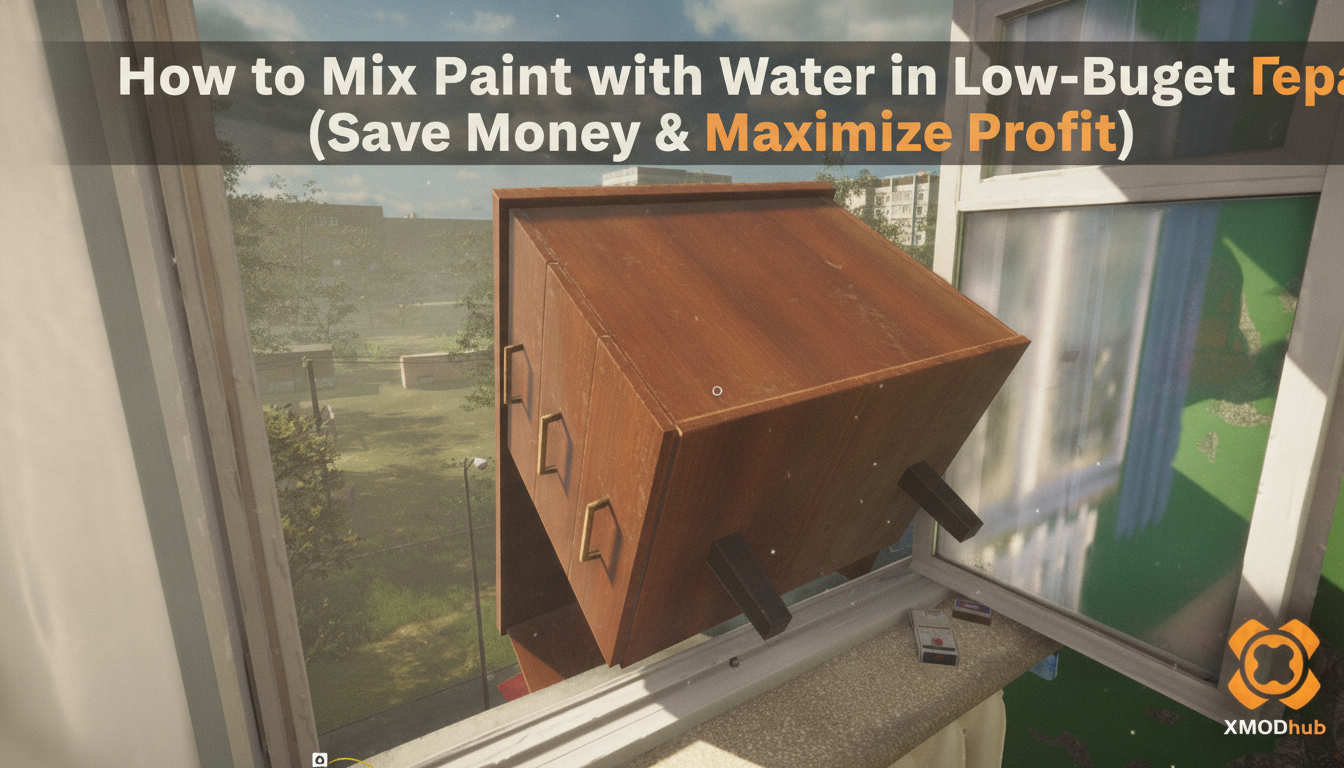
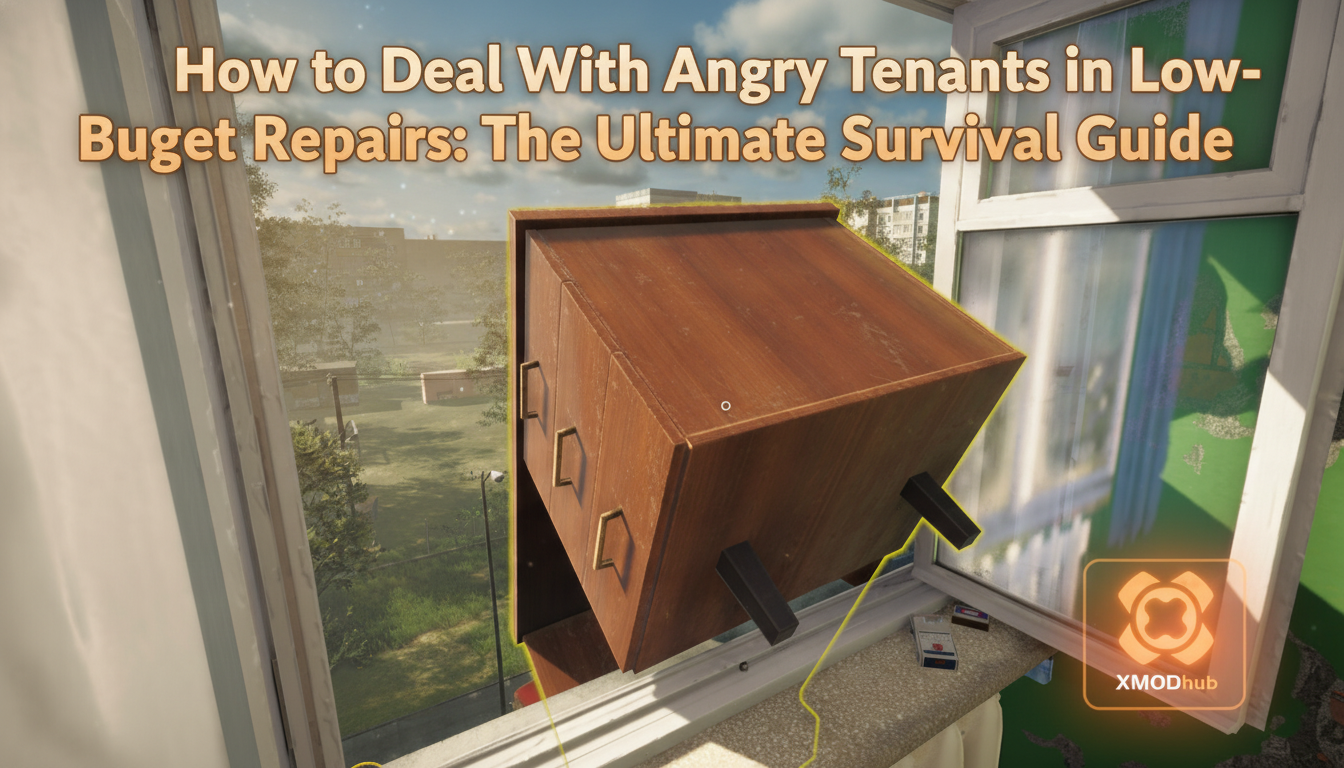
Carrying old furniture down three flights of stairs in a Polish block of flats takes too much time. The meta-strategy is to throw everything out the window.
Calculating Trajectory
To successfully execute a window toss without breaking the window frame (which costs money to repair):
- Open the window fully (Left Click + Drag).
- Pick up the object (e.g., a CRT TV).
- Walk backward to build momentum.
- Sprint forward and release the Left Mouse Button precisely at the window sill.
If done correctly, the item lands in the dumpster zone below, instantly clearing it from the apartment’s trash registry.
Hiding Damage
If you accidentally smash a hole in the drywall with a hammer, you don’t actually have to patch it. The mechanics allow you to pick up environmental objects—like a poster or a large houseplant—and simply place them in front of the hole. As long as the hole’s hit-box is 80% obscured when the job ends, the game’s line-of-sight check will pass it as “repaired.”
> To dive deeper, read our guide on How to Fix Plumbing Cheaply in Low-Budget Repairs: The Ultimate Corner-Cutting Guide
The Job Evaluation System
At the end of every contract, the game calculates your payout based on a strict algorithm. Understanding this algorithm is the final step in mastering Low-Budget Repairs Controls & Mechanics Explained for Beginners.
The Three Pillars of Payout
The evaluation screen grades you on three hidden metrics:
- Task Completion: Did you tick the boxes? (e.g., “Paint Walls”, “Fix Sink”).
- Material Expenditure: How much did you spend at the hardware store relative to the contract’s budget?
- Client Perception: Did the client catch you cutting corners?
| Evaluation Metric | Perfect Score Requirement | The “Low-Budget” Strategy |
|---|---|---|
| Visual Cleanliness | 100% trash removed | Sweep trash under rugs (bypasses the sensor). |
| Structural Stability | All screws tightened | Use 1 screw per chair leg instead of 4. |
| Color Accuracy | 100% Paint Ratio | 65% Paint / 35% Water ratio (sweet spot). |
If you balance these metrics perfectly, you can walk away with a 300% profit margin on every single job.
Bypassing the Grind with XMODhub
Let’s be honest: while watering down paint and hiding holes behind posters is hilarious for the first few hours, the mid-game economy in Low-Budget Repairs can become a brutal grind. Constantly running out of fuel for your van or failing a 40-minute job because your duct-tape pipe burst at the last second can cause severe burnout. When you just want to experience the slapstick comedy of throwing toilets out of windows without worrying about bankruptcy, you need a quality-of-life upgrade.
This is where XMODhub becomes your ultimate tool for sandbox enjoyment. Instead of stressing over every penny, you can inject pure chaos into the 1990s Polish economy.
Here is how to dominate the game in three simple steps:
- Download XMODhub: Install the lightweight, secure client directly from the official website.
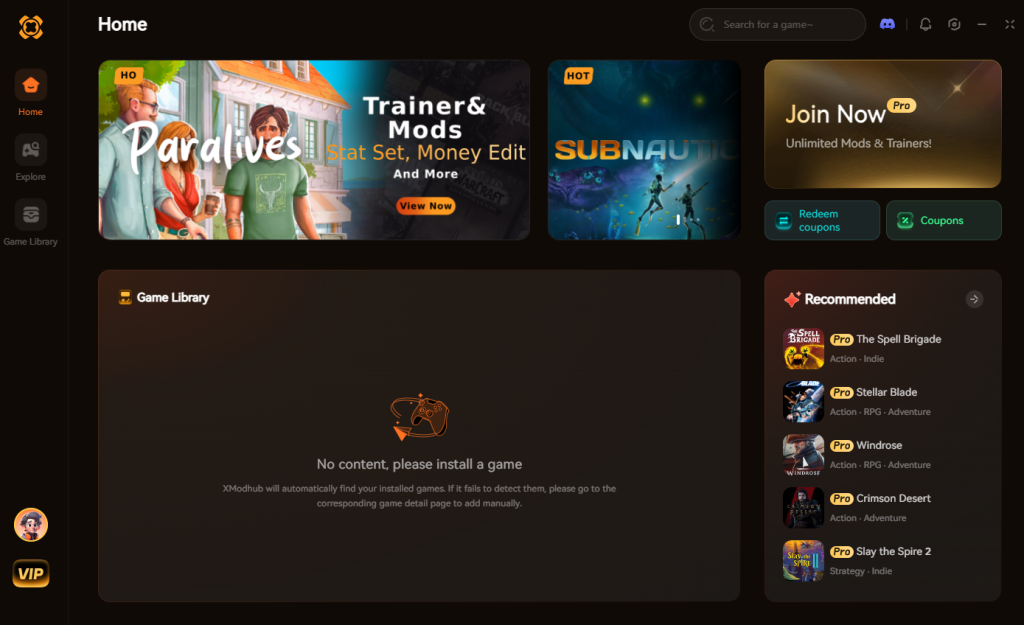
- Auto-Detect Low-Budget Repairs: Launch the game. XMODhub will automatically hook into the game’s active process with zero manual configuration required.
- Toggle Cheats: Use the in-game overlay to activate Infinite Money, Infinite Stamina, or Max Client Patience, allowing you to build the most absurd, structurally unsound apartments imaginable without any penalties.
Download Low-Budget Repairs Trainer Now
Tool Degradation and Maintenance Mechanics
A crucial part of mastering Low-Budget Repairs Controls & Mechanics Explained for Beginners is understanding the hidden Tool Durability system. Every swing of a hammer or scrape of a trowel degrades your equipment. If a tool breaks mid-job, you are forced into an expensive emergency trip to the hardware store, which can entirely ruin your profit margin.
Instead of buying new tools, the game’s mechanics allow you to perform temporary field repairs using scrap materials. Knowing when to patch a tool and when to replace it is a vital skill for early-game survival.
| Tool Category | Base Durability (Uses) | Optimal Cheap Repair Method | Mid-Job Breakage Penalty |
|---|---|---|---|
| Blunt Tools (Hammers) | 150 Strikes | Wrap handle in Duct Tape (+50 uses) | High (Damages the target object) |
| Edged Tools (Scrapers) | 80 Scrapes | Sharpen on Concrete Floor (+20 uses) | Medium (Leaves unremovable residue) |
| Power Tools (Drills) | 45 Minutes | Splice broken wires with Electrical Tape | Critical (Causes apartment blackout) |
| Brushes & Rollers | 30 Rooms | Rinse in Toilet Water (+10 uses) | Low (Applies dirt texture to wall) |
Managing the Day-Night Cycle
The game features a relentless Day-Night Cycle. Working past 18:00 (6:00 PM) drastically reduces visibility in apartments where the electricity has been shut off. While you can purchase a Halogen Lamp from the hardware store, it consumes expensive generator fuel. The beginner-friendly mechanic here is to prioritize intricate tasks (like wiring or precise tiling) during the morning hours, and save brute-force tasks (like throwing debris out the window) for the evening, as these require far less visual precision.
Frequently Asked Questions
How exactly does the paint dilution scaling work in Low-Budget Repairs?
The game uses a volumetric fluid system. A standard bucket holds 10 liters. The game checks the percentage of paint vs. water. The hard-coded threshold for client rejection is exactly 49% paint. If your mixture hits 49% paint and 51% water, the wall will register as “unfinished” upon drying, forcing you to buy a new bucket and repaint.
Can you completely skip the hardware store trips?
No, but you can minimize them. The hardware store is a mandatory zone for acquiring key items that cannot be improvised (like specific replacement windows or specialized tools). However, by hoarding scrap items from previous jobs in your van, you can drastically reduce your travel frequency.
How do you throw furniture out the window without breaking the window frame?
It requires manipulating the game’s physics momentum. Do not try to push the item through the frame. You must release the grab button before the item crosses the threshold of the window, letting its own kinetic energy carry it out. If your character’s hands collide with the frame while holding a heavy object, the frame will shatter.
Is there a penalty for misaligned tiles?
Yes and no. The game has a “straightness” rating for tiling. If a single tile is misaligned, there is no penalty. However, if consecutive tiles create a cascading misalignment that exceeds a 15-degree tilt across the wall, the client’s suspicion meter will spike by 20%, potentially reducing your final payout.
Final Verdict
Mastering Low-Budget Repairs Controls & Mechanics Explained for Beginners requires a complete rewiring of your gamer brain. You must abandon the perfectionist mindset of traditional simulation games and embrace the chaotic, penny-pinching reality of a 1990s handyman. By understanding the physics engine’s quirks and the exact thresholds of the fluid dilution mechanics, you can turn every dilapidated apartment into a goldmine of minimal effort.
For those who want to skip the economic struggle and focus purely on the physics-based slapstick comedy, integrating a tool like XMODhub is a game-changer. With support for over 5,000+ single-player titles, XMODhub ensures that your time spent in Low-Budget Repairs is entirely on your own terms, letting you tape, smash, and scam your way to the top of the Polish real estate market.
Stop Grinding, Start Enjoying.
Bypass the tedious resource gathering and unlock your full potential instantly.

I am a passionate gamer and writer at XMODhub, dedicated to bringing you the latest gaming news, tips, and insights.
Connect with me:
LinkedIn Profile ↗