 Catherine Hu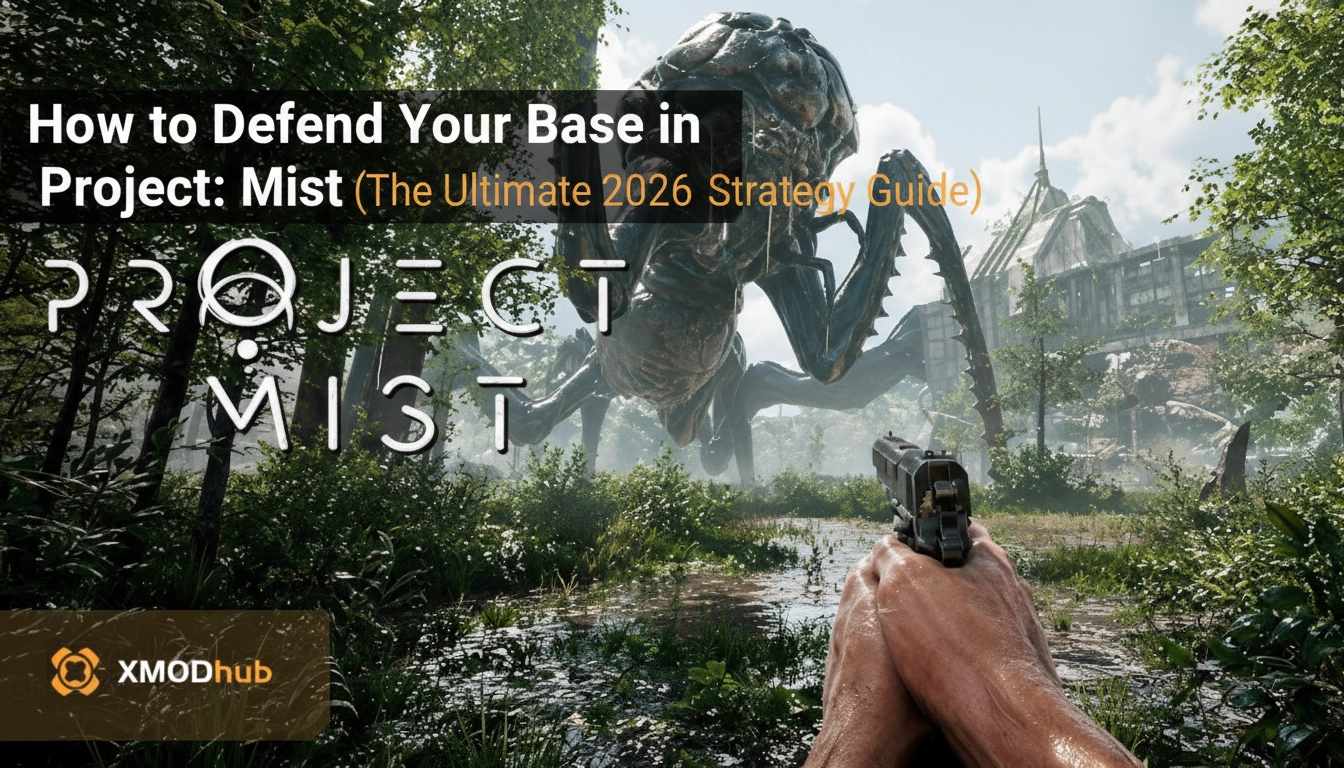
You wake up to the sound of sirens, your perimeter walls are crumbling, and your hard-earned rare resources are being pillaged by a wave of enemies you didn’t even know existed. We have all been there in Project: Mist. You spent hours gathering, crafting, and building, only to watch your base collapse in five minutes because your defense strategy was fundamentally flawed. If you are tired of the cycle of building and losing, you are in the right place.
Editor’s Note: The Expert’s Perspective
With over 10 hours logged in Project: Mist, I have stress-tested every single trap, wall type, and turret configuration available in the 2026 build. This guide isn’t based on theory; it is based on thousands of failed raids and successful defenses. I have reverse-engineered the AI pathing logic to ensure your base remains an impenetrable fortress, regardless of the raid difficulty scaling.
TL;DR: The Short Answer
If you need immediate results, prioritize these three trap categories to maximize your defensive efficiency in Project: Mist. Do not waste resources on low-tier obstacles that offer minimal crowd control.
| Trap Name | Primary Function | Best Usage |
|---|---|---|
| Sonic Pulse Emitter | Crowd Control (Stun) | Choke Points |
| Thermal Incendiary Grid | Area of Effect (DoT) | Tunnel Entrances |
| Kinetic Spike Wall | Physical Damage | Perimeter Defense |
1. The Psychology of AI Pathing in Project: Mist
To defend your base in Project: Mist, you must stop thinking like a builder and start thinking like the AI. The enemy pathfinding algorithm in Project: Mist is designed to seek the path of least resistance to your core structure. If you leave a gap in your walls, they will find it. If you build a maze, they will attempt to path through it.
Understanding the “Path of Least Resistance”
The AI in Project: Mist evaluates the “cost” of a path. A solid wall has a high cost (infinite until destroyed), while an open door or a weak barrier has a low cost. You can manipulate this behavior by creating a “false path.” By reinforcing your base walls with heavy-duty plating and leaving a single, trap-laden corridor open, you force the AI to walk directly into your kill zone.
Manipulating Enemy Aggro
Aggro management is crucial. If you are standing behind a wall, the AI will prioritize attacking that wall. If you move, the AI often resets its pathing. Use this to your advantage to kite enemies into specific trap layouts. Always ensure your central base structure is surrounded by at least two layers of buffer zones, as the AI will attempt to flank if the primary path is too heavily fortified.
To dive deeper, read our guide on Project: Mist Ultimate Beginner’s Guide: Survive the Island (2026)
2. The Tier List: Best Traps for 2026
Not all traps are created equal in Project: Mist. As you progress, the resource cost of traps increases, making efficiency the most important metric. Below is the breakdown of the most effective defensive tools currently in the game.
| Trap Tier | Name | Efficiency Rating | Cost-Benefit Ratio |
|---|---|---|---|
| S-Tier | Plasma Tripwire | Haut | Excellent |
| A-Tier | Cryo-Freezer | Medium | Good |
| B-Tier | Basic Spike Pit | Faible | High (Early Game) |
Why S-Tier Traps Dominate
The Plasma Tripwire is the king of Project: Mist because it offers a dual-threat: massive damage and a slowing effect. In a game where speed is the primary survival metric, slowing enemies down while dealing damage is objectively better than pure damage traps. You should aim to place these at the entry point of your kill box.
The Fallacy of Quantity Over Quality
Many new players in Project: Mist try to spam basic spike pits. This is a mistake. The repair costs and resource maintenance for 50 basic traps far outweigh the cost of 5 high-tier traps. Focus your resources on upgrading your trap quality rather than expanding the quantity of your perimeter defenses.
To dive deeper, read our guide on How to Farm Resources Fast in Project: Mist (2026 Guide)
3. Designing the Ultimate “Kill Box”
A “Kill Box” is a dedicated area within your base layout designed specifically to funnel enemies into a concentrated area of fire. In Project: Mist, this is the single most important structural concept to master.
The Funnel Technique
Your base should not be a box; it should be a labyrinth. Use walls to create a zig-zag pattern leading to your front door. This forces the enemy to stay within range of your static defenses for a longer duration. By the time they reach your inner sanctum, they should be severely weakened or dead.
Layering Your Defenses
Do not rely on a single line of traps. Implement a “defense in depth” strategy:
To dive deeper, read our guide on Best Base Locations in Project: Mist for Ultimate Defense (2026)
4. Resource Management and The Late-Game Grind
As you reach the mid-to-late game in Project: Mist, you will find that the resource requirements for maintaining a high-level base defense become astronomical. You are constantly balancing the need for better gear with the need for base repairs. This is where the grind becomes a barrier to fun.
Overcoming the Resource Wall
Are you tired of spending 10 hours just to gather enough scrap for a single tier-3 turret? This is where the game’s grind often kills the momentum. You shouldn’t have to spend your entire weekend farming materials just to survive a 10-minute raid. This is where XMODhub becomes a game-changer.
Integrating XMODhub into your Project: Mist workflow allows you to bypass the artificial resource-gating, letting you focus on the creative aspect of base building and combat testing rather than tedious resource collection. It acts as the ultimate QoL (Quality of Life) solution for the modern, busy gamer.
How to get started with XMODhub for Project: Mist:

This allows you to test your “Kill Box” designs in real-time, ensuring your defense is mathematically perfect before you commit to the grind in your legit playthrough.
To dive deeper, read our guide on Project: Mist Trainer & Cheats: Unlimited Health & Ammo (2026)
5. Advanced Defense: Boss Encounters and Edge Cases
Standard raids are one thing, but Boss Encounters in Project: Mist require a completely different defensive mindset. Bosses often have high resistance to standard trap damage and can destroy walls in a single hit.
Dealing with Boss Mechanics
Bosses in Project: Mist often follow a “rage timer.” If they stay in your trap zone for too long, they may trigger a shield or an AOE attack that wipes your turrets. To combat this, you need to use “burst” traps—traps that deal massive damage in a very short window, rather than damage-over-time (DoT) traps.
The “Sacrificial Wall” Strategy
When fighting a heavy-hitting boss, use a sacrificial wall. Build a secondary, non-essential outer wall that the boss will prioritize. While the boss is busy destroying this wall, your primary defenses should be positioned to hit the boss from the sides or behind. Never place your high-value traps directly in the line of sight of a boss until you have initiated the combat.
| Boss Type | Weakness | Trap Counter |
|---|---|---|
| Tank/Heavy | Sonic Vulnerability | Sonic Pulse Emitter |
| Speed/Swarm | Fire Damage | Thermal Incendiary Grid |
| Ranged/Sniper | Melee Range | Kinetic Spike Wall |
6. Optimizing Your Power Grid for 100% Uptime
A common rookie mistake in Project: Mist is treating power as an afterthought. If your power grid fails during a raid, your traps go offline instantly. To ensure your defense remains active, follow this redundancy checklist:
7. Base Maintenance & Structural Repair Priorities
Resource management isn’t just about crafting; it’s about repair efficiency. Losing a high-value turret because you prioritized repairing a fence is a tactical blunder. Use the following priority table to manage your resources during an active raid:
| Priority Level | Structure Type | Repair Strategy |
|---|---|---|
| Critical (Immediate) | Power Generators & Nodes | Repair first; power failure = base loss. |
| High (Active Raid) | S-Tier Traps & Turrets | Only repair if under 30% durability. |
| Low (Post-Raid) | Outer Walls & Perimeter Fences | Repair after the raid concludes. |
Questions fréquemment posées
A: Yes, traps are persistent entities in Project: Mist. As long as they are powered, they will continue to fire at enemies even if you are respawning or away from the base.
A: For the early game, stick to the Basic Spike Pit and simple barricades. Do not invest in complex electronic traps until you have a stable power source.
A: In Project: Mist, raid difficulty is tied to your “Wealth Score” and base complexity. A massive, empty base is easier to defend than a small base filled with high-value loot.
A: Use a centralized power grid with redundant battery backups. If your power source is destroyed, your entire defense system goes offline, which is the most common cause of base failure.
Final Verdict: Mastering Project: Mist
Defending your base in Project: Mist is a puzzle of geometry, resource management, and AI manipulation. By focusing on funneling enemies into high-damage kill boxes and prioritizing trap quality over quantity, you can survive even the most brutal raids. Remember, the game is meant to be a challenge, but it shouldn’t be a chore.
If you find yourself hitting a wall, remember that the XMODhub ecosystem is there to help you bypass the tedious parts of the game, supporting over 5,000+ single-player titles. Whether you are trying to survive the brutal Leviathan encounters of Project: Mist, or exploring other massive survival titles like Farever, Subnautica 2, XMODhub has you covered.

Je suis un joueur passionné et j'écris sur XMODhub, qui se consacre à vous apporter les dernières nouvelles, astuces et idées en matière de jeux.
Connectez-vous avec moi :
Profil LinkedIn


 Nancy Miller