 Catherine Hu
We have all been there. You have spent hours scouting in Esports Manager 2026, found the perfect prodigy, offered a massive salary, only to watch them sign elsewhere for less. Why? Because this realistic simulation requires more than just money; you must manage buyout clauses, egos, and prestige. If you are searching for Esports Manager 2026 Contract Negotiations: Tips for Signing Stars, you are in the right place. We will dissect roster building mechanics, expose critical mistakes, and teach you how to secure Tier 1 talent without bankrupting your organization.
Editor’s Note
“After putting over 300 hours into the Steam Sports Fest demo and the full release of Esports Manager 2026, I realized that contract negotiations are heavily weighted by hidden ‘Agent Patience’ and ‘Player Ambition’ modifiers. If you misread a player’s ambition and offer a standard ‘Rotation’ role to someone who views themselves as a ‘Franchise Star’, the negotiation window will instantly close, regardless of the financial package. You must read the room before you open your wallet.”
Quick Answer: TL;DR: The Short Answer
Mechanics Deep Dive: Understanding the Problem
When players search for Esports Manager 2026 Contract Negotiations: Tips for Signing Stars, they are usually reacting to a string of painful rejections. The negotiation engine in Esports Manager 2026 is not a simple “higher number wins” calculator. It is a multi-layered behavioral simulation that takes into account the psychological profile of the player, the greed of their agent, and the current state of the global esports market. To stop failing at the negotiation table, we must first break down the three most common catastrophic errors players make during the signing process.
The Trap of Base Salary vs. Market Value Misalignment
One of the most frequent mistakes managers make in Esports Manager 2026 is fundamentally misunderstanding how the game calculates a player’s perceived worth. When you scout a player, you will see their estimated Market Value. However, a Star player’s demands are rarely aligned with this base number. If a player has been consistently topping the charts in live match overviews with incredible ADR and live round tracking impact, their agent will demand a “Form Premium.”
Players often try to meet this demand by simply cranking up the Base Salary slider until the agent’s mood indicator turns green. This is a fatal long-term error. By inflating the base salary, you instantly destroy your organization’s wage structure. When your current roster sees that a new signing is making 300% more than your veteran IGL (In-Game Leader), team morale will plummet, leading to disastrous live match simulations. Furthermore, if the new Star underperforms, you are locked into a financially crippling contract that drains your monthly budget, preventing you from hiring better coaching staff or upgrading your facilities. The underlying mechanic here is the “Wage Disparity Penalty,” a hidden system that punishes managers for reckless spending.
The Buyout Clause Dilemma: Protection vs. Appeal
The buyout clause (or release clause) is the most volatile mechanic in Esports Manager 2026 contract negotiations. As a manager, your instinct is to set the buyout clause as high as legally possible. You want to ensure that if a massive organization like GamerLegion comes knocking for your star AWPer, they have to pay a king’s ransom.
However, the game’s AI is acutely aware of this tactic. Star players want flexibility. They want the guarantee that if your team fails to qualify for the Major, they can be easily purchased by a more successful organization. If you set the buyout clause too high (typically anything over 250% of their current market value), the player’s interest in signing drops off a cliff. You will notice the agent demanding a significantly higher base salary to compensate for the “prison contract” you are offering. Many managers fail to realize that lowering the buyout clause is actually a highly effective negotiation tool. By offering a player an accessible exit strategy, you can drastically reduce their base salary demands, freeing up precious budget for other areas of your organization.
Mishandling Roster Roles and the Ego System
Esports Manager 2026 features a highly sensitive Ego System that is directly tied to the Roster Role you promise during negotiations. The roles range from “Academy Prospect” to “Franchise Player.” When trying to sign a Star, managers often default to offering the “Franchise Player” role to quickly boost the negotiation success rate.
Here is the mechanical trap: the game strictly monitors your adherence to these promises. If you sign three different players and promise all of them the “Franchise Player” role, the game’s internal logic will clash. You cannot have three undisputed stars on a five-man roster without causing severe friction. The moment you prioritize one over the others in your tactical setup or media appearances, the betrayed players will trigger a “Broken Promise” event. Their morale will tank, their in-game performance (specifically their reaction time and clutch probability during live match decisions) will suffer, and they will immediately submit a transfer request. Understanding the delicate balance of ego management is just as crucial as managing your finances. You must accurately diagnose whether a player is willing to accept a “Core Player” role before you initiate talks, or you risk destabilizing your entire organization.
Best Alternative Methods and Advanced Tips
Understanding why you are failing is only half the battle. To truly master Esports Manager 2026 Contract Negotiations: Tips for Signing Stars, you need to employ advanced psychological and financial tactics that trick the AI into accepting favorable terms.
Before you even sit at the negotiation table, remember that top-tier players care deeply about where they practice and the infrastructure supporting them. A massive salary means nothing if your team is practicing in a basement. Therefore, learning How to Upgrade Training Facilities Fast in Esports Manager 2026: The Ultimate Economy & Growth Guide is arguably the most effective passive negotiation tactic you can employ. High-level facilities act as a permanent, passive buff to your organization’s prestige, which directly lowers the wage demands of every Star player you attempt to sign. Once your infrastructure is in place, you can utilize the following advanced strategies.
The “Stepping Stone” Contract Structure
Instead of locking yourself into a rigid, high-salary contract, utilize the “Stepping Stone” framework. This involves offering a relatively low base salary, but heavily loading the contract with performance-based incentives and a highly favorable buyout clause.
For example, when negotiating with a Tier 1 entry fragger, drop their base salary by 20% below their asking price. To compensate, maximize their “Major Qualification Bonus” and “Tournament MVP Bonus.” Finally, set their buyout clause to exactly 150% of their current market value. This signals to the player’s agent that you believe in their ability to win (hence the high bonuses) but are not trying to trap them if a bigger team comes along. The AI in Esports Manager 2026 values these performance incentives highly, especially if your team has a good recent win record. This structure protects your monthly cash flow; you only pay the massive bonuses when the player actually helps you win, meaning the prize money will cover the cost of the bonus itself. It is a zero-risk financial maneuver.
Leveraging the Pre-Negotiation Scouting Phase
The most successful contract negotiations in Esports Manager 2026 begin months before you actually make an offer. The game features a deep talent acquisition and scouting system that goes far beyond simply revealing a player’s stats.
When you assign your Head Scout to observe a target, do not just wait for their ADR and HS% to be revealed. Leave the scout on the player until their “Personality Profile” and “Agent Relationship” are fully uncovered. Some players have the “Loyal” trait, meaning they value contract length and organizational stability over pure cash. Others have the “Mercenary” trait, meaning they will only respond to massive signing bonuses. By fully completing the scouting phase, you unlock specific dialogue options during the negotiation minigame. If you know a player is “Loyal,” you can offer a 4-year contract with a lower salary, and they will accept it over a 1-year, high-salary offer from a rival team. Knowledge is literally currency in this game. Never enter a negotiation blind; always let your scouts finish their comprehensive reports.
The Ultimate QoL Solution: Bypassing the Grind with XMODhub
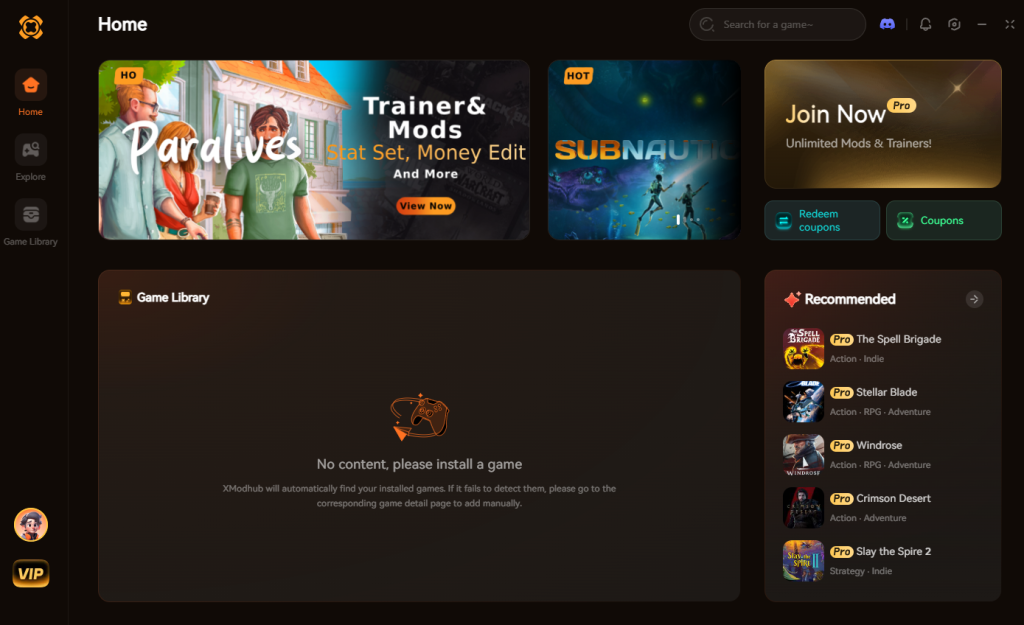
Let’s be completely honest: the financial and psychological simulation in Esports Manager 2026 is brutal. Sometimes, you just want to build your dream superteam without spending 40 hours micromanaging budget spreadsheets, balancing player egos, and crying when Copenhagen Wolves steals your star prospect because of a minor buyout clause disagreement. If you want to skip the tedious financial grind and focus purely on tactical live match decisions and dominating tournaments, XMODhub is your ultimate solution.
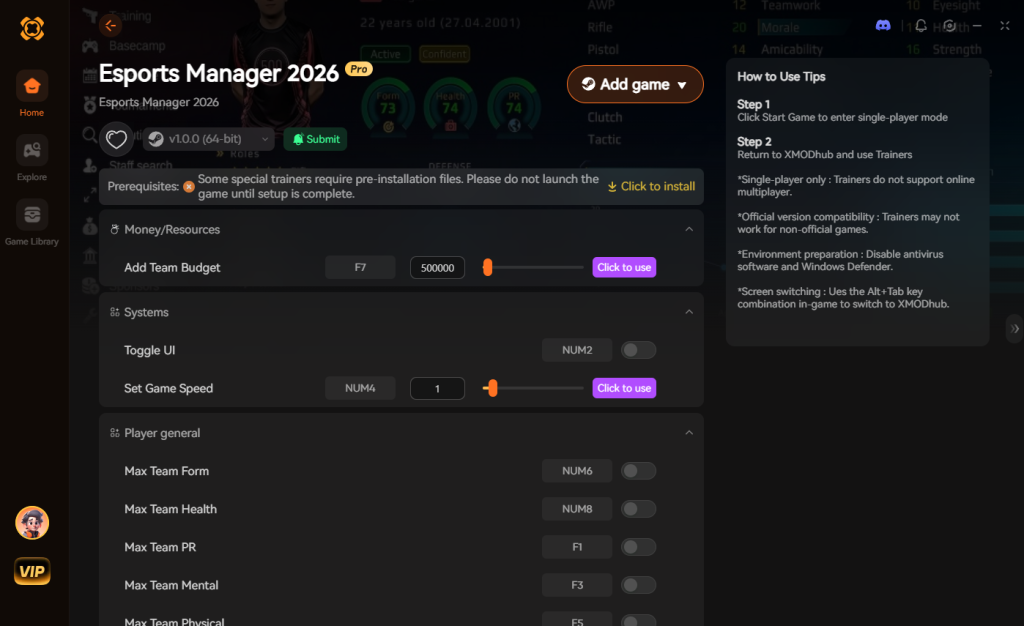
When it comes to Esports Manager 2026 Contract Negotiations: Tips for Signing Stars, XMODhub provides bespoke, highly targeted modifications that eliminate the friction of roster building. With features like Infinite Transfer Budget and Force Contract Acceptance, you can instantly sign any player in the global database, regardless of their agent’s demands. Furthermore, the Reveal Hidden Traits function instantly bypasses the lengthy scouting phase, showing you exactly what every player wants before you even click the negotiate button.
Follow these 3 simple steps to fix this instantly:
Decoding Agent Archetypes: The Hidden Bosses of Negotiations
In Esports Manager 2026, you are rarely negotiating directly with the player. The true gatekeepers are the agents, who act as a complex AI filter between your organization and the star talent. Failing to recognize the specific “Agent Archetype” before making your initial offer is a guaranteed way to drain your patience meter and collapse the deal.
Through extensive gameplay data, we have mapped out the four primary agent archetypes you will encounter. Identifying them early via your Head Scout allows you to tailor your financial package directly to their hidden preferences, bypassing the usual back-and-forth friction.
| Agent Archetype | Primary Demand Focus | Optimal Counter-Strategy | Patience Level |
|---|---|---|---|
| The Shark (Aggressive) | Maximum Base Salary & Signing Bonus | Front-load the contract with a heavy one-time signing bonus, but keep the base salary moderate to protect your long-term wage structure. | Low |
| The Stepping Stone | Low Buyout Clause & Major Release | Offer a highly accessible 150% buyout clause paired with heavy Major qualification incentives to offset base wage demands. | Medium |
| The Loyalist | Long-Term Security & Roster Role | Offer secure 3-to-4 year deals with the “Franchise Player” or “Core Player” guarantee. They prioritize stability over immediate cash. | High |
| The Mercenary | Pure Financial Gain (All Metrics) | Avoid unless desperate for a quick roster fix. Counter with massive performance-heavy bonuses (MVP, Major Wins) to shift the financial risk. | Very Low |
The Mid-Season Renewal Strategy: Retaining Your Superstars
While most managers focus their search for Esports Manager 2026 Contract Negotiations: Tips for Signing Stars on acquiring new talent, retaining your existing prodigies is where championships are truly solidified.
A massive mistake players make is waiting until the final two months of a star player’s contract to begin renewal talks. By this point, the game’s global AI has already flagged your player as an impending free agent. Rival organizations will begin “tapping up” the player, drastically inflating their agent’s demands. To avoid this bidding war, you must initiate renewal negotiations at least 8 months before the contract expires.
During this mid-season window, the agent’s leverage is significantly lower. You can often secure a 2-year extension with only a modest 10-15% wage bump, rather than the 50-80% premium they will demand if they hit the open market. Furthermore, successfully renewing a contract mid-season provides a massive, permanent morale boost to the individual player, often resulting in a noticeable spike in their in-game performance metrics right before the playoff season begins.
Frequently Asked Questions
A: Because salary is only one pillar of the negotiation. If your organization’s Prestige Level is significantly lower than the player’s Global Reputation, they will view joining your team as a career downgrade. Furthermore, if you fail to offer adequate performance bonuses or if the proposed Roster Role does not match their ambition, the agent will advise them to walk away, regardless of the base pay.
A: Your organization’s staff, specifically your General Manager (GM) and Head Coach, play a massive role behind the scenes. A GM with a high “Negotiation” attribute will passively lower the starting demands of agents and increase the patience meter during talks, allowing you to make more counter-offers before the player walks away. Always invest in top-tier management staff.
A: Yes, but it is highly risky. In Esports Manager 2026, asking a player to take a pay cut mid-season will severely damage their morale and trust in the organization. Unless they have a specific “Humble” personality trait, they are likely to reject the renegotiation and immediately demand a transfer, destabilizing your active roster right before a Major.
A: The consequences are severe and immediate. The player’s individual morale will drop to “Hostile,” which directly nerfs their in-game performance metrics (lowering their ADR and reaction times during live match simulation). Additionally, they will create a toxic environment, slowly draining the morale of the rest of your team. Eventually, the board of directors may intervene and force you to sell the player at a massive financial loss just to restore team harmony.
Final Verdict
Mastering Esports Manager 2026 Contract Negotiations: Tips for Signing Stars requires the patience of an accountant and the psychological insight of a seasoned sports manager. By understanding the delicate balance between base salary, buyout clauses, and roster promises, you can systematically outmaneuver rival organizations. Remember that every contract is a living document that affects your entire team’s ecosystem; overpaying for one star can easily destroy the championship foundation you have worked so hard to build.
However, if the hyper-realistic simulation becomes too overwhelming, you do not have to suffer through endless rejections. XMODhub offers the perfect escape valve, allowing you to bypass the bureaucratic red tape and focus on the thrill of esports competition. With support for over 5000+ titles—including similar deeply complex management simulators like Football Manager 2024 and F1 Manager 2024—XMODhub is the definitive tool for gamers who want to play by their own rules. Build your dynasty today, on your terms.

I am a passionate gamer and writer at XMODhub, dedicated to bringing you the latest gaming news, tips, and insights.
Connect with me:
LinkedIn Profile ↗

 Nancy Miller