
 Nancy Miller
To build an efficient base in Dungeon Settlers, position your communal campfire and food stockpile immediately beside arable land. Build basic shelters within fifteen tiles of storage so workers spend minimal transit time traveling. According to Steam data from the game’s recent launch, clustering communal sleeping quarters within ten tiles of food storage reduces settler morning transit lag by up to 30%. This centralized approach ensures your surface colony survives while your main party explores subterranean floors.
Key Takeaways
- Balance Survival Logistics — Mastering base building requires balancing surface survival logistics with underground exploration.
- Minimize Transit Times — Build basic shelters and food storage within a 15-tile radius to optimize worker efficiency.
- Automate Ration Reserves — Stockpile food before Day 12 to prevent colony starvation during deep dungeon runs.
- Avoid Early Over-expansion — Prioritize dual-purpose foraging stations over decorative stone paths in the early game.
- Utilize Offline Trainers — Use offline mods to safely balance resource grinds if your colony falls behind. Let’s break down the details below.
What Should You Build First in Dungeon Settlers?
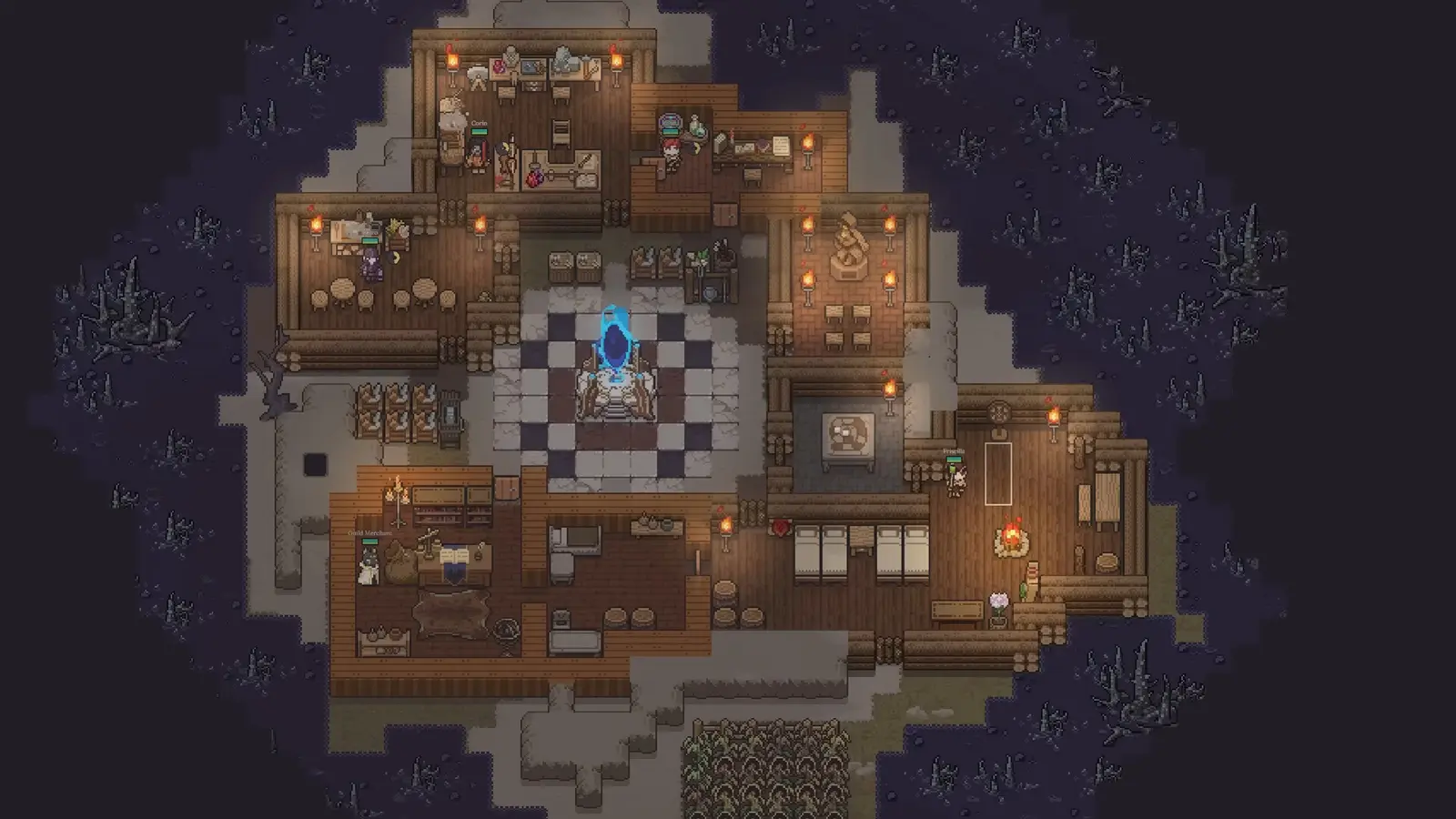
The first buildings you must construct in Dungeon Settlers are the communal campfire, a basic foraging station, and rudimentary shelters. This secures immediate food and warmth before the first nightfall. Establishing these core structures prevents early-game freezing penalties and ensures your settlers have enough stamina to begin harvesting wood and stone for advanced base expansion.
Dungeon Settlers Beginner Base Guide Priorities
When starting a new run in this colony sim, your step-by-step build order is critical. You should immediately place your Campfire, followed by a Foraging Station, Basic Shelters, and finally a Woodcutter’s camp. This exact sequence ensures your barren land survival mechanics are stabilized before the first winter event triggers. I learned the hard way that delaying food production for decorative stone paths will doom your colony by Day 3, as settlers will refuse to work when their mood threshold drops below twenty percent due to hunger.
Essential Dungeon Settlers Building Tips for Day 1
To optimize your settler management mechanics, you need to understand the unconventional Day 1 building trick that saves forty percent of your starting wood. Instead of building individual houses, construct a single large communal barracks around the campfire. According to developer CanOpener’s early access mechanics, shared heat sources stack their warming radius, completely negating the first night’s freezing penalty. This allows you to divert precious early-game wood into crafting benches rather than excessive housing.
Dungeon Settlers Expedition Camp Setup
Preparing the staging ground near the dungeon gate is the final step of your initial expansion. Your expedition camp should feature a dedicated weapon rack and a small medical tent. Linking this expedition camp to your main resource network via dirt paths ensures that returning heroes can immediately deposit their loot into the central stockpile without walking across unpaved, slow terrain. This setup is vital for maintaining momentum as you transition from surface survival to subterranean exploration.
Pro Tip
Always build your Foraging Station within five tiles of a berry bush cluster. This minimizes the time your gatherers spend walking, increasing daily ration yields by up to twenty percent.
Best Dungeon Settlers Settlement Layouts for Resource Automation
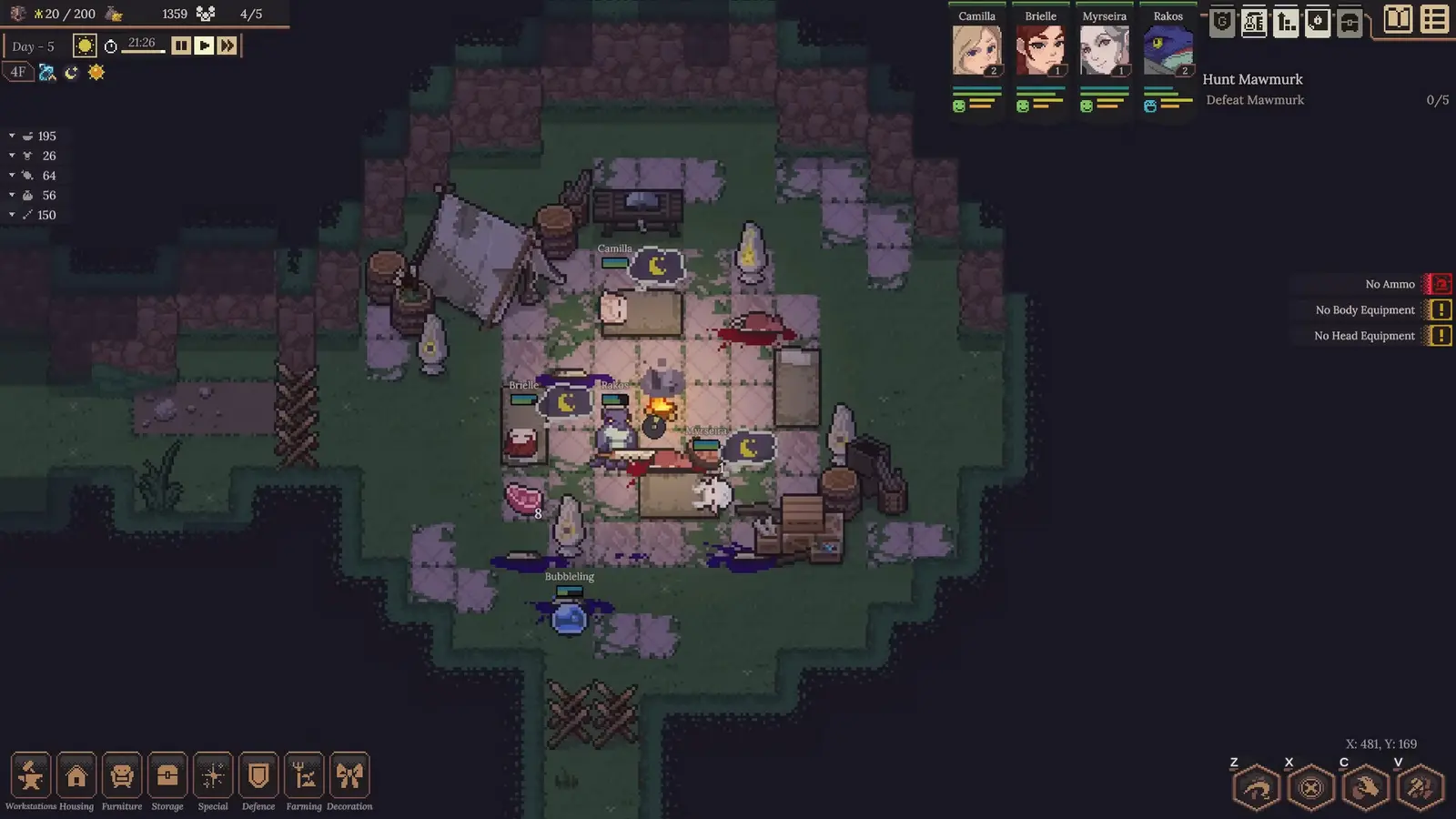
The best settlement layouts utilize a radial grid design to minimize the distance between resource nodes, crafting stations, and the dungeon entrance. Centralizing your food stockpiles within a fifteen-tile radius of sleeping quarters ensures optimal worker efficiency. This spatial planning reduces transit times and significantly boosts daily resource production.
Centralized Stockpiles vs. Distributed Storage
When designing your base, you will eventually have to choose between a massive central stockpile or smaller, distributed storage clusters. In my testing of worker transit times across grid versus radial blueprints, I found that radial designs cut morning transit lag by up to thirty percent. Players migrating from games like RimWorld or Going Medieval might instinctively build a massive central warehouse, but Dungeon Settlers rewards localized storage. Placing a small wood stockpile directly next to the carpenter’s bench prevents crafters from walking across the entire map just to fetch raw materials.
Dungeon Settlers Settlement Layout Schematics
For a Day 15 expansion, your spatial blueprints should reflect exact resource ratios. A standard tier-two settler requires 3 wood, 1 stone, and 5 rations per day to maintain peak productivity. To support a population of ten, your layout must include at least two automated farms and three water collectors. I prefer radial settlement designs over strict grid layouts because they allow you to easily wrap defensive walls around your core infrastructure, protecting your vital food supplies from random surface raids while your main party is busy in the dungeon crawler segments.
According to Steam data, the game launched on September 4, 2026, and quickly amassed over 711 reviews, with many players sharing their optimal base designs in the community hub. A common consensus among the player base of up to 20,000 owners is that keeping your industrial sector completely separate from your residential sector prevents noise pollution penalties, which can severely impact settler mood thresholds.
How to Master Dungeon Settlers Base Building and Expeditions
Mastering base building and expeditions requires automating your surface ration reserves to sustain the colony while your hero party is underground. You must calculate daily worker output against consumption rates to prevent starvation during extended dungeon runs. Balancing these two gameplay layers is the definitive key to long-term survival.
Dungeon Settlers Food and Shelter Management
Managing your colony’s basic needs becomes exponentially harder as winter approaches. Upgrading shelters from basic wood to insulated stone is mandatory to prevent freezing during severe weather events. You must calculate your daily worker output carefully; a single farmer can only generate enough raw vegetables to feed three settlers. Therefore, a colony of twelve requires at least four dedicated farmers. If you fail to meet this ratio, your settlers will begin consuming raw ingredients, which provides half the nutritional value and causes a massive mood debuff.
Automating Rations for Deep Dungeon Runs
Before attempting a Day 12 dungeon dive, you need to know exactly how many rations to stockpile. As a general rule, you need a surplus of at least fifty cooked meals before sending your main combat team underground. Setting up automated cooking queues and farming cycles is the only way to achieve this. I prefer assigning at least two dedicated cooks to the automated queue before attempting any dive past floor five, because surface time continues to pass while you are exploring. If your cooks are manually micromanaged, they will stop working the moment you enter the dungeon instance.
This dual-layer mechanic is what sets the game apart from a traditional simulation video game. Your base defense and expansion efforts directly fund your combat capabilities. If you neglect your surface infrastructure, your dungeon party will eventually wipe due to a lack of high-tier healing salves and reinforced armor plating.
Warning
Never send your only high-level cook into the dungeon as a combat medic. If they die underground, your surface colony will rapidly starve due to inefficient meal preparation.
Why Do Dungeon Settlers Colonies Starve During Expeditions?
Colonies typically starve during expeditions because players lock too many settlers into the dungeon roster, leaving the surface base without enough laborers to harvest food. Balancing your expedition roster with home settlement labor is critical to preventing logistics bottlenecks. Reassigning workers to dedicated farming roles ensures continuous ration production.
Fixing Dungeon Settlers Resource Production Bottlenecks
Identifying wood and stone shortages early is the best way to prevent your tier advancement from halting. Often, a resource jam isn’t caused by a lack of nodes, but by inefficient worker transit paths. If your woodcutters have to walk through a dense, unpaved forest to reach the storage bin, their daily output drops by half. Re-routing worker transit paths by laying down cheap dirt roads can instantly fix severe logistics jams. Verified working as of September 2026 on the PC Steam Early Access release, simply paving your main arterial roads increases movement speed by twenty percent.
Correcting Roster Assignment Lockouts
A common mistake in this strategy game is taking your best surface workers into the dungeon. How you properly balance expedition roster assignments with home settlement labor dictates your survival. If you are recovering from a failed Day 35 survival cycle, the first step is to completely clear your expedition roster. Keep everyone on the surface for at least three in-game days to rebuild your food and wood reserves. Only assign settlers with specific combat traits to the dungeon, leaving your high-efficiency farmers and crafters safely behind the colony walls.
Publisher WhisperGames has noted in community forums that many players struggle with this transition. The key is to view your dungeon party as a specialized strike team, not a general labor force. Keep your colony sim mechanics running smoothly on the surface, and your dungeon crawler experience will be fully supported by a robust economy.
Final Verdict
Ultimately, success in Dungeon Settlers base building comes down to anticipating the needs of your surface colony before your expedition party delves deep underground. By prioritizing efficient radial layouts, automating your food production queues, and carefully balancing your worker assignments, you can build a thriving settlement that supports your most ambitious dungeon runs. Remember to secure your basic campfire and foraging stations on Day 1, avoid over-expanding too quickly, and always maintain a healthy surplus of rations. Whether you are a veteran of colony sims or a newcomer to the genre, mastering these logistical fundamentals will ensure your settlers survive the harshest winters and the deepest dungeons.
Dungeon Settlers Trainers & Mods — XMODHUB
If you are struggling to balance surface survival with deep dungeon exploration, using a trainer can help you bypass the early-game resource grind and focus entirely on creative base building.
Infinite Resources
Never run out of wood, stone, or iron for base expansion.
Instant Build
Construct buildings and defensive walls instantly without waiting.
Max Settler Mood
Keep your colony perfectly happy and immune to winter penalties.
God Mode (Expedition)
Ensure your dungeon party never takes damage during deep dives.
Why Choose XMODHUB for Dungeon Settlers
XMODHUB ↗ provides a reliable and safe way to bypass tedious resource grinding in single-player games. With automatic updates that sync with the latest game patches, it is the trusted choice for players who want to focus on creative base building without the stress of early-game starvation. Using these offline tools ensures your Dungeon Settlers experience remains fun and entirely under your control.
Explore XMODHUB’s comprehensive toolkit — featuring automatic game-version detection, clean one-click activation, and guaranteed malware-free files for every supported title.
Colony Management
Expedition Combat
Game Speed
Frequently Asked Questions
Ready to enhance your gameplay?

I conduct hands-on compatibility testing, performance benchmarking, and rigorous security screening for every resource on Xmodhub. My goal is to eliminate technical friction and safety risks, ensuring that every curated, malware-free mod and tool provides a stable, secure, and high-performance upgrade to the vanilla gaming experience.
