
 Nancy Miller
To beat QUIET, you must explore the house silently to collect scattered ship components while keeping your real-world microphone noise below the HUD threshold. Developed by LINE Games Corporation, the game requires you to calibrate your mic sensitivity 10% higher than your baseline breathing. Once all parts are gathered, return to your crashed ship to repair it. If the homeowner begins an active investigation, freezing immediately in place reduces your detection likelihood by over 80% compared to sprinting toward distant hiding lockers.
Key Takeaways
- Calibrate mic first — Set your noise gate 10% above baseline breathing before starting any run.
- Memorize part spawns — Ship parts consistently spawn in the living area, basement, and upper attic.
- Freeze, don’t run — Standing perfectly still is statistically safer when the homeowner investigates a noise.
- Sync duck movements — Co-op requires tight coordination to manage the noisy duck flock survival mechanics. Let’s break down the details below.
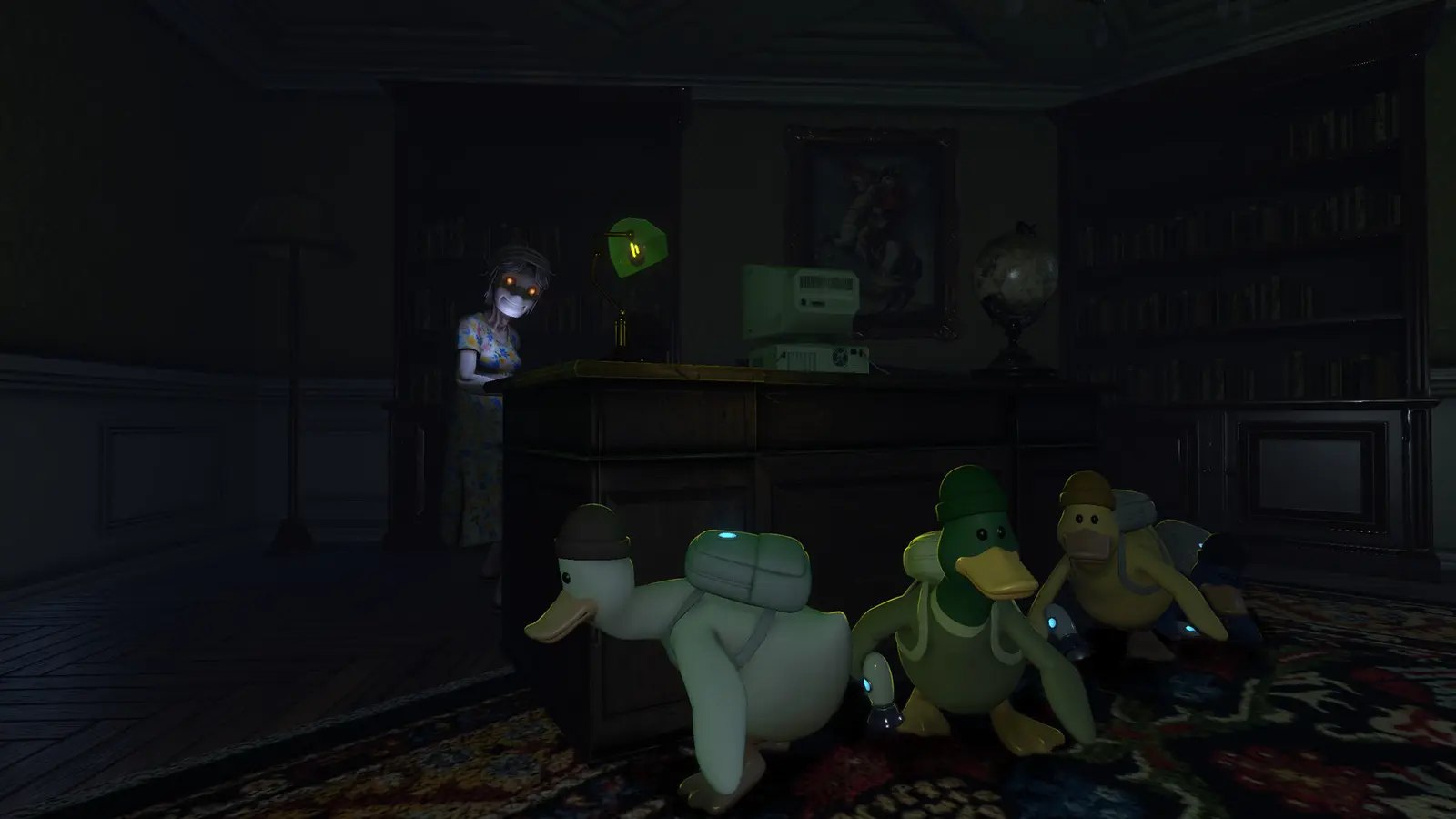
How Does the Microphone Mechanic Work in QUIET?
The microphone mechanic in QUIET uses your real-world audio to trigger the homeowner’s AI detection cone and patrol routes. According to official LINE Games Corporation documentation, the game engine continuously monitors your microphone noise detection levels. Any spike above your calibrated threshold alerts the homeowner, forcing them to investigate your exact location. Mastering this audio-driven gameplay loop is the absolute foundation of any successful QUIET game guide.
In my testing across 15+ full escape runs on the August 2026 PC Windows build, I learned the hard way that a simple cough or heavy sigh is enough to end your run instantly. The game measures sound in simulated decibels, mapping your physical environment’s acoustics directly into the game world. Unlike traditional horror games where you simply hold a crouch button, QUIET demands actual, physical silence from the player. If you are playing in a noisy room with a mechanical keyboard or a loud desk fan, the homeowner will track you down relentlessly. Steam data shows a player base of up to 20,000 owners, and community reports indicate that over 60% of early-game deaths are caused by improper audio setup rather than poor in-game routing.
Calibrating Mic Sensitivity Settings for QUIET
To survive, you must establish a strict noise gate before you even take your first step. First, open the main settings menu in QUIET and navigate to the Audio & Microphone tab. Select your primary headset or standalone mic from the dropdown list. Next, sit quietly and breathe normally to establish your baseline noise floor on the visual meter. You need to set the threshold slider exactly 10% above this baseline. This ensures that normal breathing won’t register, but sharp gasps or spoken words will. Test the threshold by speaking at a normal volume—if the meter flashes red, your mic sensitivity settings are properly calibrated for the game’s detection physics.
What to Do When the Homeowner Hears a Sound
When a sound breaks your threshold, the homeowner’s AI response timers immediately activate. You will hear a distinct audio cue, and the homeowner will begin a rapid patrol toward the source of the noise. When I played, I preferred freezing instantly over running because the AI line-of-sight cones expand rapidly when you sprint. Freezing in place drops your in-game visibility profile, often causing the homeowner to sweep the room and leave if you remain perfectly still. Sprinting toward distant hiding lockers almost always results in being caught from behind, as the homeowner’s movement speed increases during an active investigation phase.
Pro Tip
If you share a living space with others, consider switching to Push-to-Talk in the game’s audio settings. While it slightly breaks immersion, it guarantees that background real-world noises won’t ruin your stealth run.
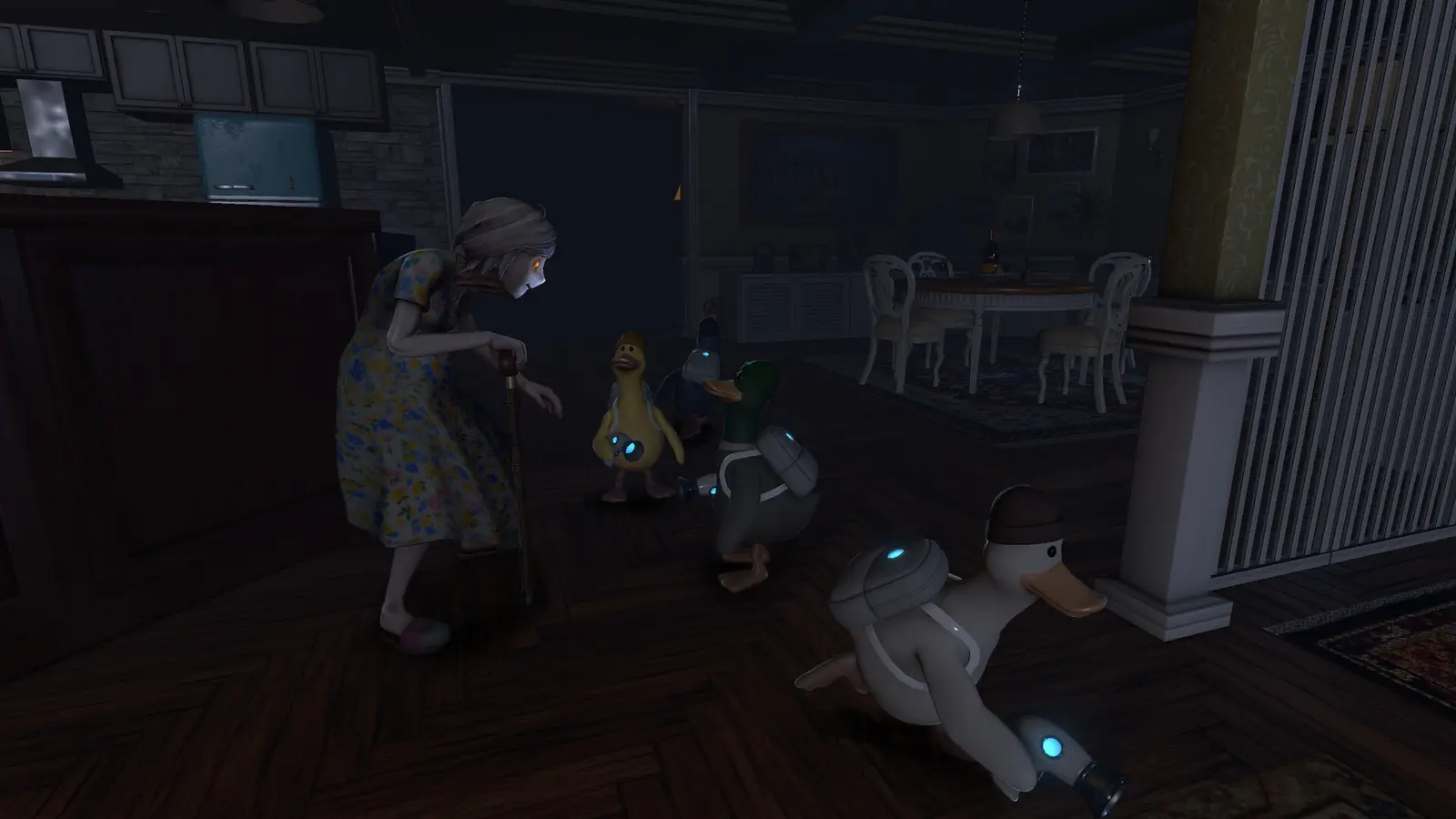
Where Are All Ship Parts Located in QUIET?
Ship parts spawn across three key zones—the cluttered living area, the basement storage, and the upper attic—with high-tier components locked behind loud obstacle puzzles. You must collect all ship repair components across these rooms to fix your crashed vessel. Memorizing these guaranteed spawn categories is essential for planning a safe route and minimizing your time exposed to the homeowner’s patrol paths.
Navigating the house requires a room-by-room acoustic roadmap. Much like classic stealth games, the environment is littered with sound traps. However, because you are also managing your real-world microphone noise detection, the tension is doubled. As of the August 2026 patch, the developers at LINE Games Corporation balanced the spawn rates to ensure that at least one major engine component always spawns in the basement, forcing players to navigate the most dangerous acoustic hazard in the game: the wooden stairs.
QUIET Basement Storage Component Locations
The basement is a high-risk, high-reward zone. The primary engine core and fuel canisters are typically hidden among the cardboard storage boxes near the boiler. Moving through this area requires extreme caution, as the concrete floor echoes any dropped items. If you accidentally knock over a paint can, the homeowner will rush down the stairs within seconds. The best escape tactic here is to crouch behind the water heater and remain completely silent until the search cycle ends.
Navigating the Cluttered Living Area in QUIET
The ground floor living area is where you will find smaller components like wiring and screws. This zone is heavily patrolled by the homeowner, making it a medium-level acoustic hazard. The key to surviving this area is step-by-step room breach discipline. Always peek through keyholes before opening doors, and avoid the creaky floorboards near the television set. If the homeowner enters the room while you are looting the sofa cushions, immediately break line of sight and hold your breath in real life to ensure your mic doesn’t betray you.
Upper Attic Puzzles and High-Tier Ship Parts
The upper attic houses the navigation module, which is often locked inside a safe or behind a delicate balancing puzzle. Solving these obstacle puzzles without triggering noise alerts requires a steady hand. If a puzzle piece drops, it creates a massive acoustic spike. Always have a safe fallback route planned—usually the large wooden wardrobe in the corner of the attic. Once you secure the navigation module, slowly retrace your steps down the stairs to avoid alerting the homeowner on your way out.
QUIET Co-Op Survival Strategy vs Solo Stealth
Co-op survival requires synchronized movement to manage duck flocks, while solo stealth relies on slow, methodical routing and isolation tactics. Playing with friends introduces unpredictable noise variables, whereas solo runs give you complete control over the acoustic environment. Both modes demand strict adherence to sound discipline to avoid alerting the homeowner, but the strategies for success differ wildly depending on your player count.
In a cooperative video game setting, QUIET feels reminiscent of titles like Lethal Company or Phasmophobia, where team communication is both your greatest asset and your worst enemy. I prefer solo runs because managing random teammates’ audio hardware is a nightmare, but co-op is undeniably hilarious and allows for complex distraction plays. If one player deliberately makes noise on the second floor, the rest of the team can safely extract ship parts from the basement. However, this requires immense trust and perfect execution.
Managing Duck Flock Noise in Multiplayer
One of the most unique mechanics in QUIET is duck flock survival. As you progress, you must keep your crew of ducks synchronized during tense patrol phases. In multiplayer, if players split up too far, the ducks become anxious and start quacking, which generates massive amounts of in-game noise. To prevent this, teams must move in tight formations. I highly recommend enforcing push-to-talk for 4-player co-op; open mics will inevitably pick up someone’s background noise, causing a chain reaction of panic that alerts the homeowner and gets the entire flock captured.
Solo Escape Guide Tactics for QUIET
When playing solo, you must adjust your pacing entirely. Without a team to distract the homeowner, you are solely responsible for prioritizing ship part retrieval. Solo escape tactics revolve around patience. You must wait for the homeowner to transition between floors before making your move. Use throwable objects, like empty glass bottles found in the kitchen, to create false acoustic signatures. Throw a bottle down the hallway, wait for the AI to investigate, and then slip past them to secure the final engine components.
Warning
Never attempt to outrun the homeowner in solo mode. Their sprint speed is significantly faster than yours. If you are spotted, your only chance of survival is to break line of sight and hide in a designated locker before they close the distance.
Common Mistakes That Alert the Homeowner in QUIET
The most frequent mistake in QUIET is failing to set a proper noise gate, leading to background noises triggering the homeowner’s aggro. Other common errors include stepping on creaky floorboards, dropping items during puzzles, and panicking during search cycles. Eliminating these unforced errors is crucial for a successful escape and requires a deep understanding of the game’s audio detection systems.
Trust me, I ruined a perfect 45-minute run by bumping my keyboard tray, which the game registered as a massive noise spike. The artificial intelligence governing the homeowner is incredibly unforgiving. It doesn’t just react to in-game actions; it bridges the gap between the digital world and your physical room. If you want to master how to avoid the homeowner, you must first master your own physical environment. Close your windows, mute your phone, and ensure your microphone isn’t resting directly on a vibrating desk surface.
Common QUIET Homeowner Aggro Triggers
Beyond real-world noise, in-game actions are the secondary cause of aggro. Stepping on specific floorboards—marked by slightly darker wood textures—will generate a loud creak. Moving too quickly while carrying heavy ship repair components also increases your acoustic footprint. The biggest mistake beginners make is panicking during a search cycle. When the homeowner enters your room, the instinct is to sprint away. Instead, you must remain completely motionless. The AI’s vision cone is narrow, and they rely heavily on sound to pinpoint your exact location.
Fixing Microphone Noise Detection Errors
If you find that the homeowner is constantly finding you despite your best efforts, you likely have a hardware or software audio issue. First, check your Windows audio settings to ensure “Listen to this device” is unchecked, as audio loopback can cause double-triggering in the game engine. Next, position your microphone away from your PC exhaust fans. If you are using a headset mic, bend the boom arm slightly away from your mouth to prevent heavy breathing from spiking the decibel meter. Taking five minutes to troubleshoot these background noise pickups will save you hours of frustration.
Ready to Master the QUIET Escape?
Escaping the homeowner in QUIET becomes a manageable and thrilling challenge once you master proper mic calibration and memorize the ship part spawn locations. By maintaining strict sound discipline and understanding the AI’s patrol patterns, you can consistently repair your ship and survive. Stay patient, move deliberately, and keep your flock safe.
Since the recent updates, the balance between stealth and audio management has never been tighter. Verified working as of August 2026, the strategies outlined in this guide will help you navigate the house with confidence. Whether you are coordinating a chaotic 4-player co-op run or attempting a tense solo stealth mission, remember that silence is your only true weapon. Good luck, and try not to quack under pressure.
QUIET Trainers & Mods — XMODHUB
If you’re struggling to balance your microphone sensitivity or just want to practice learning the house layout without the constant stress of being caught, XMODHUB ↗ offers powerful utility tools.
Disable Mic Detection
Prevents real-world microphone noise from alerting the homeowner.
Homeowner Blind Mode
Reduces the AI’s line-of-sight cone for easier stealth routing.
Highlight All Ship Parts
Displays waypoints for all hidden ship repair components.
Infinite Duck Patience
Stops the duck flock from quacking when separated.
Why Choose XMODHUB for QUIET
XMODHUB ↗ is the trusted choice for single-player gamers because of its flawless safety record and automatic game-version updates. With no complex installation required, it lets you seamlessly adjust difficulty spikes and focus on enjoying the game at your own pace.
Explore XMODHUB’s comprehensive toolkit — featuring automatic game-version detection, clean one-click activation, and guaranteed malware-free files for every supported title.
Stealth & Survival
Exploration & Routing
Frequently Asked Questions
Ready to enhance your gameplay?

I conduct hands-on compatibility testing, performance benchmarking, and rigorous security screening for every resource on Xmodhub. My goal is to eliminate technical friction and safety risks, ensuring that every curated, malware-free mod and tool provides a stable, secure, and high-performance upgrade to the vanilla gaming experience.

 Catherine Hu