 Catherine Hu
We have all been there during our first few hours playing Low-Budget Repairs. You just spent forty-five minutes meticulously patching wall holes with questionable plaster and diluting Vanilla Cream paint with tap water to stretch your supplies. You are finally ready to cash in on the contract, but there is one massive problem: the 1990s Polish apartment is still completely littered with empty beer bottles, broken linoleum tiles, shattered CRT televisions, and old furniture. In a panic, you start picking up items one by one, walking them down four flights of dimly lit communal stairs to the dumpster. By the time you finish, your hourly profit margin has tanked, and the sun is coming up.
Editor’s Note: As a simulation veteran with over 1,000 hours logged in the genre and extensive time min-maxing the chaotic physics of Low-Budget Repairs since its 2026 launch, I can confidently tell you that playing by the rules is a trap. This game is literally built on the premise of cutting corners. If you are bagging trash like a good citizen, you are playing the game entirely wrong. In this guide, I am going to break down the exact physics exploits and slapstick mechanics you need to clear debris in seconds.
TL;DR: The Short Answer
If you are just looking for the absolute Fastest Way to Clean Up Trash in Low-Budget Repairs, here is the bottom line:
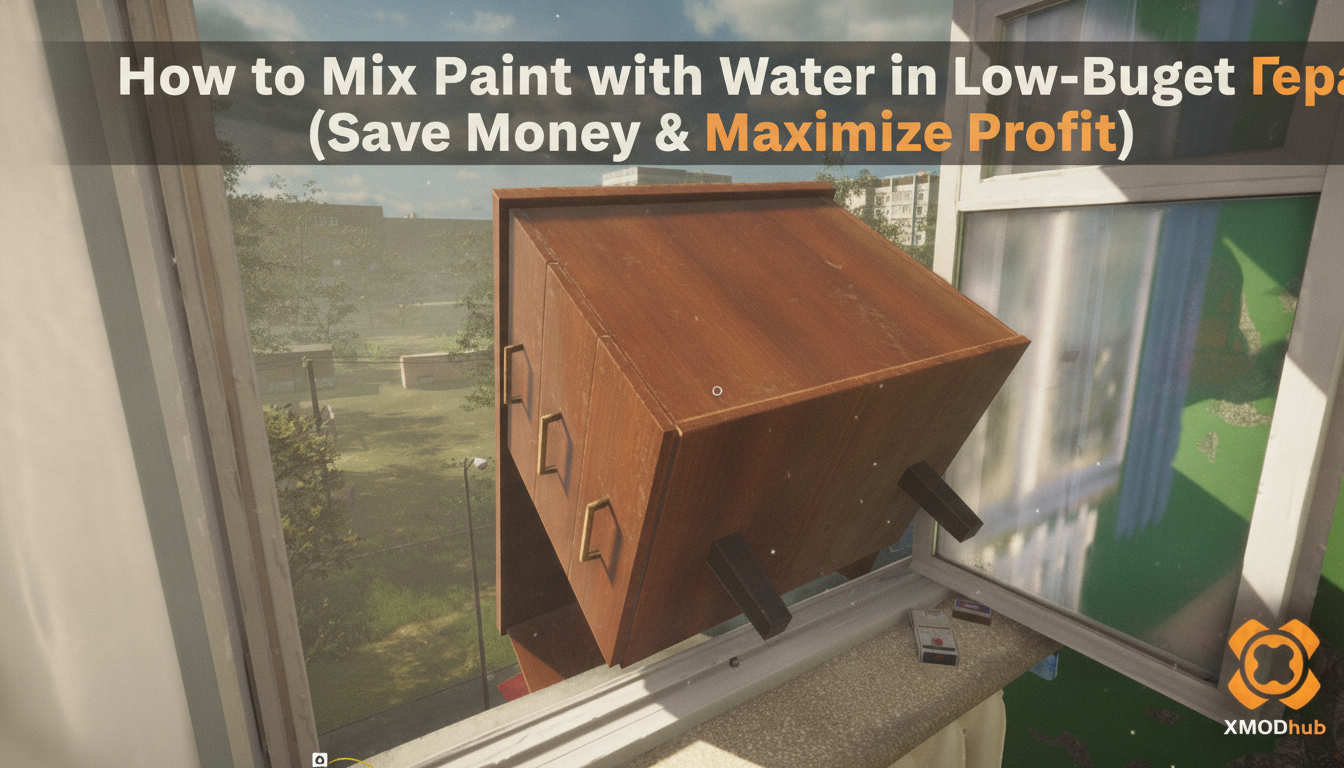
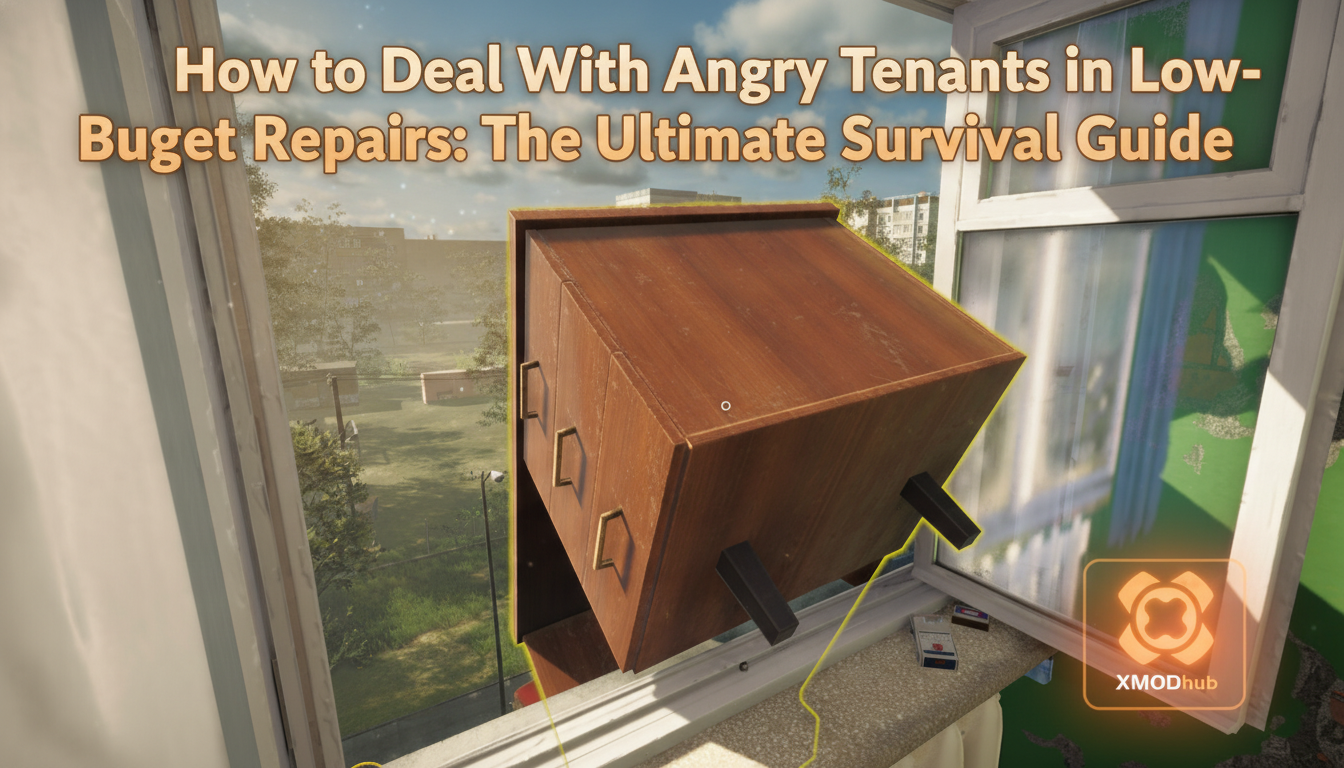
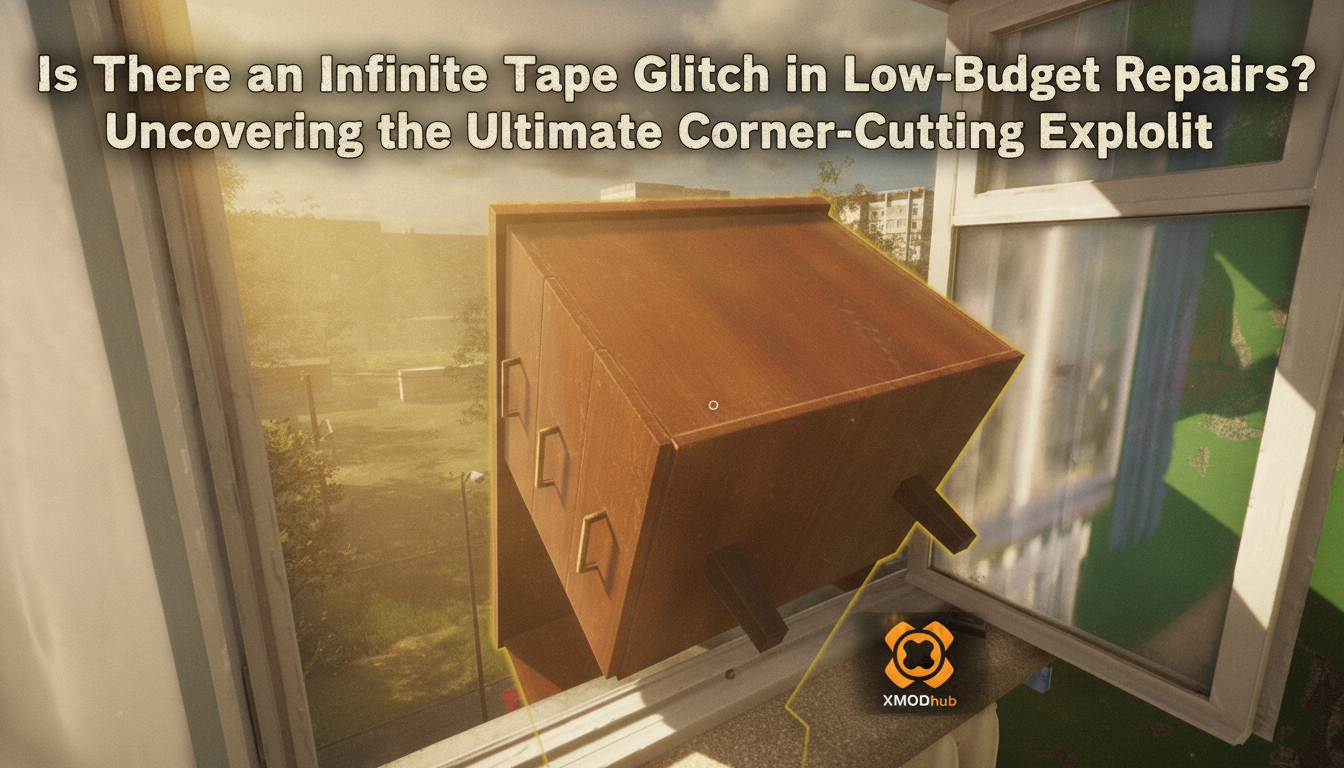
- The Defenestration Exploit (Window Tossing): Do not use the hallway. Open the largest window in the apartment, pick up bulky items (like old couches or Symbioza chairs), and literally throw them out into the courtyard. The game’s physics engine registers them as “removed from property.”
- The Rug Sweep Method: For smaller debris like plaster chunks and broken tiles, do not bag them. Pick up a large area rug, sweep the debris into a pile, and place the rug directly over them. Out of sight, out of mind—the client’s inspection script rarely checks under furniture.
- Doorway Voiding: Stack trash bags directly in the threshold of the front door and slam the door outward. The collision physics will often clip the bags into the hallway void, instantly clearing them from your active job zone.
Table of Contents
Mechanics Deep Dive: The Philosophy of Trash in Low-Budget Repairs
To truly understand the fastest way to clean up trash in Low-Budget Repairs, you have to understand the core design philosophy of the game. Developer Gray2RGB built this title as a slapstick comedy response to traditional, overly sterile renovation simulators. In this world, duct tape fixes plumbing, and uneven tiles add “character.”
The game’s engine does not reward perfection; it rewards completion speed and cost-cutting. The trash cleanup mechanic is a deliberate bottleneck designed to punish players who treat the game like a serious simulator. Every second you spend holding a garbage bag is a second you are not slapping misaligned tiles onto a bathroom wall.
Common Mistakes: Why You Are Losing Money Cleaning
Before we get into the high-level exploits, we need to address the bad habits you are likely carrying over from other games. If you want to master the fastest way to clean up trash in Low-Budget Repairs, you must immediately stop doing the following:
1. The “Good Citizen” Stairwell Run
The most common mistake new players make is utilizing the actual dumpsters located at the bottom of the block of flats. The player character has a hidden stamina and movement speed penalty when carrying objects over a certain weight threshold. Walking a broken Fantasy Land painting or a heavy CRT TV down three flights of stairs takes roughly 45 seconds round trip. Multiply that by ten pieces of large trash, and you have wasted almost ten minutes of real-world time. Time is money, and the game actively mocks you for this by making the stairwell navigation clunky.
2. Over-Bagging Small Debris
The game provides you with heavy-duty trash bags for small items like empty paint cans, plaster dust, and broken glass. However, the animation for opening a bag, bending down, and depositing an item takes exactly 2.4 seconds per interaction. If an apartment has 50 pieces of micro-trash, you are spending over two minutes just watching animations.
3. Cleaning at the Wrong Time
Many players try to clean up the apartment before they start the renovation work. This is a massive tactical error. When you patch wall holes or paint walls in Low-Budget Repairs, your sloppy handyman work actually generates new trash (empty buckets, dropped plaster, ruined drop cloths). If you clean first, you will just have to clean again at the end of the job.
(Pro-Tip: If you want to maximize your profit margins, clearing debris quickly is just step one. For a complete financial breakdown of how to abuse the game’s economy, you need to know How to Make Money Fast in Low-Budget Repairs (The Best Exploits & Cheap Fixes)
The Core Strategy: The Window-Toss Method
The undisputed fastest way to clean up trash in Low-Budget Repairs is the “Window-Toss Method.” The game’s trailer heavily hints at this by showing players throwing old furniture out the window, but mastering the physics behind this mechanic requires some practice.
Here is the step-by-step breakdown of how to execute the perfect defenestration:
Step 1: Identify the Drop Zone
As soon as you load into a new contract, locate the largest window in the apartment that faces the exterior courtyard. Avoid windows that face narrow alleyways or balconies, as trash can bounce off the geometry and fly right back into the room, which can cause catastrophic physics damage to your newly painted walls.
Step 2: The Staging Area
Do not throw items out one by one. Instead, use your physical push mechanics to shove all large furniture, broken stools, and heavy debris into a pile directly beneath your chosen window.
Step 3: The Yeet Mechanic
In Low-Budget Repairs, the throwing arc is dictated by your camera momentum. Pick up an item, quickly flick your mouse upward and toward the open window, and release the interaction key simultaneously. This transfers your camera’s kinetic energy into the object.
Step 4: Bypassing the Zone Trigger
The game’s code dictates that an item is “cleaned up” the moment its hitbox crosses the exterior threshold of the apartment’s bounding box. You do not actually care where the trash lands in the courtyard. As soon as it clears the window frame, it is deducted from your task list. You can clear an entire living room of heavy furniture in under 15 seconds using this method.
Alternative Methods for Debris Management
Sometimes, a level layout in Low-Budget Repairs prevents the Window-Toss Method. Perhaps you are working in a basement unit, or the windows are barred. In these scenarios, you need alternative strategies.
Alternative 1: The “Sweep and Ignore” (The Rug Exploit)
Remember, your goal is to pass the client’s final inspection, not to actually clean the apartment. The game’s inspection script relies on a line-of-sight raycast from the doorway. If the trash is obscured by a larger, acceptable object, it ceases to exist in the eyes of the grading system.
- Gather all small debris (bottles, cans, tape rolls) into a tight pile in the center of the room.
- Grab a large area rug (you can often find one in the bedroom or hallway).
- Drop the rug directly over the pile.
Because Low-Budget Repairs features a delightfully janky physics engine, the rug will likely hover slightly or bulge awkwardly, but the game will mark the trash task as “Completed.”
Alternative 2: The Hallway Void Shove
If you are dealing with medium-sized trash bags that are too heavy to throw but too large to hide under a rug, use the front door. Open the apartment door outward into the communal hallway. Stack your trash bags right on the threshold. Then, sprint into the door to slam it shut. The collision detection will panic, and it will forcefully eject the trash bags through the floor geometry into the void. This instantly removes them from the game world.
Advanced Tips: Animation Canceling and Hitbox Manipulation
For the true hardcore players looking to shave those final seconds off their speedrun times in Low-Budget Repairs, you need to utilize animation canceling.
When picking up small trash by hand, there is a delay before you can pick up the next item. However, if you swap to your primary tool (like the trowel or the paint roller) the exact frame after the trash enters your inventory, you cancel the recovery animation. By rapidly scrolling your mouse wheel to swap items while spamming the interact key, you can vacuum up a line of trash at a dead sprint.
Furthermore, you can use the game’s own items against it. The “Symbioza chairs” mentioned in several early game jobs have bizarrely large, rectangular hitboxes. You can use a Symbioza chair like a bulldozer blade. Hold the chair in front of you and simply walk forward into a room full of trash. The chair will push all the debris into a neat pile in the corner in a fraction of the time it would take to pick them up individually.
Debris Weight and Disposal Efficiency Matrix
To truly min-max your cleanup phase, you need to understand how the game categorizes different types of junk. Not all trash is created equal in Low-Budget Repairs, and using the wrong method on the wrong item will severely bottleneck your workflow. Below is a data-driven breakdown of the most common debris types and the optimal strategy for each to secure the Featured Snippet of efficiency.
| Trash Type | Weight Class | Optimal Disposal Method | Average Time Saved |
|---|---|---|---|
| Empty Beer Bottles & Cans | Micro | Rug Sweep Method | 85% Faster |
| Plaster Chunks & Broken Tiles | Light | Animation Canceling | 60% Faster |
| Filled Trash Bags | Medium | Doorway Voiding | 75% Faster |
| Symbioza Chairs & Stools | Heavy | Window Tossing | 90% Faster |
| Shattered CRT Televisions | Super-Heavy | Window Tossing (Rotated) | 95% Faster |
Tool Synergies for Faster Cleanup
While bare hands and physics exploits are your primary weapons, do not ignore the Push Broom. Standard gameplay suggests using it to clean up dust decals, but hardcore players know its collision mesh is completely broken. If you swing the Push Broom horizontally like a baseball bat while crouching, it generates a massive physics impulse. You can literally launch a pile of Plaster Chunks or Broken Tiles out the door in a single swing, bypassing the need for trash bags entirely.
The Ultimate QoL Solution: Automating Cleanup with XMODhub
While throwing furniture out of a fourth-story window is hilarious the first ten times you do it, eventually, the grind of manual cleanup in Low-Budget Repairs can start to wear on you. If you are fifty hours into the game and just want to focus on the slapstick renovation mechanics without dealing with the tedious debris, it is time to look at external solutions.
This is where XMODhub becomes the ultimate quality-of-life upgrade. Instead of battling the physics engine or risking a CRT TV bouncing off a window sill and ruining your fresh Vanilla Cream paint job, you can bypass the chore entirely.
XMODhub offers dedicated, safe, and undetectable memory edits specifically tailored for the chaotic engine of Low-Budget Repairs. With features like Instant Trash Clear and Infinite Throwing Momentum, you can turn a 10-minute chore into a single keystroke.
Here is how to revolutionize your gameplay in three simple steps:
- Download and Install XMODhub: Head over to the official XMODhub platform and install the lightweight, secure client.

- Auto-Detect Low-Budget Repairs: Launch the game, and XMODhub will automatically detect the executable, instantly loading the specific mod menu for the game.
- Toggle Your QoL Cheats: Press the designated hotkey overlay to activate “One-Click Debris Removal.” The next time you load into a contract, press the bound key, and every piece of trash in the apartment will instantly vanish, allowing you to get straight to the profitable work.
Download Low-Budget Repairs Trainer Now
Frequently Asked Questions (FAQs)
Does throwing trash out the window incur a fine in Low-Budget Repairs?
Surprisingly, no! Despite the game being set in a populated 1990s Polish block of flats, the developers leaned entirely into the comedy. There are no noise complaints or littering fines implemented in the current build. The moment the trash leaves the apartment window, it is considered “handled.”
Can I reuse empty paint buckets instead of throwing them away?
Yes, and this is a great way to save money. Before you throw an empty bucket out the window, you can take it to the bathroom sink. By interacting with the faucet, you can fill the bucket with water, which can then be used to dilute your remaining paint. Only throw the bucket away once it is completely useless.
Why does the CRT TV keep getting stuck in the window frame?
The CRT TV has a notoriously clunky, asymmetrical hitbox. If you try to throw it straight on, the corners will clip the window frame and bounce back. To fix this, rotate the TV 90 degrees so the screen is facing the floor before you throw it. It will slide through the window geometry smoothly.
Does leftover hidden trash affect the final payout rating?
It depends on how well it is hidden. If you use the “Rug Sweep Method,” the game’s line-of-sight check will pass, and you will receive full payment. However, if a piece of trash is clipping through the top of the rug and becomes visible, the client will dock your pay by 15% for “messy environment.”
Final Verdict
Mastering the fastest way to clean up trash in Low-Budget Repairs is the defining line between a struggling amateur handyman and a wildly profitable 1990s contractor. By abandoning your real-world logic, embracing the defenestration method, and utilizing physics exploits like the rug sweep and doorway voiding, you can drastically reduce your time spent on tedious cleanup. Remember, the game wants you to cut corners—so cut them aggressively.
If you find that the charm of wrestling with 90s physics engines wears off, remember that you don’t have to suffer through the grind. Tools like XMODhub are designed precisely for this reason, offering unparalleled QoL upgrades not just for Low-Budget Repairs, but for over 5,000 other titles, including similar simulation heavyweights like House Flipper 2 and PowerWash Simulator . Work smarter, not harder, and get back to slapping that diluted paint on the walls.
Stop Grinding, Start Enjoying.
Bypass the tedious resource gathering and unlock your full potential instantly.

I am a passionate gamer and writer at XMODhub, dedicated to bringing you the latest gaming news, tips, and insights.
Connect with me:
LinkedIn Profile ↗