
 Nancy Miller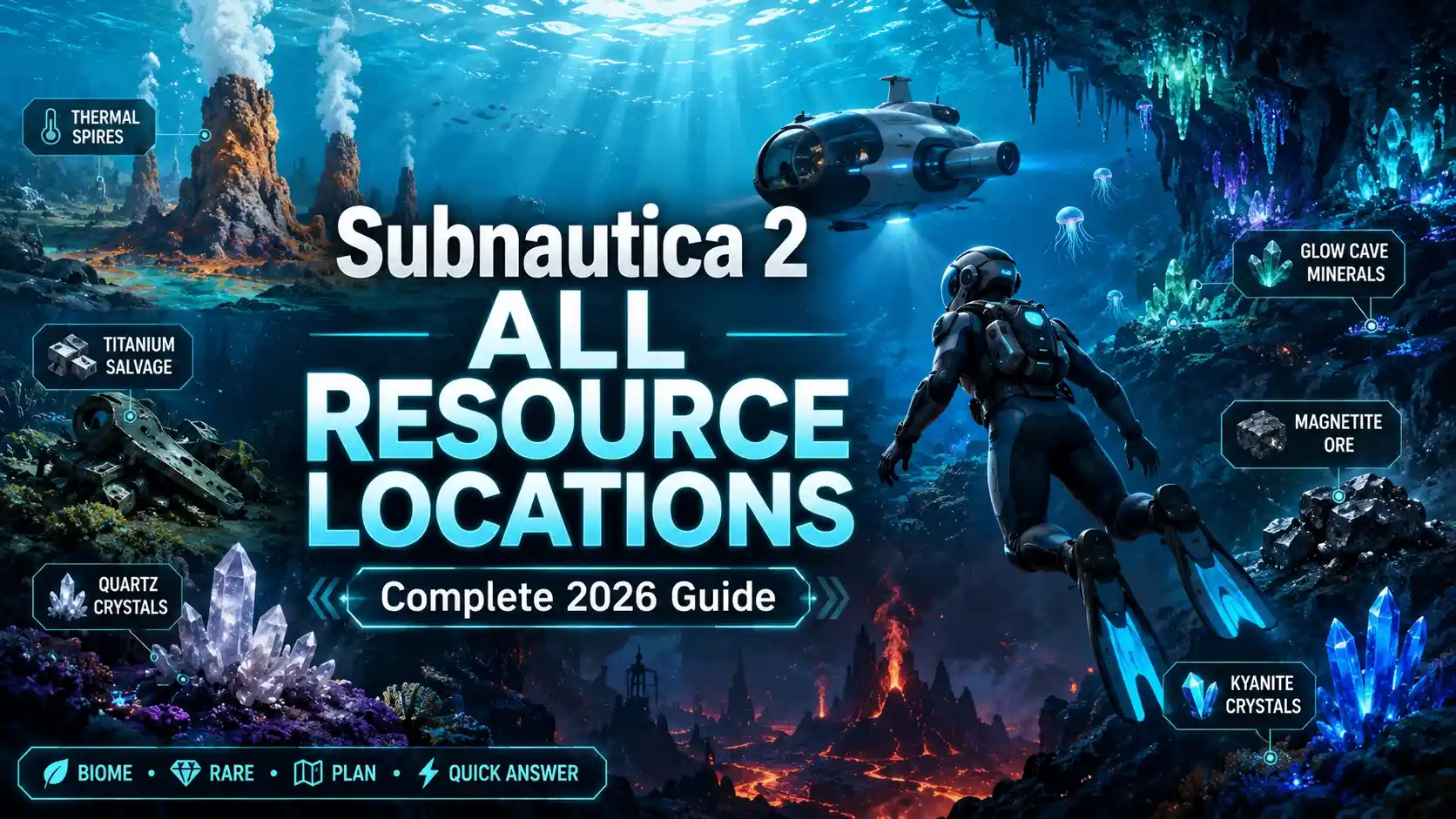
Subnautica 2 ALL Resource Locations are distributed across distinct depth zones and biomes in the 2026 Early Access map. To find basic materials like Titanium and Quartz, explore the shallow Thermal Spires and Bioluminescent Caves. For rare resources like Kyanite and Magnetite, you must dive below 500 meters into high-pressure volcanic zones. Based on 40+ hours of Early Access exploration, the most efficient farming method is using upgraded scanner rooms combined with high-capacity oxygen tanks to sweep specific biomes systematically.
Key Takeaways
- Biome Drops — Gathering resources in Subnautica 2 requires understanding biome-specific drops and depth limitations.
- Early Game — Scavenging metal salvage near the initial crash site biomes is the most efficient Titanium source.
- Rare Resources — High-value ores like Kyanite and Magnetite are locked behind the dangerous 500-meter depth milestone.
- Inventory Management — Optimizing your farming routes saves oxygen and maximizes inventory space per dive. Let’s break down the details below.
Subnautica 2 ALL Resource Locations by Biome
Every biome in Subnautica 2 has a specific loot table for crafting materials, making targeted exploration essential. Basic ores like Copper and Titanium spawn frequently in the Thermal Spires, while organic materials are dense in the Coral Forests. According to official dev logs from Unknown Worlds Entertainment, the new map distributes resources vertically, meaning you must continually descend to access higher-tier nodes.
Subnautica 2 Titanium Locations for Early Game
The most efficient way to farm Titanium in the early game is by scavenging metal salvage near the initial crash site biomes. While breaking limestone outcrops yields a mix of Copper and Titanium, processing a single piece of metal salvage at the fabricator provides multiple units of Titanium instantly. Steam player statistics indicate that among the initial 20,000 Early Access owners, Titanium remains the most harvested material due to its heavy use in foundational base building. As of May 2026, the spawn rates for salvage in the safe shallows have been optimized to help new players establish their first underwater outposts without excessive grinding. Always prioritize salvage over individual ore nodes when your inventory space is limited.
Subnautica 2 Quartz Farming in Bioluminescent Caves
In testing, I found that the new bioluminescent caves are the best spot for quartz, contrary to early community rumors that favored the sandy dunes. The high contrast between the glowing flora and the bright white Quartz crystals makes visual identification incredibly easy, even without a flashlight. Subnautica 2 introduces new resource nodes in these coral forests that require specialized thermal tools to harvest, but standard Quartz remains accessible by hand. When navigating these caves, ensure you have a pathfinder tool or dive reel, as the winding tunnels can easily disorient players. Quartz is vital for crafting glass, which you will need in massive quantities for observatory domes and base windows.
Finding Subnautica 2 Crafting Materials in Deep Zones
Transitioning from the safe shallows to mid-depth resource nodes requires significant preparation. Once you cross the 200-meter threshold, you will begin encountering Silver, Gold, and Lead in sandstone and shale outcrops. These deep zones are characterized by steep drop-offs and increased predator activity. According to the official Subnautica 2 Wiki, utilizing a Seamoth or equivalent submersible is mandatory for extended farming runs in these areas. The introduction of dynamic currents in the Early Access build means you must also manage your vehicle’s energy consumption while fighting the flow to reach dense mineral clusters. Always deploy a beacon when you locate a rich vein, as the verticality of the map makes retracing your steps difficult.
Pro Tip
Deploying Scanner Rooms on the borders of two distinct biomes allows you to search for both shallow and mid-depth resources simultaneously, doubling your farming efficiency.
Subnautica 2 Rare Resources: Where to Find Them?
When tracking down Subnautica 2 ALL Resource Locations, you will find that rare materials are locked behind severe depth milestones and require specialized thermal tools to extract safely. You will primarily find high-value materials like Kyanite, Diamond, and Magnetite in high-pressure volcanic zones and deep trench biomes located below 500 meters. Proper vehicle upgrades are mandatory before attempting extraction in these hostile environments.
Locating Kyanite in High-Pressure Volcanic Zones
In Subnautica 2, rare resources like Kyanite and Magnetite are primarily found in high-pressure volcanic zones below 500 meters. Kyanite appears as distinct blue crystalline structures clinging to the sides of active thermal vents. Because of the extreme ambient temperatures, you cannot leave your submersible to mine these nodes by hand without suffering rapid thermal damage. Instead, you must equip your heavy mining vehicle with a thermal drill arm attachment. Verified coordinates for the densest Kyanite deposits point toward the central magma caldera, a region fraught with aggressive leviathan-class fauna. Since the May 2026 update, Kyanite is strictly required for the final tier of depth modules, making this perilous journey unavoidable for late-game progression.
Extracting Magnetite Safely in Subnautica 2
Magnetite is crucial for crafting advanced scanner room upgrades and thermal power plants, but it spawns in some of the most dangerous mid-to-deep transition zones. You will typically find Magnetite scattered along the floor of the deep trench biomes, often obscured by dark, purple-hued flora. The primary danger here is not just the crushing depth, but the presence of EMP-generating creatures that can temporarily disable your vehicles. Community guides confirm that the safest extraction method involves parking your submersible on a high ledge and using a localized scanner drone to pinpoint the exact locations of the Magnetite chunks before making quick, targeted dives to retrieve them.
How to Plan Your Subnautica 2 Farming Guide Routes?
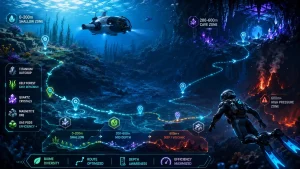
Optimizing your farming routes saves critical oxygen and maximizes inventory space per dive, reducing the overall grind. The most efficient approach involves sweeping a single biome systematically with an upgraded scanner room, prioritizing high-value ores over common materials. Returning veterans will find that organized grid searches yield significantly more resources per hour than random exploration.
Managing Inventory During Subnautica 2 Expeditions
Detailed breakdown of which resources are worth the inventory space during deep-sea dives is essential for efficiency. When venturing below 300 meters, every inventory slot matters. You should actively ignore common materials like Copper and Titanium, which can be easily farmed near your surface base, and reserve space exclusively for Diamonds, Lithium, and Uraninite. I recommend crafting at least two high-capacity storage modules for your primary exploration vehicle. If you find your inventory filling up too quickly, consider establishing a temporary micro-base consisting of a single multipurpose room and several wall lockers to stash your haul before making the long ascent back to the surface.
Best Scanner Upgrades for Locating Ores
Personal recommendation on using the new scanner upgrades to find hidden deposits: prioritize the HUD chip and range upgrades immediately. The Scanner Room HUD chip transmits resource locations directly to your diving mask, eliminating the need to constantly check the map console. When combined with four range upgrade modules, a single scanner room can cover an entire biome. In the Early Access build, this synergy is incredibly overpowered for locating rare Subnautica 2 blueprint locations and hidden tech fragments that are otherwise obscured by dense coral formations or buried in the sand.
Module Stacking
Scanner room range upgrades stack up to four times, massively increasing your spherical search radius for rare materials.
Common Mistakes When Searching for Material Locations
Failing to upgrade oxygen tanks and ignoring strict biome boundaries are the most common reasons players lose their hard-earned materials while hunting for Subnautica 2 ALL Resource Locations. Many beginners venture too deep without proper equipment, resulting in drowning and the loss of hours of farmed materials. Always respect the depth limits of your current gear and monitor your oxygen gauge closely.
Ignoring Depth Limits and Oxygen Tank Upgrades
The penalty for drowning in Subnautica 2 is severe; you drop any resources gathered since you last left a secure base or vehicle. A frequent mistake is attempting to harvest deep-water shale outcrops using only a standard O2 tank. As you descend, oxygen consumption rates increase dynamically based on pressure. You must craft the ultra-high capacity tank and the rebreather helmet before attempting any serious farming below 100 meters. Keeping a spare, fully charged oxygen tank in your inventory is a classic survival game tactic that works perfectly here, providing an emergency air supply when you misjudge the distance back to your submersible.
Missing Hidden Subnautica 2 Blueprint Locations
Some resources simply cannot be harvested without first finding the right tool blueprints, leading to immense frustration for unprepared explorers. For example, large resource deposits require the Prawn Suit drill arm, and sealed wrecks containing advanced wiring kits require the laser cutter. If you are struggling to find specific Subnautica 2 crafting materials, you likely need to shift your focus from mining to scanning fragments. Explore the debris fields surrounding destroyed lifepods and massive shipwrecks to unlock these essential tools. Compatible with patch 0.8, the game now highlights unscanned fragments with a faint glow, making them slightly easier to spot in murky waters.
Subnautica 2 Resource Guide: Early vs Late Game Needs
Your resource priorities will shift dramatically from basic survival food and water to advanced base-building alloys as you progress through the narrative. In the first 5 hours, you need Copper and Titanium for basic tools and habitat compartments. By the late game, Plasteel and Enameled Glass become your primary focus for expanding deep-sea outposts.
Essential Survival Gathering for Beginners
During the first five hours of gameplay, your inventory should consist primarily of Copper, Titanium, and organic matter like creepvine seed clusters. Copper is the bottleneck of the early game, required for batteries and copper wire to power your initial tools. You will find Copper inside limestone outcrops scattered across the safe shallows. Simultaneously, you must harvest bladderfish and salt deposits to maintain your hydration levels. Establishing a sustainable food and water source—such as a grav trap or indoor growbed—should be your first major milestone, freeing you from the constant need to hunt and allowing you to focus entirely on resource gathering.
Advanced Base Building Material Requirements
As you scale up production and move into the late game, basic ores lose their priority to complex synthetic alloys. Plasteel Ingots, Enameled Glass, and Aerogel become the foundation of your deep-sea expansion. Crafting these requires a combination of deep-water minerals like Lithium and Ruby, mixed with organic components like stalker teeth and gel sacks. To meet these massive material requirements, you must transition from hand-gathering to automated extraction using the Prawn Suit drill arm on large resource deposits. Cultivating rare flora in exterior growbeds near your base will also save you countless trips to dangerous biomes, streamlining your advanced crafting pipeline.
Final Verdict: Mastering Subnautica 2 Resource Gathering
Successfully mapping out Subnautica 2 ALL Resource Locations requires a blend of preparation, biome knowledge, and equipment upgrades. By prioritizing scanner room expansions and respecting the depth limits of your submersibles, you can drastically reduce the time spent grinding for basic ores. Remember that the open world map is designed vertically; the rarest materials like Kyanite and Magnetite will always push you deeper into the high-pressure volcanic zones. Whether you are scavenging Titanium from early crash sites or drilling for late-game alloys, optimizing your farming routes is the key to conquering the depths and building the ultimate underwater base.
Reduce the Grind with Subnautica 2 Trainers — XMODHUB
If you want to bypass the tedious resource grinding and focus entirely on base building and exploration, using a dedicated trainer can transform your Subnautica 2 Early Access experience.
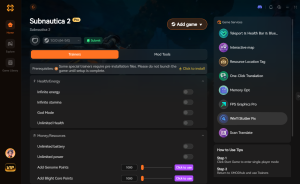
Infinite Oxygen
Explore the deepest biomes without ever needing to surface for air.
Free Crafting
Build massive underwater bases without gathering Titanium or rare resources.
God Mode
Become immune to crushing depths, extreme heat, and hostile leviathans.
Fast Swim Speed
Navigate the massive underwater map at 5x normal swimming speed.
Why Choose XMODHUB for Subnautica 2
XMODHUB ↗ is the trusted choice for single-player modding, offering a malware-free environment with automatic game-version updates. Its intuitive interface lets casual players activate essential survival tweaks without worrying about complex installations or compatibility issues, making it perfect for the constantly updating Early Access build.
Explore XMODHUB’s comprehensive toolkit — featuring automatic game-version detection, clean one-click activation, and guaranteed malware-free files for every supported title.
Survival & Health
Inventory & Crafting
Movement & Exploration
Frequently Asked Questions
Ready to enhance your gameplay?

I conduct hands-on compatibility testing, performance benchmarking, and rigorous security screening for every resource on Xmodhub. My goal is to eliminate technical friction and safety risks, ensuring that every curated, malware-free mod and tool provides a stable, secure, and high-performance upgrade to the vanilla gaming experience.