 Catherine Hu
There is nothing more immersion-breaking than lining up the perfect shot in Directive 8020, only to have your frame rate tank to single digits the moment the particle effects trigger. I remember spending my first six hours with the game fighting more against the stuttering engine than the actual cosmic horrors lurking in the dark. It was a miserable experience until I stopped trusting the “Auto-Detect” settings and started digging into the Unreal Engine 5 architecture myself. If you are tired of the inconsistent frame pacing and want a buttery-smooth experience, you have come to the right place.
🛰️ Editor’s Note: The Expert Perspective
With over 100 hours of intensive testing across various hardware configurations—ranging from budget-friendly GTX builds to top-tier RTX 4090 rigs—I have dissected Directive 8020 from the inside out. My approach isn’t just about turning everything to “Low”; it is about balancing visual fidelity with the demanding nature of UE5’s Lumen and Nanite systems. This guide represents the culmination of that research, designed to help you reclaim your framerate without sacrificing the atmosphere that makes Directive 8020 a masterpiece.
⚡ TL;DR: The Short Answer
If you want the immediate fix for Directive 8020 without reading the technical deep dive, follow the configuration table below. These settings strike the golden ratio between visual clarity and high-performance throughput.
| Impostazione | Optimal Value | Why? |
|---|---|---|
| Upscaling Mode | DLSS / FSR 3.0 (Quality) | Essential for UE5 performance overhead. |
| Lumen Global Illumination | High (or Medium) | Massive impact on VRAM. |
| Qualità dell'ombra | Medio | High settings provide diminishing returns. |
| Qualità della texture | Ultra | Depends on your VRAM; keep high if possible. |
| Motion Blur | Spento | Increases perceived input lag. |
🧬 1. Understanding the Directive 8020 Engine Architecture
To optimize Directive 8020, you must first respect the engine it runs on. Unreal Engine 5 is a beast, specifically because of its two core technologies: Lumen and Nanite. Understanding how these interact with your hardware is the first step toward achieving a locked 144 FPS experience.
The Lumen Factor
Lumen is the dynamic global illumination system in Directive 8020. It calculates light bounces in real-time. In a dark, sci-fi setting, this is what makes the game look breathtaking. However, it is also the primary culprit for frame dips. When you enter a room with many light sources, the engine has to recalculate the light interaction for every surface. If your GPU struggles here, it is usually because the ray-tracing pipeline is being overwhelmed.
Nanite Geometry
Nanite allows Directive 8020 to render incredibly detailed assets without the traditional LOD (Level of Detail) popping. While this is great for visuals, it requires significant VRAM bandwidth. If your GPU has less than 8GB of VRAM, you are likely hitting a memory wall, causing micro-stutters as the engine clears and loads assets from your system RAM.
To dive deeper, read our guide on Directive 8020 Review (2026): A Terrifying UE5 Sci-Fi Masterpiece.
🖥️ 2. Deep Dive: Graphics Menu Optimization
Most players make the mistake of setting everything to “Ultra” and wondering why their PC sounds like a jet engine. Directive 8020 is a game of visual balance. Let’s break down the most impactful settings.
Shadows and Volumetrics
Shadows in Directive 8020 are calculated via Virtual Shadow Maps. Setting this to “Epic” or “Cinematic” is often unnecessary for gameplay and costs significant GPU cycles. By dropping this to “Medium,” you can often recover 10-15% of your frame rate with almost zero perceptible difference during active gameplay. Similarly, Volumetric Fog should be set to “Medium” or “High.” “Ultra” fog is notoriously heavy in UE5 titles and often creates a hazy, low-resolution look if your resolution scale is low.
The Upscaling Dilemma
If you are playing at 1440p or 4K, native resolution is a trap. Directive 8020 supports DLSS (for NVIDIA users), FSR (for AMD/Intel), and XeSS. Always enable one of these. If you have an RTX card, DLSS in “Quality” mode is non-negotiable. It provides a sharper image than native resolution in many cases due to the superior anti-aliasing reconstruction.
| Impostazione | Impact on FPS | Visual Fidelity Loss |
|---|---|---|
| Lumen GI (High vs. Ultra) | Alto | Basso |
| Volumetric Fog (High vs. Medium) | Medio | Basso |
| Reflections (Screen Space) | Medio | Medio |
To dive deeper, read our guide on Directive 8020 Ultimate Beginner’s Guide: How to Keep Everyone Alive
🛠️ 3. Advanced Engine.ini Tweaks for Enthusiasts
Sometimes, the in-game menu just isn’t enough. Directive 8020 allows for deeper customization via the Engine.ini file. Please back up your files before proceeding, as incorrect values can lead to crashes.
Editing the .ini File
Navigate to your local AppData folder: %LOCALAPPDATA%\Directive8020\Saved\Config\WindowsNoEditor\. Open Engine.ini. Adding specific command lines can force the engine to prioritize performance over visual fluff.
Disabling Unnecessary Post-Processing
You can force-disable certain post-processing effects that aren’t available in the in-game menu. For example, adding r.MotionBlurQuality=0 ensures that motion blur is strictly disabled, which is a common request for competitive players who want maximum clarity during quick camera movements.
Streaming Pool Size
If you experience stuttering while turning the camera, it is often due to the texture streaming pool being too small. Try adding: [SystemSettings] r.Streaming.PoolSize=4096. This forces the engine to reserve 4GB of VRAM for textures, which can smooth out traversal stutters significantly.
📉 4. Identifying and Solving Hardware Bottlenecks
Directive 8020 is CPU-intensive due to the complex AI and physics calculations required for the horror elements. If your GPU usage is consistently below 90%, you are suffering from a CPU bottleneck.
CPU vs. GPU Usage
Monitor your usage using tools like MSI Afterburner. If your GPU usage is low, you need to reduce CPU-bound settings. In Directive 8020, this includes “Crowd Density” (if applicable), “Physics Quality,” and “Audio Quality.” Yes, audio processing in complex UE5 scenes can actually impact CPU frame times.
Memory Latency
DDR5 RAM is significantly better for Directive 8020 than DDR4. The speed of your RAM (MT/s) and, more importantly, the latency (CL timings) directly impact the 1% low framerates. If you are experiencing “hitching” or “stuttering,” ensure your XMP/DOCP profiles are enabled in your BIOS. This is a step many players skip, leaving 10-15% of their performance on the table.
| Hardware Component | Primary Bottleneck Symptom | Correzione rapida |
|---|---|---|
| CPU | Low GPU usage, stuttering in busy scenes | Reduce physics/audio settings |
| GPU | High GPU usage, low FPS, smooth frame times | Lower resolution scale or DLSS |
| RAM | Micro-stuttering, asset pop-in | Enable XMP/DOCP, increase page file |
🖥️ 5. System-Level Optimization for Unreal Engine 5
Even with a perfect in-game setup, Windows background processes can interfere with the demanding nature of Unreal Engine 5. Before launching Directive 8020, ensure your operating system is optimized to give the game priority.
| OS Setting | Recommended Action | Impact |
|---|---|---|
| Hardware Accelerated GPU Scheduling (HAGS) | Enable (Windows Settings > Display > Graphics) | Reduces latency in GPU-bound titles. |
| Game Mode | Enable | Prioritizes game processes over background apps. |
| Power Plan | High Performance / Ultimate | Prevents CPU downclocking during gameplay. |
| NVIDIA/AMD Drivers | Clean Install (DDU recommended) | Fixes shader cache corruption common in UE5. |
📺 6. Display Calibration for Horror Immersion
Directive 8020 relies heavily on lighting and shadow detail. If your monitor isn’t calibrated, you will lose critical visibility in dark areas or encounter “crushed blacks” that hide environmental cues. Follow these quick steps to ensure your display is ready for the deep space horror:
🚀 7. Resource Management and the XMODhub Advantage
As you progress through the mid-to-late stages of Directive 8020, the game shifts from a tense exploration experience to a resource-intensive survival struggle. You will find yourself constantly backtracking, farming for essential upgrade materials, and repeating combat sequences that, while thrilling the first time, become tedious on the fifth attempt. This is where the grind begins to eclipse the joy of the game.
If you find yourself spending more time managing inventory and grinding for supplies than actually enjoying the narrative of Directive 8020, you are not alone. This is a common pain point for many players. You shouldn’t have to sacrifice your limited free time to repetitive, artificial difficulty.
Qui è dove XMODhub becomes your ultimate tool for reclaiming your gaming time. Instead of spending ten hours farming resources, XMODhub allows you to focus on the content that actually matters. Whether you need infinite health to bypass a frustrating boss encounter or unlimited resources to experiment with different weapon upgrades, the solution is seamless.
Getting started with XMODhub is simple:
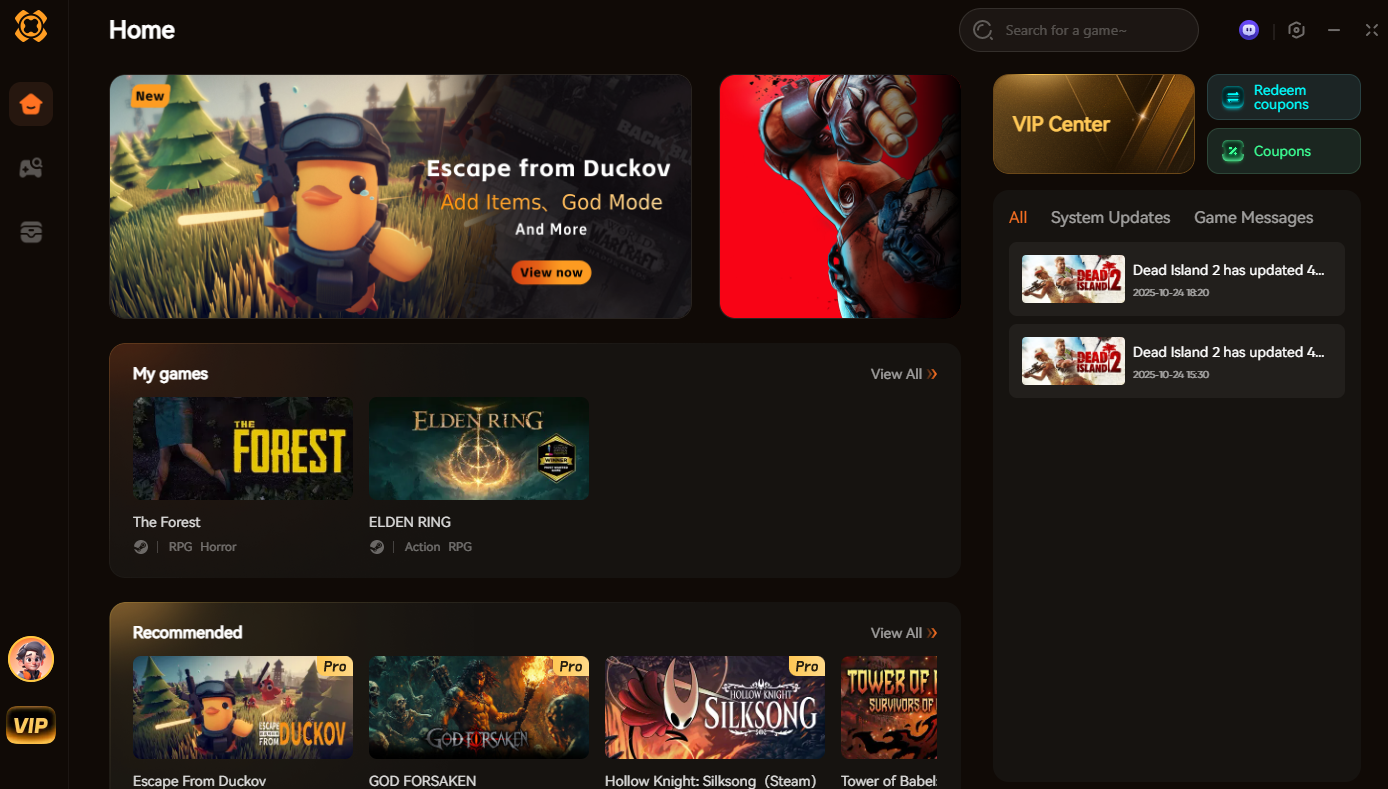
By leveraging XMODhub, you turn a tedious grind into a tailored experience, ensuring that your playthrough of Directive 8020 remains fun from start to finish.
To dive deeper, read our guide on Directive 8020 Best Choices Guide: The “Everyone Survives” Walkthrough
💬 Frequently Asked Questions
A: Shader compilation stutter is a known issue in many Unreal Engine 5 titles. The engine compiles shaders as you encounter new areas or effects. This is often unavoidable on the first playthrough of a level. The best practice is to play through the area once, and the stutter will typically disappear on subsequent visits as the shaders are cached.
A: Only if you have a top-tier card. Ray Tracing in Directive 8020 is extremely demanding. For the best performance-to-visual ratio, rely on Lumen’s software-based ray tracing rather than hardware-accelerated ray tracing, as it provides 90% of the visual quality for 50% of the performance cost.
A: Yes, Directive 8020 has native ultrawide support, but it can occasionally cause HUD elements to stretch. Check the game settings to ensure “HUD Scaling” is set to “Aspect Ratio Corrected” to avoid distortion.
A: Yes. If your PC cannot maintain a consistent 144 FPS, it is better to cap your framerate at 60 or 90 FPS using the NVIDIA Control Panel or RivaTuner Statistics Server. Consistent frame times are always better for player experience than high, fluctuating frame rates.
🌟 Final Verdict: Mastering Directive 8020
Directive 8020 is a technical marvel that demands a lot from your hardware, but with the right configuration, it is an incredibly rewarding experience. By moving away from “Ultra” presets and focusing on the specific UE5 settings that actually impact performance—like Lumen and Shadow Maps—you can achieve a smooth, cinematic experience that does the game’s atmosphere justice. Remember that your hardware is a tool, and fine-tuning it is just as much a part of the gaming experience as the gameplay itself.
If you ever find the game’s difficulty or resource management becoming a barrier to your enjoyment, remember that the XMODhub ecosystem is there to provide the freedom you deserve. With support for over 5,000+ single-player titles—ranging from massive open-world RPGs like Cyberpunk 2077 to intense action games like Anello di Elden—XMODhub ensures that you always remain in control of your gaming experience. Optimize your settings, master the engine, and enjoy Directive 8020 on your own terms.

Sono un giocatore appassionato e uno scrittore di XMODhub, che si dedica a fornire le ultime notizie, consigli e approfondimenti sui giochi.
Collegatevi con me:
Profilo LinkedIn
 Nancy Miller