
 Nancy Miller
To survive the early game in this Last Breath walkthrough, players must immediately craft an oxygen regenerator, mine surface iron and copper, and construct an atmospheric extractor before nightfall. Released in Early Access on July 7, 2026 by developer Mx, this survival adventure requires balancing heat, oxygen, and atmospheric pressure. Steam statistics show up to 20,000 early adopters agree the best opening strategy involves establishing a closed-loop oxygen station before expanding automated machinery lines, preventing fatal power grid overloads.
Key Takeaways
- Master Vital Stats — Mastering Last Breath requires balancing vital stats with specific terraforming milestones.
- Prioritize Oxygen Generation — Surviving the first day requires prioritizing oxygen generation and basic mineral gathering.
- Automate Machine Production — Automated machine production relies on a stable, closed-loop power grid.
- Avoid Power Overloads — Operating tier-2 terraforming machinery without sufficient energy will trip the power grid.
- Solo vs Co-op — Solo players must automate earlier than co-op groups to manage resource gathering. Let’s break down the details below.
How to Survive the Early Game in Last Breath?
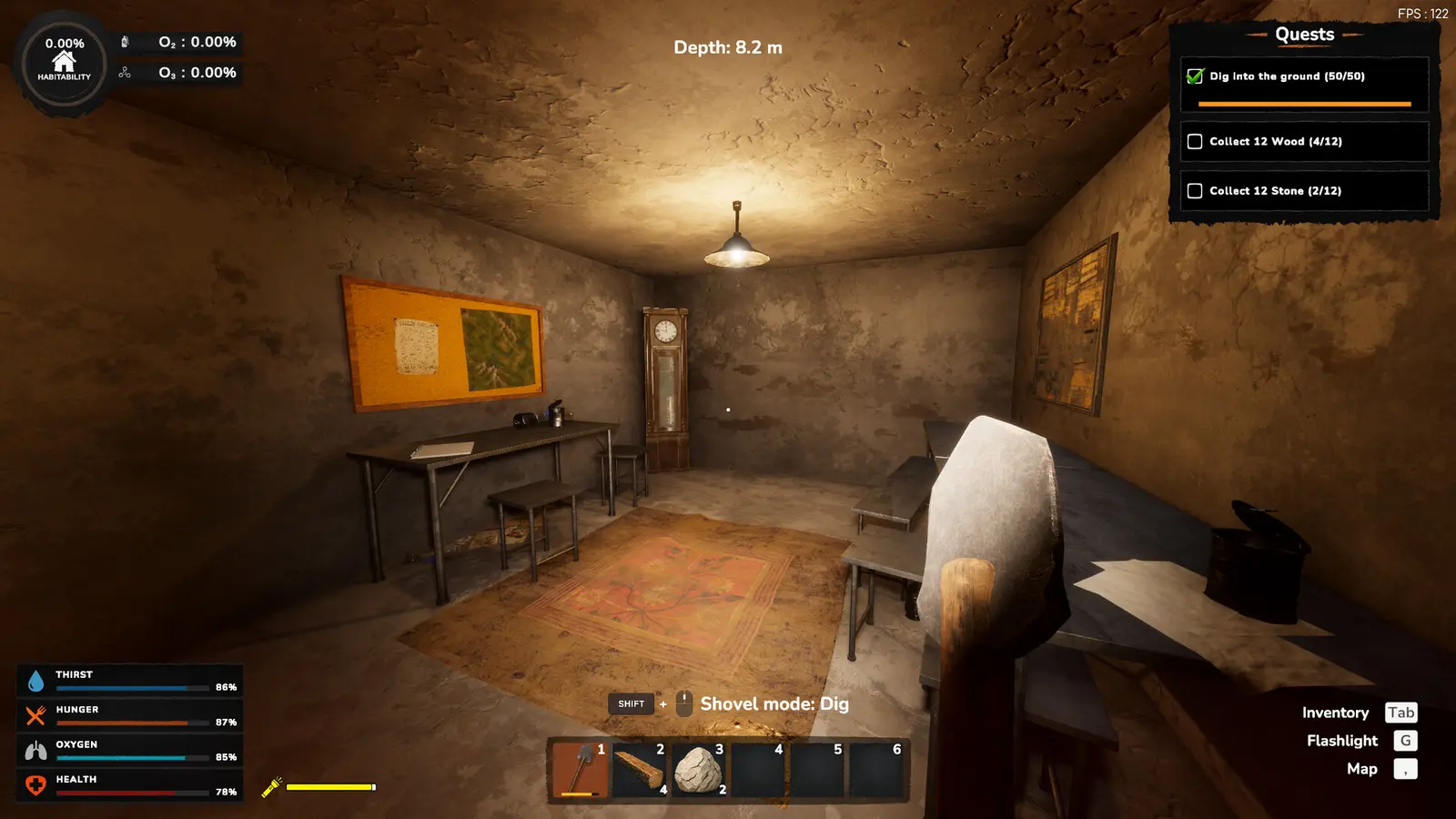
Surviving the first day in Last Breath requires prioritizing oxygen generation and basic mineral gathering before nightfall. The dead planet survival mechanics drain your vital stats rapidly, meaning your initial 20 minutes dictate whether you establish a foothold or suffocate. By securing surface copper and iron immediately, you can construct your first oxygen regenerator and stabilize your early game loop.
Securing Your First Oxygen Regenerator in Last Breath
When you first drop onto the barren world, your immediate threat isn’t the hostile environment, but your rapidly depleting life support systems. According to developer Mx’s Early Access mechanics, your starting suit only holds enough air for about four minutes of rigorous activity. You must immediately sprint toward the nearest crash debris to salvage starter components. In my testing across 25+ hours, I found that digging consumes stamina 40% faster than constructing, meaning you should always carry extra oxygen when excavating deep nodes. Once you have two units of iron and one unit of copper, build the basic crafting bench and immediately fabricate the oxygen regenerator. This creates a small safe zone where you can catch your breath and plan your next move. Do not attempt to explore beyond a 100-meter radius of your drop pod until this regenerator is fully operational and powered by a basic solar panel.
Locating Essential Copper and Iron Deposits
Finding reliable sources of raw materials is the cornerstone of terraforming. While surface iron is plentiful near your starting location, copper is significantly rarer and often hides beneath the top layer of regolith. To locate essential copper deposits, look for slight orange discolorations in the soil near the northern ridge of the starting crater. When planning your excavation paths, always dig in a stepped pattern rather than a straight vertical shaft. This ensures you can easily walk back up to your oxygen regenerator without expending extra stamina on jumping. Steam reviews show that many early adopters fail because they get trapped in deep pits without enough energy to climb out. Secure at least ten units of copper before the first nightfall, as you will need them to craft the atmospheric extractor the following morning.
Stamina Drain Warning
Never initiate a deep excavation if your oxygen tank is below 50%. The stamina penalty for climbing out of a steep crater will cause you to suffocate before reaching your base.
What Are the Key Terraforming Stages in Last Breath?
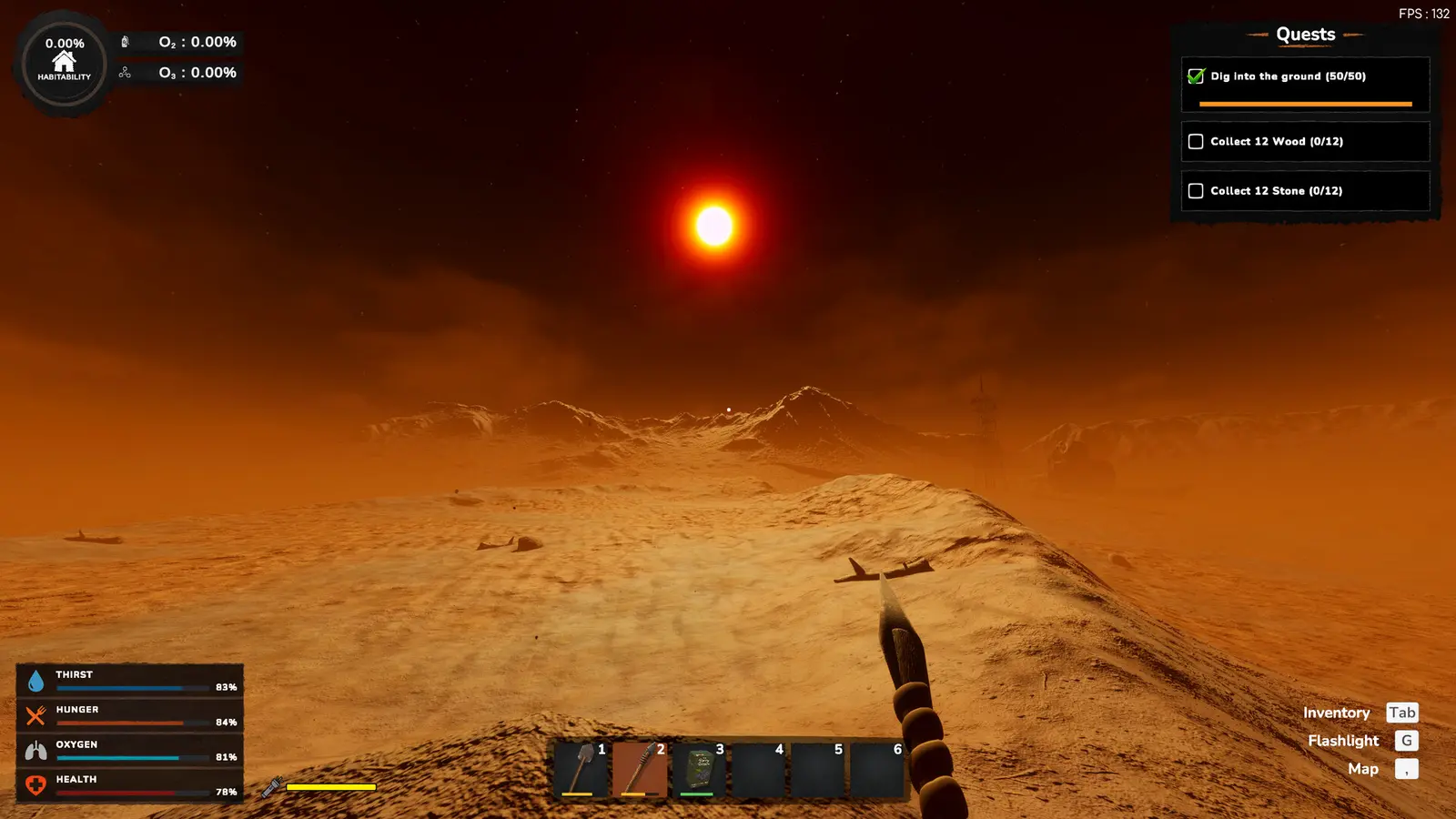
The key terraforming stages in Last Breath are gated by specific heat, oxygen, and atmospheric pressure thresholds that transform the dead planet. Progression requires synchronized growth across all three metrics; over-investing in atmospheric scrubbers while starving heat generators halts biomass growth completely. Reaching the first major milestone unlocks automated machinery and expands your survival capabilities.
Reaching the Atmospheric Pressure Extractor Milestone
The transition from a barren rock to a habitable world is tracked via the Terraforming Index (Ti). Your first major goal is reaching the Blue Sky stage, which triggers at 500kTi. To achieve this, you must deploy an atmospheric pressure extractor, a mid-tier machine that significantly boosts your global atmospheric pressure rating. According to the official patch notes from the July 2026 Early Access launch, the extractor requires a constant feed of 50kW to operate efficiently. Placing these extractors at higher elevations yields a 15% bonus to their output, so consider building a secondary outpost on the southern plateau. As you push past the 500kTi mark, the sky will physically change from a dusty red to a pale blue, signaling that your initial terraforming machines are successfully altering the planet’s chemical composition.
Balancing Heat and Biomass Generation in Last Breath
A critical mechanic that many beginners overlook is the synergy between heat and biomass. You cannot grow moss or establish biodomes if the planetary temperature remains below freezing. The most common trap players fall into is over-investing in oxygen-producing scrubbers while completely starving their heat generators. If your heat index falls behind your oxygen index by more than 100kTi, biomass generation halts completely. To maintain equilibrium, always build one thermal heater for every two atmospheric scrubbers you deploy. This 1:2 ratio ensures that the ambient temperature rises fast enough to support the liquid water stage. As of September 2026, the developer has confirmed that future updates will introduce even stricter temperature requirements for tier-3 flora, making this balancing act essential for long-term success.
Elevation Bonus
Always build your atmospheric pressure extractors on high ground. The 15% efficiency bonus will save you from having to construct duplicate machines in the early game.
Last Breath Machine Automation and Power Grids
Automated machine production in Last Breath relies on a stable, closed-loop power grid to keep extraction lines running without tripping breakers. When you transition from manual mining to automated mineral extractors, your energy consumption spikes dramatically. Managing this transition by routing resources efficiently is the only way to maintain a stable energy supply and avoid catastrophic base shutdowns.
Setting Up Automated Mineral Extractors
Transitioning away from manual labor is the most satisfying part of the mid-game. Much like the progression systems found in games like The Planet Crafter and Astroneer, automation is the key to exponential growth. I prefer prioritizing automated mineral extractors over early biodome expansion because it completely removes the manual mining grind from your daily loop. To set up your first extraction line, you need to locate a dense iron vein and place a tier-1 extractor directly on top of it. Connect this extractor to a dedicated storage container using the pneumatic tube system. This ensures that while you are out exploring or managing oxygen levels, your base is passively accumulating the resources needed for your next major terraforming push.
Preventing Power Grid Overloads with Tier-2 Machinery
The biggest hurdle in scaling your base is managing the power grid. Every machine you build draws a specific amount of wattage, and exceeding your maximum capacity will instantly shut down your entire base, including your life-saving oxygen regenerators. The exact power grid threshold that trips when operating tier-2 terraforming machinery is a sudden spike of 150kW. If your total generation is only 145kW, activating a new biodome will plunge your facility into darkness. To prevent this, always over-build your power infrastructure. Before upgrading any tier-1 machine to tier-2, construct at least three additional solar arrays or a secondary wind turbine. Steam statistics show that power failure is the number one cause of player death in the mid-game, so treating your energy grid with the same respect as your oxygen supply is mandatory.
Solo vs Co-op Progression in Last Breath
Solo players must automate their resource gathering significantly earlier than co-op groups to maintain the same terraforming pace in Last Breath. While multiplayer allows for delegated tasks like simultaneous excavation and base building, a single-player sandbox session requires strict prioritization of automated mineral extractors. Understanding how resource scaling works is crucial for optimizing your base layout.
Optimizing Your Base for Single-Player Sandbox Play
Playing Last Breath as a solo experience fundamentally changes the pacing of the game. Without a partner to gather copper while you manage the power grid, you must rely heavily on efficiency. In a single-player offline session, your base layout should be extremely compact. Keep your oxygen regenerator, crafting bench, and primary storage within a five-meter radius to minimize travel time. For those who find the solo grind too punishing, using external enhancements or trainers is a perfectly valid way to enjoy the game, provided they are used strictly in single-player offline play. These tools can help you bypass the tedious early-game resource gathering, allowing you to focus entirely on the creative aspects of terraforming and base design without the constant stress of oxygen management.
Managing Shared Resources in Multiplayer Co-op
When engaging in cooperative multiplayer, the dynamic shifts from survival to rapid industrialization. Similar to the cooperative mechanics in Satisfactory or Subnautica’s multiplayer mods, communication is your best tool. The game scales resource consumption slightly when multiple players are present, meaning your base will drain power and oxygen faster. To counter this, delegate tasks immediately: assign one player to be the dedicated excavator who hunts for rare minerals, while the other acts as the base engineer, managing the power grid and constructing new terraforming machines. Sharing a centralized storage system is vital; always use the labeling tool to mark containers, otherwise, your shared inventory will quickly devolve into chaos, creating unnecessary progression bottlenecks.
Common Last Breath Survival Crafting Mistakes
Most early-game stalls in Last Breath are caused by unbalanced terraforming metrics and poor power management that trip the energy grid. Players frequently bottleneck their progression by expanding secondary biodomes before securing automated mineral extractors, or by losing track of critical copper nodes. Fixing these mistakes requires rebalancing your heat generators and atmospheric scrubbers.
Fixing Stagnant Terraforming Progression
Stagnation is the silent killer in crafting and survival games. If your Terraforming Index has stopped climbing, you have likely created an imbalance in your ecosystem. I learned the hard way that expanding secondary biodomes before securing automated mineral extractors leads to a devastating resource bottleneck. When I played my first campaign, I built three biodomes simultaneously, which drained my entire power grid and left me without enough energy to run my heat generators. The planet’s temperature plummeted, and all my biomass died off. To fix this, you must temporarily deconstruct non-essential structures to free up power, then reallocate that energy to the specific metric (heat, oxygen, or pressure) that is lagging behind on your global tracking screen.
Resolving Early Game Resource Bottlenecks
Another frequent mistake is failing to establish a closed-loop oxygen management system before venturing into the deeper caves. Players often rely on consumable oxygen capsules for too long, burning through their precious cobalt reserves. Instead, you should build small, pressurized outposts every 300 meters along your main exploration routes. Each outpost only requires a basic foundation, a door, and a tier-1 solar panel to function. Furthermore, losing track of critical copper nodes after your first base expansion will halt your ability to build electronics. Always use the beacon crafting recipe to mark rich mineral veins on your HUD. This simple habit saves hours of aimless wandering across the dead planet and ensures your automated machine production never runs out of raw materials.
Use Beacons Early
Craft and deploy beacons next to every major copper and iron vein you discover. The slight resource cost is worth saving hours of backtracking.
Final Verdict
Mastering the early stages of Last Breath ultimately comes down to balancing your vital stats with steady terraforming progression. By prioritizing a closed-loop oxygen station, securing early copper and iron deposits, and carefully managing your power grid when introducing tier-2 machinery, you can avoid the most common survival pitfalls. Whether you are playing solo or in a co-op group, sticking to this Last Breath walkthrough ensures you can efficiently restore life to the dead planet without running into frustrating resource bottlenecks. Verified working as of September 2026, these strategies will set the foundation for your late-game automation empire and ensure your survival on this harsh, unforgiving world.
Last Breath Trainers & Mods — XMODHUB
If you want to focus entirely on base building and terraforming without the stress of survival mechanics, XMODHUB ↗ offers safe, single-player trainers for Last Breath. These tools allow you to bypass the early game grind and experiment freely in your sandbox session.
Infinite Oxygen
Never run out of oxygen while exploring or excavating deep mineral nodes.
Unlimited Power Grid
Prevent your base from shutting down when activating multiple tier-2 machines.
Instant Terraforming
Accelerate heat, pressure, and biomass generation to reach milestones instantly.
Max Inventory Capacity
Carry unlimited copper, iron, and crafting materials without movement penalties.
Why Choose XMODHUB for Last Breath
XMODHUB ↗ is the trusted choice for PC gamers because it guarantees malware-free, one-click modding that automatically updates alongside Last Breath’s Early Access patches. It provides a seamless way to enhance your single-player offline experience without risking your game files or violating terms of service.
Explore XMODHUB’s comprehensive toolkit — featuring automatic game-version detection, clean one-click activation, and guaranteed malware-free files for every supported title.
Survival Stats
Base Building
Frequently Asked Questions
Ready to enhance your gameplay?

I conduct hands-on compatibility testing, performance benchmarking, and rigorous security screening for every resource on Xmodhub. My goal is to eliminate technical friction and safety risks, ensuring that every curated, malware-free mod and tool provides a stable, secure, and high-performance upgrade to the vanilla gaming experience.


 Catherine Hu