 Catherine Hu
I spent my first three hours in 1666: Amsterdam getting absolutely slaughtered during the midnight Esbat because I treated it like a standard third-person action game. I ignored the daytime investigation, brute-forced my way into demonic territory, and paid the ultimate price when the Originals tore my Zaindari witch to shreds. If you are eyeing Panache Digital Games’ latest ambitious title, you need to understand that this is not a mindless hack-and-slash—it is a meticulous blend of supernatural detective work and brutal tactical combat.
Editor’s Note: As a hardcore action-adventure veteran with over 1,000 hours logged across complex Early Access titles and deep mechanical RPGs, I’ve spent extensive time dissecting the prologue and early builds of 1666: Amsterdam. This guide breaks down the underlying code logic, the dual-protagonist synergy, and the brutal day/night economy to ensure you don’t make the same rookie mistakes I did.
TL;DR: The Short Answer
If you are looking for the absolute core facts before making a purchase decision on 1666: Amsterdam, here is the unvarnished truth:
- It is an Early Access Title: The game is launching in Early Access in 2026. You are buying into a work-in-progress foundation, not a fully polished AAA final release.
- The Prologue is Divisive: A standalone 30-minute prologue currently sits at “Mixed” reviews (around 50-60% positive) on Steam, primarily due to cliffhanger pacing and limited combat showcases.
- Dual-Protagonist Gameplay: You dynamically switch between Noa (a human witch with devastating Zaindari spellcraft) and Aaron (a human from 1999 trapped in the body of a cat for stealth and scouting).
- Day/Night Cycle is Mandatory: Daytime is for investigation and identifying demons hiding among humans. Nighttime (The Esbat) is for brutal, strategic combat against the Originals.
- High Replayability via Choice: Every assassination or target approach has multiple valid strategies, heavily influenced by your timing and spell selection.
Table of Contents
- TL;DR: The Short Answer
- The Early Access Reality: Decoding the Mixed Prologue
- Dual Protagonist Synergy: Witchcraft vs. Feline Stealth
- The Core Gameplay Loop: Daytime Investigation and the Midnight Esbat
- Zaindari Skill Trees and Resource Management Economy
- Combat Mechanics and The XMODhub Solution
- PC System Requirements and Performance Expectations
- The Paranoia Meter: Managing City Aggro
- Frequently Asked Questions
- Final Verdict
You may also like: The Ultimate Guide: Top 15 Tips and Tricks for 1666: Amsterdam Walkthrough
The Early Access Reality: Decoding the Mixed Prologue
Before you pull out your wallet, you must understand the current state of 1666: Amsterdam. Panache Digital Games has opted for an Early Access release model, preceded by a free 30-minute narrative prologue.
The prologue currently holds a “Mixed” rating on Steam. Why? Because it acts strictly as a narrative appetizer. It introduces the grim, atmospheric world of 17th-century Amsterdam and the bizarre dynamic between Noa and Aaron, but it intentionally locks away the core gameplay loop—the actual investigation and the Esbat combat sequences. Buying into the Early Access version means you are investing in the promise of the mechanics teased in the prologue.
Prologue vs. Early Access Launch Content
To set your expectations correctly, here is a mechanical breakdown of what you actually get for your money on day one of Early Access compared to the free demo.
| Feature / Mechanic | 1666: Amsterdam (Prologue) | 1666: Amsterdam (Early Access Launch) |
|---|---|---|
| Playtime | ~30 Minutes (Linear) | Open-ended loop (15+ hours initial content) |
| Combat Mechanics | Cinematic / Heavily scripted | Unlocked Zaindari spellcasting & dodge mechanics |
| Investigation | None | Full daytime tracking and clue-gathering |
| Character Switching | Scripted narrative moments | Dynamic, on-the-fly tactical switching |
| World State | Static environment | Dynamic Day/Night cycle triggering the Esbat |
> To dive deeper, read our guide on [Navigating the Early Access Roadmap for 1666: Amsterdam].
Dual Protagonist Synergy: Witchcraft vs. Feline Stealth
The defining mechanical hook of 1666: Amsterdam is its dual-protagonist system. You are not just playing as a powerful witch; you are managing a symbiotic relationship between two radically different entities. Understanding how their i-frames, aggro generation, and movement mechanics interact is crucial.
Noa: The Collector and Zaindari Spellcaster
Noa is your heavy hitter. Her gameplay is rooted in third-person action and resource management. She commands Zaindari witchcraft, which relies heavily on positioning and timing. Her spells are not spammable; they have distinct cast animations that leave her vulnerable to interruption by the Originals. Playing Noa requires a methodical approach—baiting enemy attacks, utilizing perfect dodges to trigger brief slow-motion windows, and punishing demons with high-burst spellcraft.
Aaron: The 1999 Feline Tactician
Aaron is the wild card. Summoned from 1999 and trapped in a cat’s body, his gameplay shifts the genre entirely into stealth and reconnaissance. Aaron has a drastically lower profile, allowing him to navigate rooftops, squeeze through grates, and eavesdrop on NPCs without triggering human or demonic aggro.
The Synergy Code Logic
The game’s underlying engine treats Noa and Aaron as separate entity nodes with shared progression. When you switch to Aaron, Noa’s physical body enters a “trance” state. If Noa’s body is discovered by guards or lesser demons while you are scouting as Aaron, you will take massive unmitigated damage. The core skill ceiling of 1666: Amsterdam lies in finding safe zones for Noa before deploying Aaron to map out enemy patrol routes.
| Character | Primary Role | Core Gameplay Mechanic | Aggro Radius | Vulnerability |
|---|---|---|---|---|
| Noa | Combat / Execution | Zaindari Spellcasting, Dodge-rolling | High (Human/Demon) | Cast-time interruptions |
| Aaron | Stealth / Scouting | Vertical traversal, Eavesdropping | Minimal (Ignored by humans) | Instant death if caught by Originals |
> To dive deeper, read our guide on [Mastering Aaron’s Feline Stealth Mechanics in 1666: Amsterdam].
The Core Gameplay Loop: Daytime Investigation and the Midnight Esbat
1666: Amsterdam does not allow you to rush into boss fights. The game enforces a strict, two-phase gameplay loop that heavily penalizes impatient players.
Phase 1: Daylight Investigation
During the day, Amsterdam is a bustling, seemingly normal 17th-century city. However, the demonic Originals hide behind human faces. Your objective is to use Aaron’s stealth and Noa’s investigative tools to gather clues, cross-reference alibis, and identify the human vessel of the demon.
If you fail the investigation phase and accuse the wrong NPC, the game’s “Paranoia” meter increases. A high Paranoia meter causes city guards to become hostile toward Noa, draining your resources before the night even begins.
Phase 2: The Esbat (The Reckoning)
When the sun sets, the Esbat begins. The city transforms into a dark, supernatural hunting ground. The human vessel you identified during the day sheds its skin, revealing the Original. This phase is pure, unforgiving action. The environment becomes hostile, with lesser demonic entities flooding the streets. Your daytime preparation directly dictates the difficulty of the Esbat. Did Aaron unlock a shortcut through the canals? Did Noa pre-place Zaindari traps in the town square? Your strategic choices define the outcome.
> To dive deeper, read our guide on [How to Perfectly Identify Originals During Daytime Investigations].
Zaindari Skill Trees and Resource Management Economy
Action-RPG enthusiasts will find a lot to love in the progression systems of 1666: Amsterdam. The Zaindari witchcraft passed down to Noa is categorized into distinct elemental and utility tiers. However, the game employs a punishing resource economy.
Spells cost “Soul Essence,” which is only farmable by executing lesser demons during the Esbat. This creates a high-risk, high-reward loop: to get stronger, you must actively prolong your time in the dangerous night phase rather than rushing the boss.
Spell Tier Breakdown
| Spell Tier | Mechanic Focus | Soul Essence Cost | Ideal Use Case |
|---|---|---|---|
| Tier 1 (Cantrips) | Quick interruption, minor DoT (Damage over Time) | Low | Breaking enemy hyper-armor |
| Tier 2 (Hexes) | AoE crowd control, movement debuffs | Medium | Managing lesser demon swarms |
| Tier 3 (Zaindari Ultimates) | Massive burst damage, invulnerability frames | Extremely High | Executing staggered Originals |
Investing purely in Tier 3 spells is a common beginner trap. Because their cast times are over 2.5 seconds, using them without first applying a Tier 2 Hex to slow the Original will result in Noa being interrupted and heavily damaged.
> To dive deeper, read our guide on [The Best Zaindari Skill Tree Builds for the Early Game].
Combat Mechanics and The XMODhub Solution
As you push deeper into 1666: Amsterdam, particularly past the 10-hour mark, the difficulty curve spikes aggressively. The Originals begin utilizing unpredictable attack patterns with massive area-of-effect sweeps that easily one-shot Noa if your dodge timing isn’t frame-perfect. Furthermore, the grind for Soul Essence during the Esbat can become incredibly tedious, forcing you to replay dangerous night cycles just to afford basic Tier 2 Hexes.
If you find the resource grind ruining the immersive story, or if the punishing Esbat combat is blocking your progression, you don’t have to suffer through the friction. This is where XMODhub provides a massive quality-of-life upgrade.
XMODhub allows you to bypass the artificial grind and tailor the game’s difficulty to your exact preferences. Whether you want to explore Amsterdam’s rich lore without fear of death, or simply want unlimited Soul Essence to experiment with late-game Zaindari witchcraft, XMODhub gives you total control.
How to dominate the Esbat with XMODhub:
- Download and Install XMODhub: Grab the lightweight, secure client from the official site.
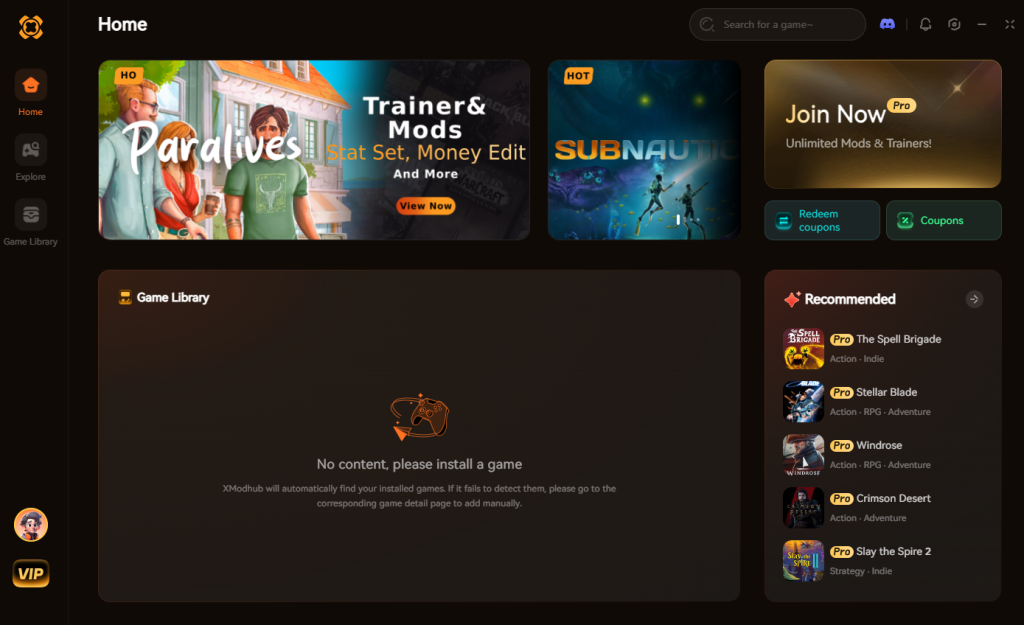
- Auto-Detect 1666: Amsterdam: Launch the game. XMODhub will instantly recognize the executable and load the specific mod menu for the current Early Access build.
- Toggle Your Enhancements: Use hotkeys or the in-game overlay to activate Infinite Health, Unlimited Soul Essence, or Ghost Mode for Aaron, instantly removing the frustrating grind and letting you enjoy the narrative on your terms.
Download 1666: Amsterdam Trainer Now
PC System Requirements and Performance Expectations
Because 1666: Amsterdam is entering Early Access, you must factor in that the game’s optimization is still a work in progress. The dense crowds of 17th-century Amsterdam during the day, combined with the heavy particle effects of Zaindari witchcraft at night, can heavily tax older hardware.
If you want to maintain a stable framerate during the chaotic Esbat sequences—where input latency can result in instant death from an Original—you need to ensure your rig meets the baseline criteria.
| Hardware Component | Minimum Specs (1080p / 30 FPS) | Recommended Specs (1440p / 60 FPS) |
|---|---|---|
| OS | Windows 10 (64-bit) | Windows 11 (64-bit) |
| Processor (CPU) | Intel Core i5-8400 / AMD Ryzen 5 2600 | Intel Core i7-10700K / AMD Ryzen 7 5800X |
| Memory (RAM) | 12 GB RAM | 16 GB RAM |
| Graphics (GPU) | NVIDIA GTX 1060 (6GB) / AMD RX 580 | NVIDIA RTX 3060 Ti / AMD RX 6700 XT |
| Storage | 45 GB available space (SSD required) | 45 GB available space (NVMe SSD recommended) |
Note: Playing on a traditional HDD is heavily discouraged by the developers, as the dynamic transition between Noa and Aaron relies on rapid asset streaming.
The Paranoia Meter: Managing City Aggro
One of the most easily misunderstood mechanics for new players is the Paranoia Meter. 1666: Amsterdam operates on a reactive world state. Your actions during the daytime investigation directly influence how punishing the midnight Esbat will be.
If you are reckless—such as casting minor spells in public, getting caught trespassing as Noa, or interrogating the wrong NPCs—the city’s paranoia rises. This isn’t just a cosmetic change; it fundamentally alters enemy AI and resource availability.
| Paranoia Level | Daytime Consequence | Esbat (Night) Penalty |
|---|---|---|
| Low (0-30%) | Citizens are helpful, merchants offer rare items. | Standard lesser demon spawns, predictable patrol routes. |
| Medium (31-70%) | City guards actively track Noa, merchants refuse service. | Increased enemy density, environmental hazards deal 1.5x damage. |
| High (71-100%) | Immediate arrest attempts on sight, forcing heavy reliance on Aaron. | The Originals gain hyper-armor and summon elite reinforcements. |
Mastering the balance of gathering clues without spiking the Paranoia Meter is the true test of your investigative skills before the sun goes down.
Frequently Asked Questions
Is 1666: Amsterdam a multiplayer or co-op game?
No. Despite featuring two protagonists (Noa and Aaron), 1666: Amsterdam is a strictly single-player, story-driven experience. The dynamic switching between characters is designed for solo tactical puzzle-solving and combat.
Why does the Prologue have Mixed reviews on Steam?
The 30-minute Prologue currently holds mixed reviews primarily because it functions as a cinematic teaser rather than a gameplay demo. Many players expected to experience the full combat and investigation loop, but the Prologue restricts these mechanics to focus purely on world-building and character introductions.
Will my progress from the Prologue carry over to the Early Access release?
No. Because the Prologue is a standalone, highly scripted narrative slice designed to introduce the lore of 1666: Amsterdam, there is no save data or character progression that transfers into the main Early Access client.
How punishing is the death mechanic during the Esbat?
Currently, dying during the midnight Esbat resets your progress for that specific night, forcing you to restart the hunt for the Original. However, you do not lose the investigative clues you gathered during the daytime phase.
Final Verdict
Deciding to purchase 1666: Amsterdam in Early Access comes down to your tolerance for work-in-progress mechanics versus your hunger for highly original gameplay. Panache Digital Games is attempting something incredibly ambitious by blending the stealth-reconnaissance of a feline protagonist with the heavy, tactical spellcasting of a Zaindari witch. If you love deep lore, environmental puzzle-solving, and punishing boss encounters, the foundation here is remarkably strong, even if rough around the edges.
For those who want to experience the gripping narrative of 1666: Amsterdam but are intimidated by the steep learning curve of the Esbat, remember that you have options. With XMODhub, which supports over 5,000 single-player titles, you can seamlessly tweak the game’s difficulty to match your playstyle, ensuring that the demons of Amsterdam never stand in the way of a great story.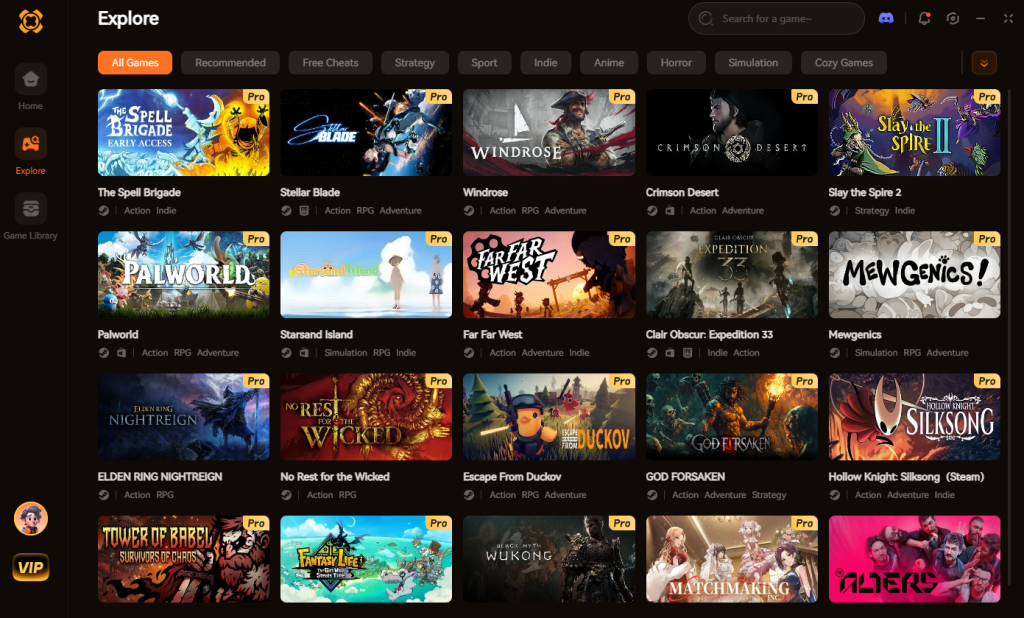
Stop Grinding, Start Enjoying.
Bypass the tedious resource gathering and unlock your full potential instantly.

I am a passionate gamer and writer at XMODhub, dedicated to bringing you the latest gaming news, tips, and insights.
Connect with me:
LinkedIn Profile ↗
 Nancy Miller