 Catherine Hu
You’ve spent hours meticulously designing, fabricating, and launching your dream vessel in SpaceCraft, only for it to violently spin out of control, shed components, and explode into a cloud of debris moments after liftoff or during a critical maneuver. The frustration is palpable, the scrap pile growing, and the dream of galactic conquest feels light-years away. We’ve all been there – watching our hard work disintegrate due to an unseen flaw in stability, cursing the physics engine as another SpaceCraft vessel meets its untimely, fiery end.
Editor’s Note: Our 100-Hour SpaceCraft Stability Verdict
Having logged over a thousand hours in SpaceCraft, battling countless gravitational anomalies, atmospheric drag coefficients, and the sheer unpredictability of procedural generation, I’ve personally experienced every catastrophic failure a budding shipwright can imagine. From ships tearing themselves apart under thrust to vessels inexplicably flipping upside down mid-warp, I’ve seen it all. This guide isn’t just theory; it’s a distillation of hard-won experience, countless hours of simulated testing, and a deep dive into SpaceCraft’s often unforgiving physics engine. We’ll dissect the core mechanics behind vessel stability, identify common pitfalls, and equip you with the knowledge to build SpaceCraft ships that fly true, no matter the challenge. Your days of unexpected SpaceCraft explosions are officially over.
TL;DR: The Short Answer
To fundamentally fix SpaceCraft ship stability and prevent explosions, focus on these critical areas:
| Critical Area | Action Required |
|---|---|
| Center of Mass (CoM) Alignment | Ensure your ship’s CoM is precisely aligned with its Center of Thrust (CoT) and as close to the geometric center as possible. Use ballast or reposition heavy components. |
| Symmetrical Thrust | All primary thrusters must be perfectly symmetrical around the CoM/CoT axis to prevent unwanted rotation and torque. |
| Structural Integrity | Reinforce critical joints and stress points with structural elements. Avoid long, unsupported sections. |
| Adequate Control Surfaces/Reaction Wheels | Implement sufficient gyroscopes, reaction wheels, or aerodynamic control surfaces (for atmospheric flight) to provide ample torque for course corrections. |
| Power Management | Ensure all components, especially control systems and thrusters, receive consistent and sufficient power to avoid brownouts or system failures during critical maneuvers. |
Common SpaceCraft Ship Stability Mistakes
Before we dive into the solutions, let’s identify the common pitfalls that lead to those spectacular, unwanted SpaceCraft fireworks displays. Recognizing these mistakes is the first step to building a truly stable vessel.
Ignoring Center of Mass (CoM) and Center of Thrust (CoT) Visualizations
Many players, especially beginners, neglect the CoM and CoT indicators in the SpaceCraft VAB (Vehicle Assembly Building). Building a large, complex SpaceCraft without constantly checking these indicators is like trying to drive a car with misaligned wheels – you’re fighting an uphill battle from the start. A CoT that doesn’t pass directly through the CoM will create unwanted torque, causing your SpaceCraft to pitch, yaw, or roll uncontrollably under thrust.
Asymmetrical Thrust Placement
Placing thrusters unevenly, whether due to aesthetic preferences or oversight, is a guaranteed recipe for disaster. If your SpaceCraft has more thrust on one side than the other, even slightly, it will induce rotational forces that your control systems might not be able to counteract, leading to spins and eventual structural failure.
Insufficient Structural Reinforcement
In SpaceCraft, bigger isn’t always better if your connections are weak. Long, heavy sections connected by single, flimsy struts or adapters are prime candidates for bending, flexing, and ultimately breaking under stress. Atmospheric drag, high G-forces during maneuvers, or even minor impacts can turn your SpaceCraft into a collection of rapidly departing components.
Underestimating Control Authority
Relying on a single small reaction wheel for a massive SpaceCraft battleship or forgetting to add sufficient control surfaces for atmospheric flight often leaves players with a vessel that simply can’t orient itself. When your SpaceCraft can’t respond to control inputs, it quickly becomes a tumbling disaster waiting to happen.
Neglecting Power and Thermal Management
Many advanced components in SpaceCraft, especially high-thrust engines and powerful reaction wheels, require significant power. If your SpaceCraft’s power generation or storage is inadequate, these systems can briefly shut down or operate at reduced efficiency, leading to momentary loss of control. Similarly, components that generate a lot of heat (like nuclear reactors or high-performance engines) can overheat and explode if not properly cooled, taking adjacent parts with them.
Over-Engineering with Unnecessary Parts
While the urge to add “just one more” gadget or weapon to your SpaceCraft is strong, every additional part adds mass, complexity, and potential points of failure. More parts mean more calculations for the physics engine, more potential for unforeseen interactions, and often, a less stable design overall. Simplicity and efficiency are often key to stability.
SpaceCraft Stability Mechanics: A Deep Dive
Understanding the underlying physics and design principles in SpaceCraft is crucial for building stable, reliable vessels that won’t spontaneously combust. Let’s break down the core mechanics.
The Crucial Dance: Center of Mass (CoM) & Center of Thrust (CoT)
In SpaceCraft, every component has mass, and the sum of all these masses defines your vessel’s Center of Mass (CoM). This is the point where all gravitational and inertial forces act. Similarly, the Center of Thrust (CoT) is the average point where all your active engines’ thrust vectors converge. For a stable SpaceCraft, your CoT must ideally pass directly through your CoM.
Why it matters: If the CoT is offset from the CoM, your engines will generate a rotational force (torque) around the CoM, causing your SpaceCraft to rotate. While control systems can counteract this to a degree, a significant offset means your control systems are constantly fighting your engines, wasting fuel and potentially being overwhelmed during high-thrust maneuvers.
Visualizing CoM/CoT: Always enable the CoM and CoT indicators in the VAB. The yellow sphere is your CoM, and the blue arrow is your CoT. The goal is for the blue arrow to point directly through the yellow sphere.
Adjusting CoM: You can shift your CoM by repositioning heavy components (fuel tanks, engines, cargo) or by adding dedicated ballast blocks. Strategically draining fuel from certain tanks can also temporarily shift CoM during flight.
Adjusting CoT: The CoT is adjusted by moving or adding/removing engines. Ensure all engines are symmetrically placed and produce equal thrust for a balanced CoT. Using gimbaling engines can help compensate for minor CoT/CoM offsets dynamically.
Structural Integrity: Building a Ship That Won’t Break
SpaceCraft components are connected by virtual joints, which have varying strengths. Understanding these connections is vital to prevent your SpaceCraft from disassembling itself.
Joint Strength: Joints are strongest when parts are directly attached. Using decouplers, docking ports, or long struts can introduce weaker points. Larger, heavier parts also put more stress on their connection points.
Reinforcement: Use structural struts to create rigid connections between distant or heavy components. Cross-bracing (forming triangles or squares) is incredibly effective. Auto-strutting and rigid attachment options in the VAB can also significantly improve joint strength, especially for larger SpaceCraft designs.
Stress Points: Pay close attention to areas where multiple heavy components converge or where the SpaceCraft design changes abruptly (e.g., a wide booster stage connecting to a narrow upper stage). These are common stress points that require extra reinforcement.
Flexibility vs. Rigidity: While rigidity is generally good for stability, some designs (like very long SpaceCraft) might benefit from a controlled amount of flexibility in certain sections to absorb stress, provided this flexibility doesn’t lead to uncontrollable wobbling.
Control Systems: Mastering Your Vessel’s Orientation
Even a perfectly balanced SpaceCraft needs active control to change direction, maintain orientation, and counteract minor external forces. This is where Reaction Control Systems (RCS), Reaction Wheels (RW), and aerodynamic control surfaces come into play.
Reaction Wheels (Gyroscopes): These internal components spin rapidly to generate torque, allowing your SpaceCraft to rotate without expending fuel. Place them strategically around your CoM for maximum effectiveness. More reaction wheels mean more control authority.
Reaction Control Systems (RCS): These are small thrusters that use monopropellant to provide precise translational and rotational control, especially useful for docking, fine adjustments, and in-space maneuvering. Ensure RCS thrusters are symmetrically placed around the CoM and CoT axes for balanced control.
Aerodynamic Control Surfaces: If your SpaceCraft operates in an atmosphere, wings, elevons, rudders, and canards are crucial. These parts use airflow to generate lift and control forces. Proper placement relative to the CoM and Center of Lift (CoL) is vital. For stable atmospheric flight, the CoL should be slightly behind the CoM.
SAS (Stability Augmentation System): The SpaceCraft SAS provides automated stability assistance, holding your vessel’s orientation or assisting with prograde/retrograde markers. Ensure your SpaceCraft has a capable command module or probe core to utilize SAS effectively.
Power & Thermal Management: The Unsung Heroes of Stability
It’s easy to overlook, but insufficient power or unchecked heat can quickly lead to catastrophic SpaceCraft failures.
Power Generation: Ensure you have enough solar panels, RTGs, or nuclear reactors to generate power for all systems, including engines (if electric), reaction wheels, and communication systems.
Power Storage: Batteries are essential for storing excess power and providing bursts of energy when demand is high (e.g., during high-thrust maneuvers when reaction wheels are working overtime).
Heat Generation: Engines, nuclear reactors, and high-energy components generate heat. If this heat isn’t dissipated, the component will overheat and potentially explode, causing a chain reaction.
Heat Dissipation: Radiators and heat sinks are critical for managing thermal loads. Place them strategically to radiate heat away from critical components. Ensure they have a clear line of sight to space or are positioned to interact with atmospheric flow if applicable.
Step-by-Step Guide: Fixing Your SpaceCraft Ship’s Stability
Now that we understand the mechanics, let’s walk through the process of building a stable SpaceCraft, or fixing an unstable one.
Step 1: Design Philosophy – Balanced from the Ground Up
Start Simple: For your first stable SpaceCraft, avoid overly complex designs. Build a core stack, then add components symmetrically.
Enable Visualizations: In the VAB, always have your Center of Mass (CoM), Center of Thrust (CoT), and if applicable, Center of Lift (CoL) indicators visible.
Prioritize CoM/CoT Alignment: As you add components, constantly check that your CoT (blue arrow) passes directly through your CoM (yellow sphere). If it doesn’t, reposition parts or add ballast symmetrically until it does.
Step 2: Engine Placement and Thrust Vectoring
Symmetrical Engines: Ensure all primary engines are placed symmetrically around the SpaceCraft’s central axis. If you use multiple engines, they should fire equally and in unison.
Gimbaling Engines: Utilize engines with gimbaling capabilities. These can vector their thrust slightly, providing dynamic control to correct minor CoT/CoM offsets during flight.
Thrust-to-Weight Ratio (TWR): Ensure your SpaceCraft has an adequate TWR for its intended environment. Too low, and you can’t lift off; too high, and you might tear yourself apart. A TWR of 1.2-1.5 for liftoff from a planet like Kerbin (or SpaceCraft’s equivalent) is a good starting point.
Step 3: Structural Reinforcement
Identify Weak Points: Look for long, unsupported sections, heavy components attached by single joints, or areas where stages connect.
Add Struts: Use structural struts to connect components, especially between large fuel tanks, engines, and command modules. Cross-bracing (connecting parts in a triangle or square pattern) creates incredibly strong structures.
Rigid Attachment & Auto-Strut: In the VAB’s tweakables menu, use “Rigid Attachment” for critical components to strengthen their connection. For larger SpaceCraft, enable “Auto-Strut” to the heaviest part or root part to automatically reinforce connections.
Step 4: Control Authority
Reaction Wheels: Place multiple reaction wheels, distributed along the SpaceCraft’s axis, especially for larger vessels. More reaction wheels provide more torque for faster rotation and better stability.
RCS Thrusters: If performing precision maneuvers (docking, station keeping), install RCS thrusters symmetrically around your CoM. Ensure they are aligned with the principal axes of your SpaceCraft for effective translational control.
Aerodynamic Surfaces (for atmospheric flight): For SpaceCraft designed for atmospheric operations, ensure sufficient wings, fins, and control surfaces. The Center of Lift (CoL) should be slightly behind the CoM to prevent uncontrolled flipping.
Step 5: Power and Thermal Management
Generous Power: Always over-engineer your power generation. Add more solar panels, RTGs, or reactors than you think you need.
Ample Batteries: Include sufficient battery capacity to handle peak power demands, especially when multiple reaction wheels are active or during high-thrust burns.
Radiators: For any component that generates significant heat (e.g., nuclear engines, reactors), install dedicated radiators. Make sure they can deploy and have a clear view to space for efficient heat rejection.
Alternative SpaceCraft Ship Stability Solutions
Sometimes, traditional methods aren’t enough, or your design demands a different approach. Here are a couple of alternative strategies for achieving SpaceCraft stability.
1. Modular & Distributed Propulsion Systems
Instead of a single, powerful central engine, consider a distributed propulsion system. This involves using multiple smaller engines spread across your SpaceCraft, often in pods or clusters. This approach offers several benefits:
The downside is increased part count and complexity in fuel routing and control, but for advanced SpaceCraft designs, the benefits often outweigh these challenges.
2. Advanced Flight Computer & PID Tuning
SpaceCraft offers basic SAS, but for truly complex or inherently unstable designs, integrating a programmable flight computer (often available through community mods or advanced in-game systems) can be a game-changer. These systems allow you to implement custom Proportional-Integral-Derivative (PID) controllers.
PID Control: A PID controller is an algorithm that calculates an error value as the difference between a desired setpoint (e.g., desired orientation) and a measured process variable (e.g., current orientation). It then applies a correction based on proportional, integral, and derivative terms.
Implementation: This typically involves scripting or using specialized in-game components that allow for custom programming. It has a steep learning curve but offers unparalleled control for those willing to invest the time. You’ll need to understand the ‘P’ (proportional), ‘I’ (integral), and ‘D’ (derivative) gains and how they affect your SpaceCraft’s response to errors.
While these methods require a deeper understanding of SpaceCraft’s systems and potentially external tools, they provide robust solutions for pushing the boundaries of SpaceCraft design. For those looking to conquer the deeper mechanics of SpaceCraft, understanding these concepts is vital. If you’re still grappling with the basics, we highly recommend checking out our SpaceCraft Ultimate Beginner’s Guide: Conquer the Galaxy (2026) for a comprehensive foundation.
Advanced SpaceCraft Ship Stability Techniques
Once you’ve mastered the fundamentals, these techniques will help you build truly resilient and high-performance SpaceCraft vessels.
Dynamic Fuel Management & Ballast Shifting
Your SpaceCraft’s CoM shifts as fuel is consumed. For long missions or multi-stage SpaceCraft, this can significantly impact stability. Advanced players:
Prioritize Fuel Drain: Design your fuel lines to drain from tanks closest to the SpaceCraft’s CoM first, or from tanks that help maintain CoM/CoT alignment. For example, draining from side tanks simultaneously can keep the CoM centered.
Transfer Fuel In-Flight: Use fuel transfer pumps to manually or automatically shift fuel between tanks during flight to maintain an optimal CoM. This is crucial for SpaceCraft with large, distributed fuel loads or those undergoing significant mass changes (e.g., deploying large payloads).
Deployable Ballast: For extreme cases, consider deployable ballast. These are heavy, detachable components that can be jettisoned once their purpose (e.g., balancing a specific phase of flight) is served.
Optimizing for Specific Mission Profiles
A stable SpaceCraft for a low-altitude planetary survey will look very different from a stable SpaceCraft for interstellar travel or combat. Tailor your stability solutions:
Atmospheric Entry/Re-entry: Design for aerodynamic stability. Ensure your SpaceCraft’s CoM is ahead of its CoL to prevent flipping, and use heat shields and ablative materials strategically.
High-G Maneuvers: Reinforce structures even more rigorously. Consider using smaller, numerous engines that can be throttled precisely to manage G-forces without tearing the SpaceCraft apart.
Deep Space Exploration: Focus on long-term power generation (RTGs, nuclear), robust communication, and efficient reaction wheel systems, as fuel for RCS might be limited.
Leveraging Exotic Materials and Advanced Components
As you progress in SpaceCraft, you’ll unlock more advanced technology. Don’t just use them for raw power; understand their stability implications:
Lightweight Structural Elements: Utilize advanced alloys or composite materials (if available in your SpaceCraft version/mods) to build lighter, yet stronger, SpaceCraft, reducing overall mass and making CoM management easier.
High-Efficiency Reaction Wheels: Upgrade to more powerful reaction wheels that generate more torque for less mass and power, offering superior control authority.
Grav-Drives/Anti-Gravity Generators: If your SpaceCraft version includes such components, they can offer entirely new ways to manage stability by manipulating local gravity fields or providing artificial lift, effectively negating some of the CoM challenges.
These advanced techniques require a holistic understanding of SpaceCraft mechanics and often demand meticulous planning and iterative testing. They represent the pinnacle of SpaceCraft engineering, allowing you to build vessels that defy conventional limitations.
Troubleshooting SpaceCraft Stability: A Quick Checklist
Even with the best design principles, sometimes SpaceCraft vessels behave unpredictably. When your ship starts acting up, use this systematic checklist to quickly pinpoint and resolve common stability issues.
Environmental & Physics Impacts on SpaceCraft Stability
The environment your SpaceCraft operates in, along with the game’s underlying physics settings, play a significant role in its stability. Understanding these external factors is crucial for designing truly versatile vessels.
Atmospheric vs. Vacuum Flight Stability
The challenges and solutions for stability differ greatly depending on whether your SpaceCraft is operating within an atmosphere or in the vacuum of space.
| Factor | Atmospheric Flight (e.g., Launch, Re-entry) | Vacuum Flight (e.g., Orbital, Interplanetary) |
|---|---|---|
| Primary Control | Aerodynamic surfaces (wings, elevons, rudders) are crucial. Gimbaling engines assist. | Reaction wheels (gyroscopes) and RCS thrusters are primary. Gimbaling engines assist. |
| Stability Focus | Center of Lift (CoL) relative to Center of Mass (CoM) is paramount (CoL slightly behind CoM). Drag management. | Center of Thrust (CoT) relative to Center of Mass (CoM) is paramount (CoT through CoM). Inertial control. |
| External Forces | Atmospheric drag, lift, dynamic pressure, wind shear. | Gravitational forces (planets, moons), solar radiation pressure (minor). |
| Common Failures | Flipping due to CoL/CoM imbalance, structural stress from dynamic pressure, overheating from atmospheric friction. | Uncontrolled rotation from CoT/CoM offset, slow response to control inputs, propellant depletion for RCS. |
| Key Solutions | Proper wing/fin placement, strong structural elements, heat shields, streamlined design. | Ample reaction wheels, symmetric RCS, precise fuel management, gimbaling engines. |
Impact of Game Physics Settings
While SpaceCraft aims for realism, certain in-game physics settings or engine quirks can influence stability. Being aware of these can help diagnose persistent issues:
Physics Delta-Time / Substeps: Lower delta-time or higher substeps (if configurable in SpaceCraft) can increase physics calculation accuracy, reducing “wobble” or “phantom forces” on complex ships, but at a performance cost.
Joint Reinforcement Multipliers: Some SpaceCraft versions or mods might have settings to adjust joint strength globally. If your game feels excessively “floppy,” check these.
Part Clipping: While sometimes used for aesthetics, intentionally or accidentally clipping parts can lead to unpredictable physics interactions and instability.
Kraken Attacks (Physics Glitches): These are rare, often inexplicable physics bugs where a vessel experiences extreme forces or rapid disassembly. They are often triggered by high part counts, rapid time-warp changes, or specific structural configurations. Quicksaving and reloading is often the only immediate fix.
XMODhub: The Ultimate Quality of Life Solution for SpaceCraft
Let’s be honest, even with all these advanced tips, SpaceCraft can be a brutal mistress. The grind for resources, the countless failures, and the sheer time investment required to perfect a stable design can be daunting. What if you just want to experiment freely, test radical SpaceCraft designs without worrying about resource costs, or simply enjoy the exploration without the constant threat of an explosive demise?
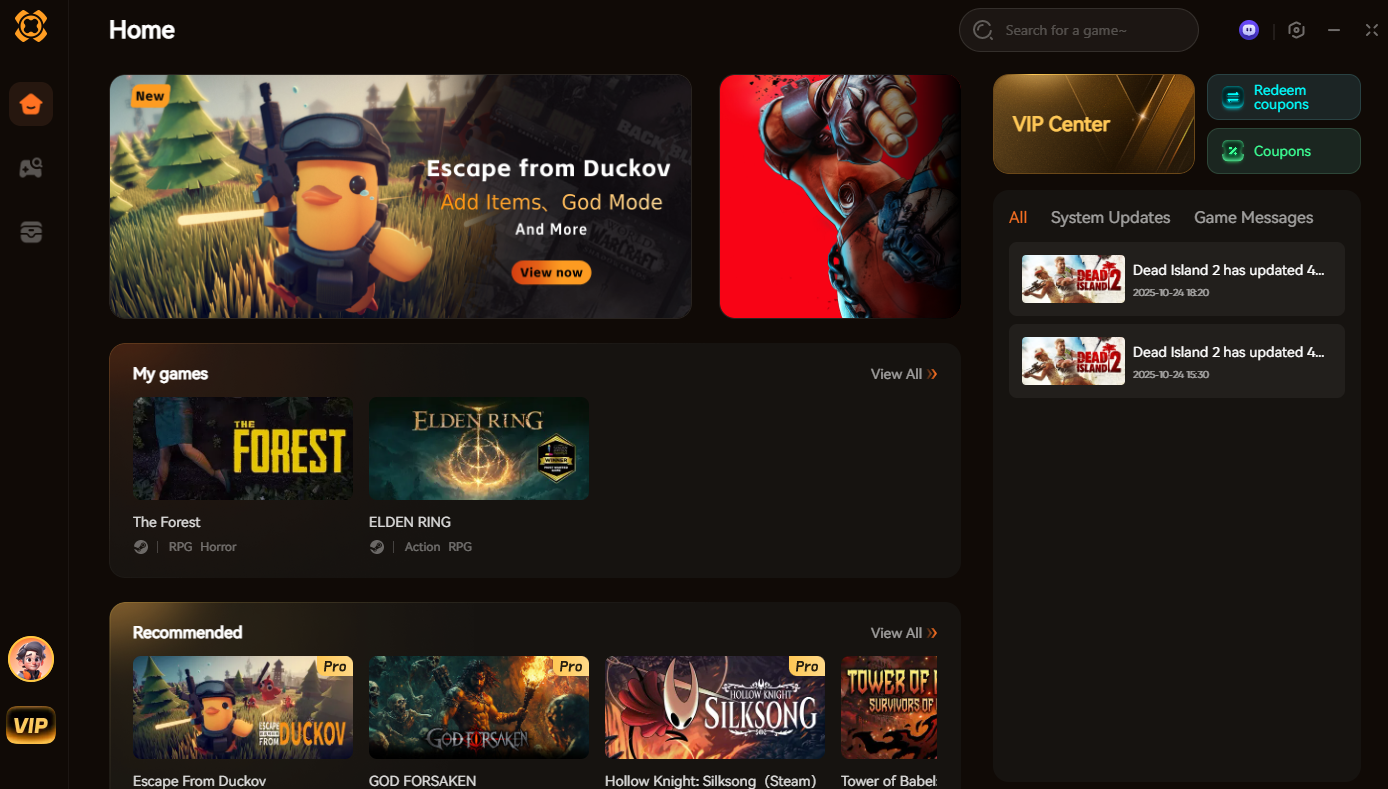
This is where XMODhub steps in, offering a quality-of-life upgrade that transforms your SpaceCraft experience. XMODhub isn’t just a cheat engine; it’s a meticulously crafted utility designed to enhance your gameplay, allowing you to bypass tedious elements and focus on what you love most: building and exploring.
Imagine being able to prototype any SpaceCraft design without spending hours mining rare minerals, or testing a high-speed atmospheric re-entry with invincibility enabled, so you can tweak parameters without constant restarts. XMODhub makes this a reality, providing features specifically tailored to SpaceCraft’s challenges.
For SpaceCraft, XMODhub offers game-changing functions like:
Getting started with XMODhub is incredibly simple:
With XMODhub, you’re not just playing SpaceCraft; you’re mastering it on your own terms, transforming every challenge into an opportunity for creative problem-solving rather than frustrating repetition.
Preguntas frecuentes
A: Uncontrolled flipping in atmospheric flight is almost always due to improper Center of Mass (CoM) and Center of Lift (CoL) alignment. For stable flight, your CoM must be ahead of your CoL. If the CoL is ahead of or too close to the CoM, your SpaceCraft becomes aerodynamically unstable and will want to flip. Ensure your wings and control surfaces are placed correctly, and consider shifting heavy components forward or adding nose cones/ballast to move the CoM.
A: Overheating is a critical stability issue. Ensure your SpaceCraft has adequate heat dissipation systems. Nuclear engines and powerful reactors are major heat generators and require dedicated radiators. Place radiators strategically so they have a clear line of sight to space (for passive cooling) or are exposed to airflow (for atmospheric cooling). Also, avoid placing heat-sensitive components directly adjacent to high-heat sources without insulation.
A: Yes, several components directly enhance stability. Reaction Wheels (gyroscopes) provide torque for rotation control. RCS thrusters offer precise translational and rotational control. Gimbaling engines can vector thrust to compensate for CoM/CoT offsets. SAS-equipped command modules or probe cores provide automated stability assistance. Structurally, struts and rigid attachment options improve joint strength, preventing parts from wobbling or breaking.
A: The VAB’s CoM/CoT/CoL indicators are your first line of defense. Beyond that, conduct thorough test flights in a simulated environment (if your SpaceCraft version offers one, or by saving frequently). Start with simple maneuvers: full throttle ascents, sharp turns, and stage separations. Observe how your SpaceCraft reacts to control inputs and external forces. If available, use time-warp during test flights to stress-test structural integrity over extended periods. Pay close attention to any wobbling, unwanted rotations, or “phantom forces” that might indicate a deeper stability issue. For truly risk-free testing, consider using XMODhub’s invincibility feature to push your designs to their absolute limits without consequence.
A: Excessive wobbling (often called “kraken bait” by players) usually indicates insufficient structural rigidity or an issue with joint strength. Common culprits include: 1) Too many parts connected in a long chain without cross-bracing. 2) Using adapters or decouplers as primary structural connections without additional struts. 3) Not utilizing “Rigid Attachment” or “Auto-Strut” in the VAB’s tweakables menu for critical components. Ensure your SpaceCraft’s primary backbone is exceptionally rigid, especially where heavy components or high-thrust engines are attached. Also, check for clipping parts, which can sometimes cause physics glitches.
Final Verdict: Stop SpaceCraft Explosions for Good
The days of watching your meticulously crafted SpaceCraft vessels spontaneously combust are officially over. By diligently focusing on the trinity of proper Center of Mass and Center of Thrust alignment, robust structural integrity, and ample control authority, you can transform your spacefaring experience. Remember to meticulously check your designs in the VAB, reinforce weak points, and always ensure your SpaceCraft has enough power and cooling to perform its mission reliably. Mastering these fundamental principles will not only prevent catastrophic failures but will also empower you to build more ambitious, capable, and ultimately, more stable SpaceCraft.
While the journey to perfect SpaceCraft engineering can be challenging, the rewards are immense. For those moments when the grind becomes too much, or you simply want to experiment without limitations, XMODhub offers a powerful shortcut to unlocking your full creative potential. With its comprehensive suite of quality-of-life enhancements, XMODhub supports not just SpaceCraft but also over 5000 other titles like Factorio, Satisfactory, y RimWorld, allowing you to explore, build, and conquer galaxies without the usual constraints. Embrace the freedom, master the mechanics, and let your SpaceCraft designs soar to new, stable heights.

Soy un jugador apasionado y escritor en XMODhub, dedicado a traerte las últimas noticias de juegos, consejos y puntos de vista.
Conecta conmigo:
Perfil en LinkedIn