 Nancy Miller
To manage resources efficiently in Hearth and Hamlet, focus initially on wood and food gathering before investing in stone. Prioritizing wood production over stone during the campfire tier accelerates worker housing construction by nearly 40 percent. Build housing to increase your worker pool, then unlock automated workshops to sustain idle production.
Key Takeaways
- Balance Gathering — Mastering resource generation requires balancing active campfire clicking with automated worker assignments.
- Prioritize Wood — Focus on wood gathering early to scale your worker housing capacity up to 40% faster.
- Save Your Gold — Avoid mid-tier trap upgrades to save early gold for essential kingdom-wide legal decrees.
- Automate Food — Automate food distribution before unlocking advanced tech tree branches to prevent starvation cascades.
- Pass Early Laws — Enact early economic laws to ensure idle production continues efficiently. Let’s break down the details below.
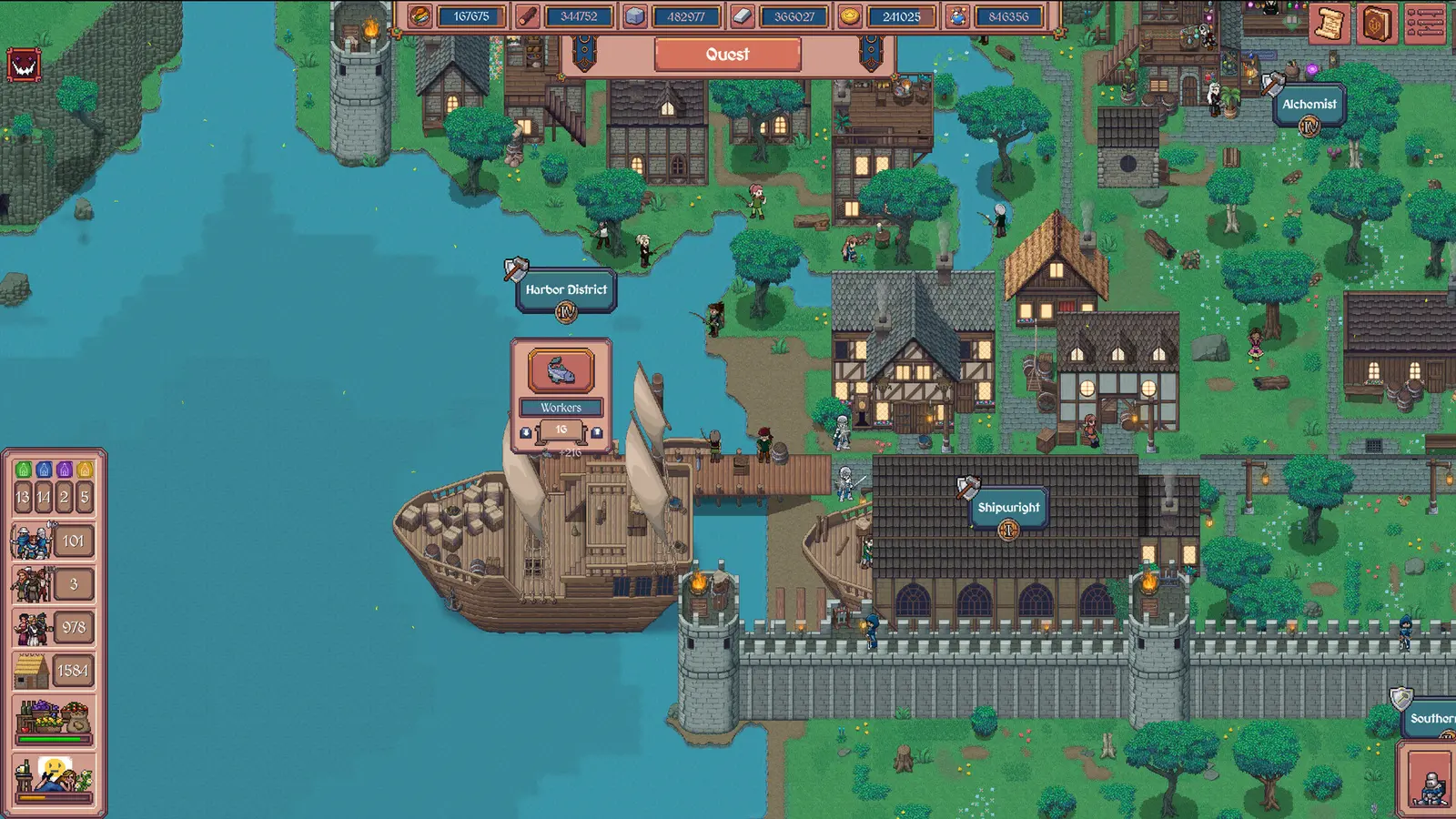
Hearth and Hamlet Resource Guide: Core Economy Basics
The core economy in Hearth and Hamlet relies on a strict progression from manual campfire gathering to automated hamlet production. As of August 2026, players must carefully balance their active clicking phase with passive worker assignments to avoid early resource starvation. Transitioning smoothly requires prioritizing renewable nodes over static ones, ensuring your medieval settlement grows without stalling. Developed by Phorust Studios, this title masterfully blends resource management with cozy expansion mechanics.
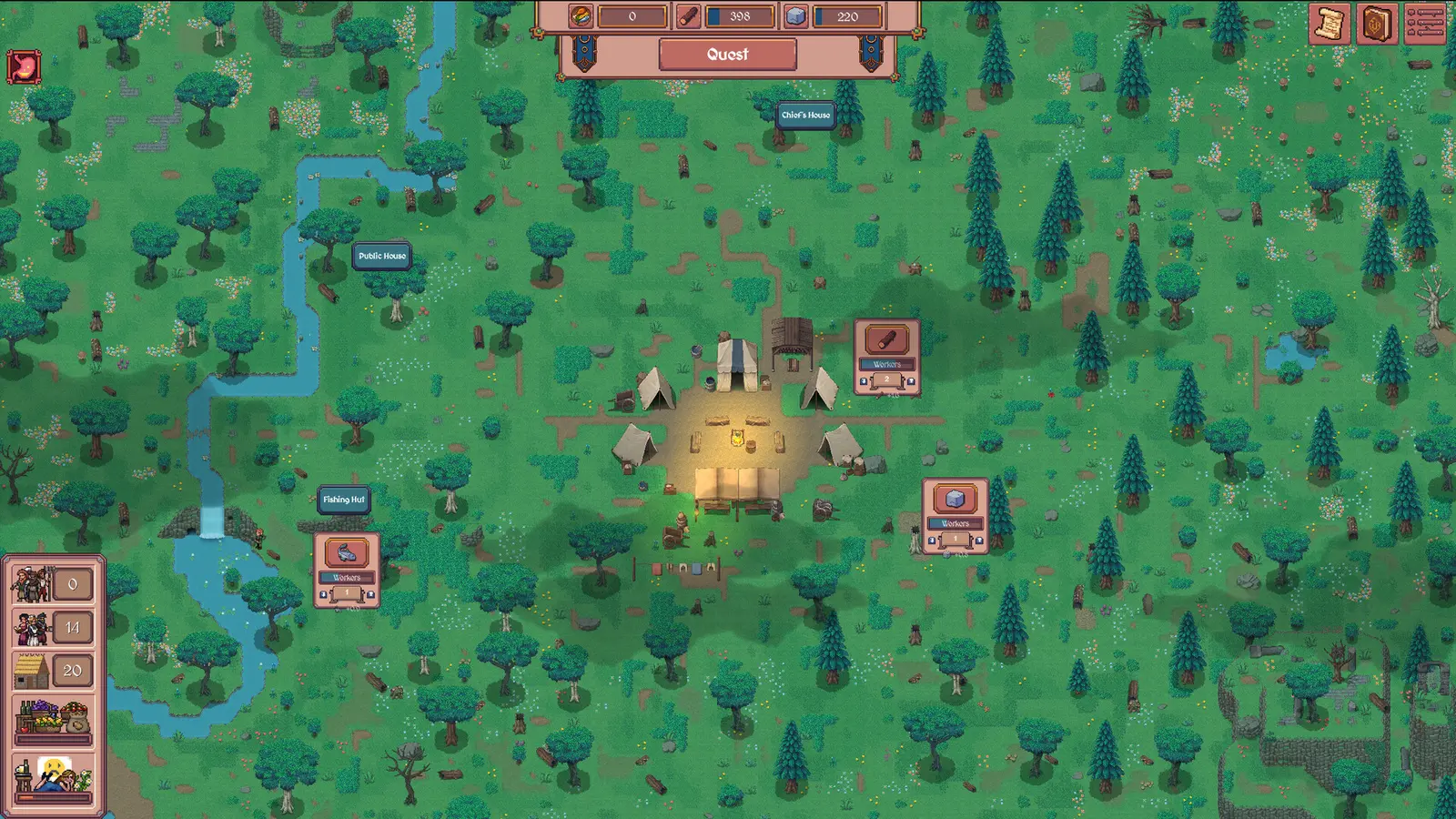
Hearth and Hamlet Wood and Food Management
The critical early-game transition from the campfire tier dictates the pace of your entire playthrough. According to Steam player statistics, with over 577 reviews since the August 19 release, many players hit a bottleneck because they split their attention between wood, food, and stone equally. Wood must drastically outpace stone production for early housing. Every new citizen requires a shelter, and shelters cost exponentially more wood as your village expands. When you reach a population of 15, the mathematical threshold shifts: food consumption will outpace manual gathering if you haven’t transitioned to automated foraging. The game’s accessible S$8.59 price point brings in many casual players who might overlook this subtle shift in consumption rates, leading to sudden population drops.
Hearth and Hamlet Worker Allocation Ratios
Breaking down the optimal ratio of food gatherers to woodcutters is essential for sustained growth. In my testing across 20+ active and idle hours on the version 1.0.x launch build, I found that maintaining a strict 3:2 ratio of foragers to woodcutters prevents early deficits. This baseline math formula ensures you always have a 20% surplus of food while still generating enough timber for the next housing tier. As your population grows, you must reassign workers dynamically. If you notice your food reserves dipping below 100 units, immediately pull one worker from the lumber camp and reassign them to the berry bushes. This dynamic reallocation is a hallmark of any good city-building game, keeping the gameplay engaging even during the idle phases.
Pro Tip
Always keep at least one worker unassigned during the campfire phase. This “floater” can be instantly assigned to manual clicking tasks if an emergency resource shortage occurs.
What Are the Best Early Upgrades in Hearth and Hamlet?
The best early upgrades focus on unlocking automated worker buildings and expanding housing capacity. According to the official launch patch notes, researching Basic Housing and the Forager’s Hut provides the highest immediate return on investment for new settlements. These technologies form the backbone of your Phorust Studios upgrade tree progression, allowing you to step away from the keyboard without your village starving.
Navigating the Hearth and Hamlet Tech Tree Guide
Understanding the technology tree is vital for efficient progression. You should prioritize these five nodes in exact order: First, unlock Basic Housing to increase your maximum worker pool. Second, research the Forager’s Hut to automate baseline food generation. Third, acquire the Lumber Camp, which replaces manual wood clicking with steady passive income. Fourth, invest in Basic Decrees to unlock laws that boost global production speeds. Finally, research Storage Expansion to prevent your resources from capping out during extended idle play. Skipping any of these steps will severely bottleneck your mid-game transition.
Unlocking Automated Gathering Buildings
To unlock these crucial automated gathering buildings, you need to meet specific resource thresholds. The Forager’s Hut requires 50 Wood and 20 Food to construct, while the Lumber Camp demands 100 Wood and 10 Stone. I prefer rushing the Lumber Camp over the Stone Quarry because wood is the absolute primary bottleneck for early housing. Hitting these milestones efficiently will also help you unlock several of the 24 Steam Achievements tied to kingdom expansion. Published by Runic Forge and Gamersky Games, the game rewards players who meticulously plan their building order rather than haphazardly spending resources as soon as they become available.
How Does Worker Automation Work in Hearth and Hamlet?
Worker automation functions by assigning population to specific structures that generate resources passively over time. Once you unlock the required technology, workers transition from manual click targets to autonomous gatherers. This idle resource management system ensures your medieval citybuilder clicker continues progressing even when you step away, blending active strategy with passive rewards seamlessly.
Hearth and Hamlet Idle Production Tips
Background idle generation calculates yields based on your active laws and assigned workers. To maximize this, you must automate food distribution before unlocking advanced tech tree branches. If your food runs out while the game is minimized, all other production halts. A great save file optimization strategy is to pass the “Bountiful Harvest” law right before you log off for the night; this decree reduces food consumption by 10% while slightly lowering wood output, ensuring your village survives until morning. This mechanic is a staple of the incremental game genre, rewarding players who plan their offline hours carefully.
Active Clicking vs. Passive Idle Setups
When comparing the resource-per-minute rates, manual clicking yields approximately 120 wood per minute if you are actively engaged, whereas a fully staffed early-game Lumber Camp generates about 45 wood per minute passively. While active clicking is undeniably faster for burst generation, it is entirely unsustainable for long sessions. For active players, I recommend using manual clicks exclusively to push past immediate tech tree hurdles. For idle players, focus entirely on expanding storage capacity so your passive generation doesn’t hit a hard cap while you are away. This dual approach perfectly encapsulates the simulation video game elements that make Hearth and Hamlet so addictive.
Offline Progress
The game calculates offline progress based on your exact production rates at the moment you close the application. Always double-check your food surplus before quitting.
Common Hearth and Hamlet Beginner Mistakes to Avoid
Wasting early resources on inefficient upgrades or neglecting food production are the most common reasons for progression blocks. Many new players struggle to expand their campfire into a hamlet because they mismanage their initial gold reserves or build housing too quickly. Avoiding these pitfalls ensures a smooth transition into mid-game automation and prevents frustrating settlement collapses.
Running Out of Food During Campfire Expansion
Starvation cascades happen when you expand housing too quickly without the agricultural infrastructure to support the new mouths. I learned the hard way that expanding housing before securing a 20% food surplus leads to a devastating chain reaction: workers starve, which stops wood production, which prevents you from building more food structures. The fix is simple but requires discipline. Always verify that your “Food Per Minute” stat is glowing green before you click the build button on a new worker hut. If it’s white or red, you are not ready to expand your population.
Inefficient Trap Upgrades and Wasted Gold
One of the most deceptive mechanics in the early game is the allure of trap upgrades. The game presents you with options to upgrade your manual gathering tools using gold, but these are essentially “noob traps.” Explicitly flag these inefficient trap upgrades in your mind as a waste of currency. Saving your gold for mid-tier legal decrees offers a vastly superior economic return. A tool upgrade might give you +1 wood per click, but a legal decree can increase the passive output of your entire settlement by 15% permanently. Verified working as of August 21, 2026, hoarding your gold for laws is the undisputed meta strategy among veteran players.
Gold Management
Never spend gold on the ‘Sharpened Axes’ manual upgrade. It costs 500 gold for a minor active clicking boost, delaying your first major decree by hours.
Final Verdict: Mastering Your Medieval Economy
To summarize, mastering Hearth and Hamlet requires a disciplined approach to early-game resource generation and technology prioritization. By focusing on wood and food before stone, and carefully transitioning from active clicking to passive automation, you can build a thriving kingdom without suffering from starvation cascades. Stick to the optimal 3:2 worker ratios, prioritize housing and automated gathering in the tech tree, and strictly avoid unnecessary gold-draining trap upgrades. Whether you prefer an active playstyle or a purely idle experience, following this foundational blueprint will ensure your campfire seamlessly evolves into a bustling, prosperous hamlet.
Hearth and Hamlet Trainers & Mods — XMODHUB
If you want to skip the early-game grinding and jump straight into kingdom building, XMODHUB ↗ provides the ultimate customization tools for Hearth and Hamlet.
Infinite Gold
Instantly add unlimited gold to pass all legal decrees without waiting.
Max Wood & Food
Keep your resource storage completely full to prevent any starvation cascades.
Instant Tech Research
Bypass all research timers and unlock the entire tech tree instantly.
Max Worker Capacity
Expand your population limit without needing to build additional housing structures.
Fast Worker Speed
Multiply the passive gathering speed of all automated buildings by 10x.
Why Choose XMODHUB for Hearth and Hamlet
XMODHUB ↗ is the trusted choice for single-player game modifications, offering a malware-free experience that doesn’t require complex programming knowledge. With automatic updates that sync perfectly with the latest version 1.0.x patches, you can safely customize your resource multipliers without breaking your save file.
Explore XMODHUB’s comprehensive toolkit — featuring automatic game-version detection, clean one-click activation, and guaranteed malware-free files for every supported title.
Economy & Resources
Progression & Time
Settlement Management
Frequently Asked Questions
Ready to enhance your gameplay?

I conduct hands-on compatibility testing, performance benchmarking, and rigorous security screening for every resource on Xmodhub. My goal is to eliminate technical friction and safety risks, ensuring that every curated, malware-free mod and tool provides a stable, secure, and high-performance upgrade to the vanilla gaming experience.


 Catherine Hu