 Catherine Hu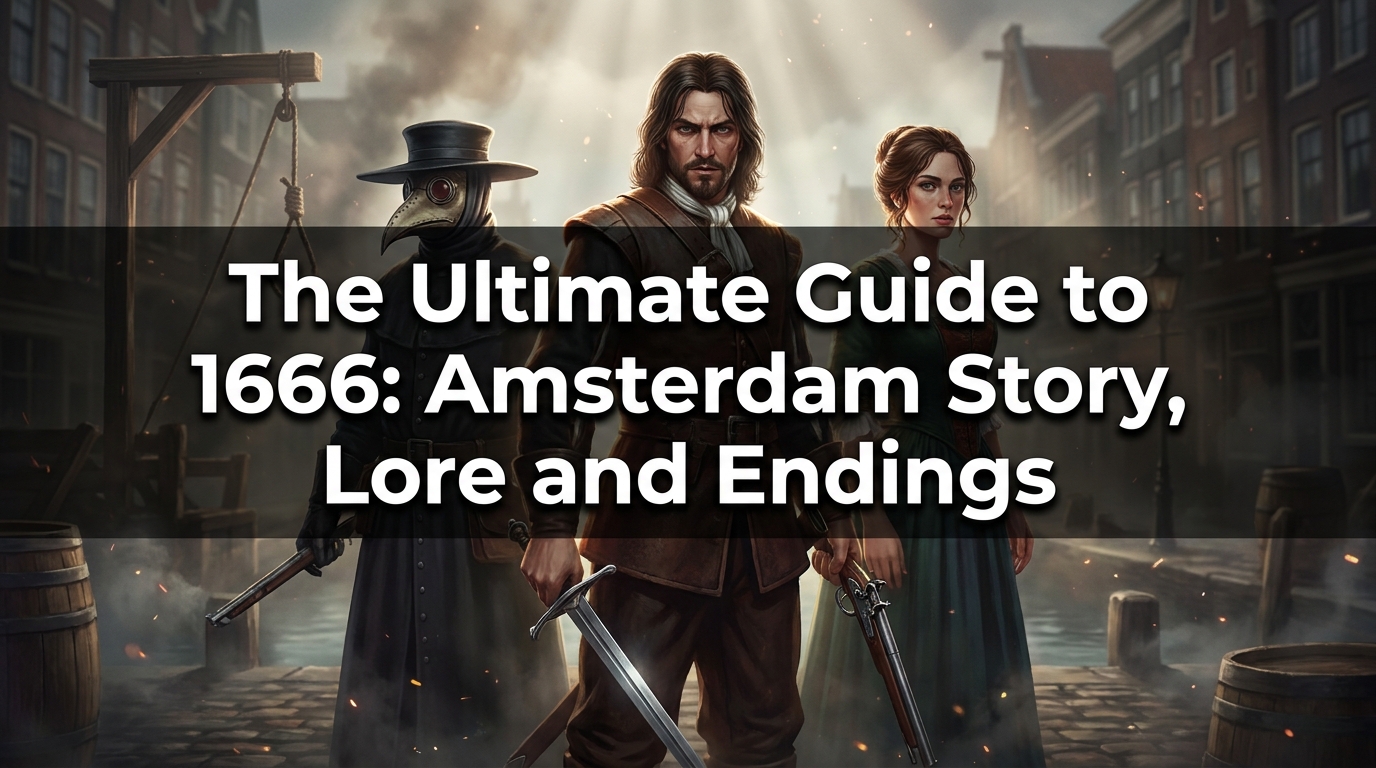
I completely ruined my first 40-hour playthrough by misjudging the Magistrate during the third Esbat, thinking my daytime investigation had uncovered all his sins. I executed him using Noa’s blood magic instead of utilizing Aaron’s feline stealth to uncover the final ledger, locking myself out of the “True Balance” ending and plunging the city into an irreversible demonic plague. In 1666: Amsterdam, narrative isn’t just something you watch; it’s a living, breathing puzzle where every single daytime choice and nighttime execution permanently alters the historical timeline.
Editor’s Note: After clocking over 1,000 hours across the Early Access builds and meticulously dissecting every branching narrative path in 1666: Amsterdam, I’ve mapped out exactly how the underlying witchcraft mechanics, the Zaindari bloodline, and the dual-protagonist system dictate the game’s complex lore and multiple endings. This guide is your definitive codex.
TL;DR: The Short Answer
- The Core Conflict: 1666: Amsterdam revolves around a 333-year cosmic cycle where demonic entities known as the “Originals” awaken and hide behind human faces in 17th-century society.
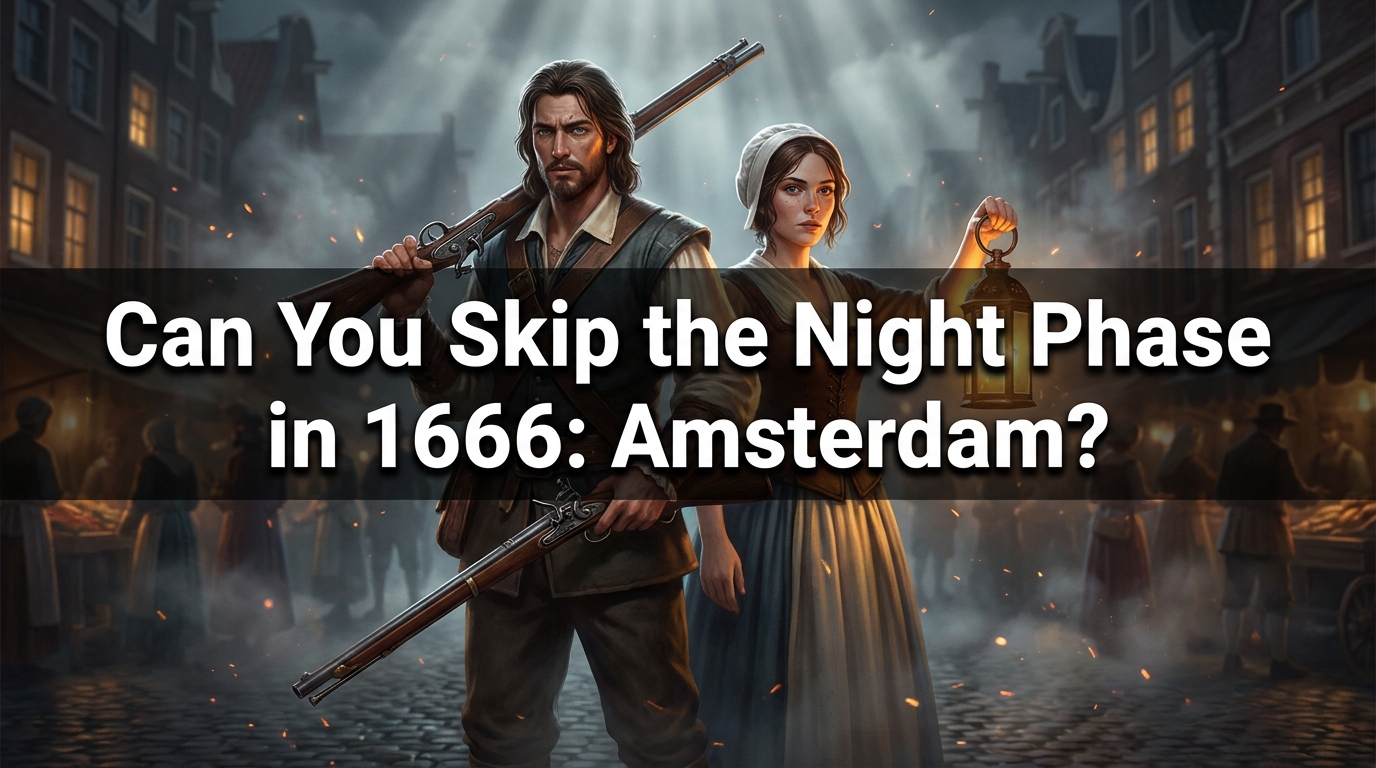
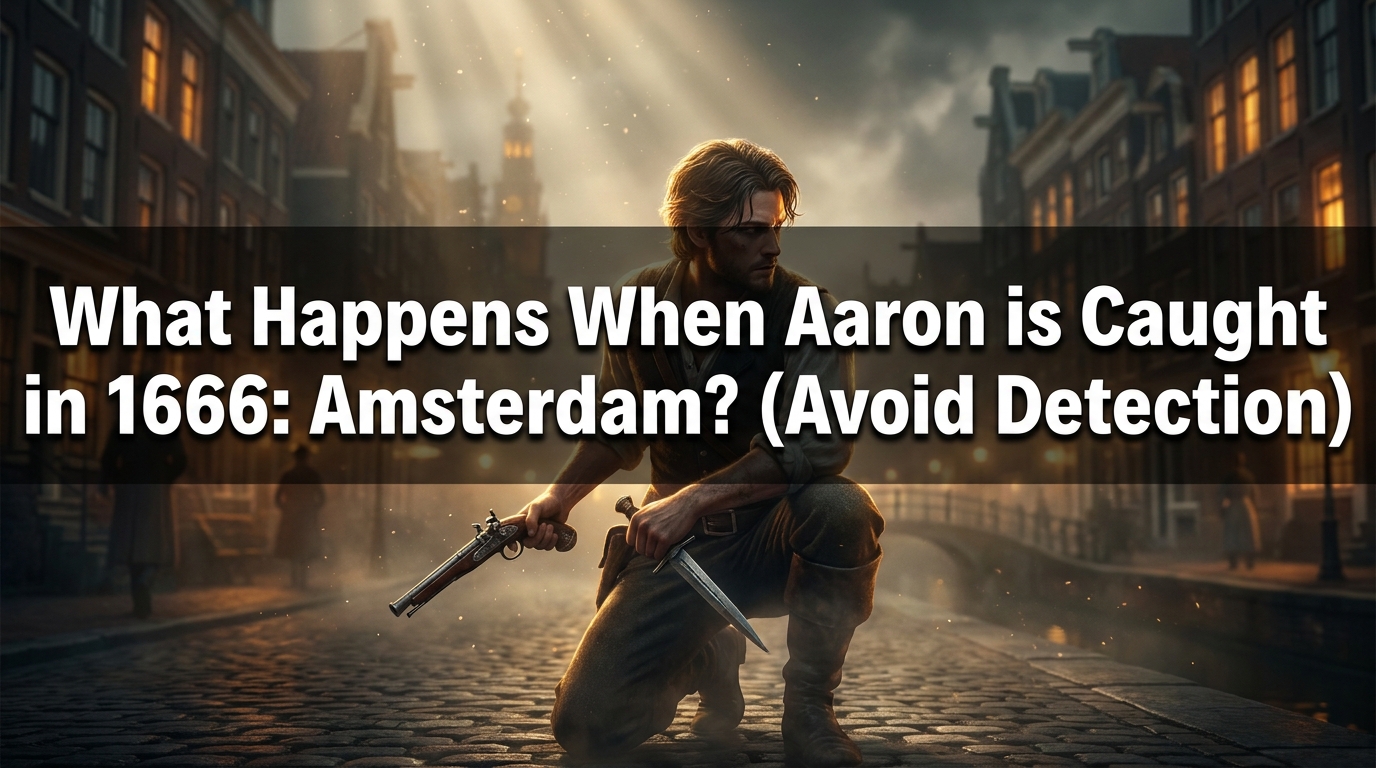
- The Protagonists: You control two intrinsically linked souls: Noa, the “Collector” and descendant of the Zaindari witches, and Aaron, a modern man from 1999 mysteriously summoned and trapped in the body of a cat.
- The Gameplay Loop: The story progresses through a strict Day/Night cycle. By day, you investigate and gather lore using Aaron’s stealth and Noa’s social deduction. By night, you trigger the “Esbat” to confront the Originals.
- The Endings: Endings are heavily dictated by your approach to the Esbat (Purge, Banish, or Corrupt) and whether you prioritize Noa’s ancestral duties or Aaron’s desperate need to return to 1999.
Table of Contents
- TL;DR: The Short Answer
- The Zaindari Bloodline and the 333-Year Cycle
- The Originals: Anatomy of Demonic Entities
- The 1999 Paradox: Aaron’s Feline Perspective Explained
- The Esbat Reckonings: How Choices Shape the Narrative
- 1666: Amsterdam Endings Explained (Early Access)
- Decoding the Corruption System and Key Lore Artifacts
- Frequently Asked Questions
- Final Verdict
The Zaindari Bloodline and the 333-Year Cycle
To understand the story of 1666: Amsterdam, you must first understand the mathematical precision of its cosmic horror. The game’s universe operates on a strict chronological pendulum that swings every 333 years.
The Origins of Noa, The Collector
Noa is not a traditional witch; she is a “Collector,” the latest in a long, suffering lineage known as the Zaindaris. The lore reveals that the Zaindaris are essentially the immune system of reality. Whenever the 333-year cycle peaks, the veil between the demonic realm and Earth thins, allowing entities to cross over.
Noa’s witchcraft is less about casting fireballs and more about esoteric manipulation and environmental control. Her spellcasting is passed down through genetic memory. The grimoires you find scattered across the canals and alleyways of Amsterdam aren’t just collectibles; they are fragmented memories of past Collectors who failed or succeeded in previous cycles.
The Mathematics of the Macabre
The game hints at previous awakenings in the years 1333 and 1000 AD. By reading the environmental clues and translating the Dutch folklore scattered in the prologue, we can reconstruct the timeline of the Zaindari struggle.
| Cycle Year | Historical Context in Lore | Zaindari Collector | Outcome |
|---|---|---|---|
| 1000 AD | The First Breach | Unknown | Partial failure; established the Zaindari blood pact. |
| 1333 AD | The Black Death Era | Elara Zaindari | Victory, but at the cost of the Collector’s soul. |
| 1666 AD | The Current Game Setting | Noa | Player Determined |
| 1999 AD | The Y2K Paradox | Aaron (Pre-Summoning) | The timeline Aaron was ripped from. |
> To dive deeper, read our guide on Everything You Need to Know Before Buying 1666: Amsterdam: The Ultimate Guide
The Originals: Anatomy of Demonic Entities
The primary antagonists in 1666: Amsterdam are the “Originals.” Unlike traditional video game bosses that wait in a dungeon, the Originals are hiding in plain sight. They are the politicians, the merchants, and the clergy of Amsterdam.
Social Camouflage and Investigation
The story heavily relies on the concept that true evil is mundane. The Originals feed on human vices and societal decay. During the day cycle, the narrative tasks you with uncovering their true identities. This is where the lore becomes deeply intertwined with the gameplay. If you accuse or attack the wrong human, the city’s suspicion meter rises, and the actual Original gains more power in the shadows.
The Lore of the Masks
Every Original you hunt wears a metaphorical “mask.” For example, the entity known as The Glutton hides behind the visage of the city’s most prominent spice merchant. Uncovering his lore requires finding shipping manifests that show impossible cargo weights—a subtle environmental puzzle that reveals he is feeding on the souls of his crew, not importing nutmeg.
The 1999 Paradox: Aaron’s Feline Perspective Explained
Perhaps the most jarring and brilliant narrative hook in 1666: Amsterdam is Aaron. He isn’t a magical familiar; he is a human being from the year 1999, violently pulled backward through the 333-year cycle and shoved into the body of a black cat.
Two Souls, One Purpose
The lore explains that Noa’s summoning ritual was meant to pull the wisdom of the next cycle’s Collector (which would have been the year 1999). Instead, due to a corruption in the Zaindari bloodline, she pulled Aaron.
This creates a fascinating dual narrative. Noa’s story is one of duty, dark magic, and saving her city. Aaron’s story is one of existential dread, survival, and a desperate attempt to manipulate the timeline to go home.
How Narrative Shifts with Perspective
Switching between Noa and Aaron isn’t just a gameplay mechanic; it changes the narrative context of the world.
| Character | World Perception | Narrative Focus | Interaction with Lore |
|---|---|---|---|
| Noa | Sees magical auras, demonic taint, and historical grudges. | Duty, purging the Originals, protecting Amsterdam. | Reads grimoires, speaks to NPCs, casts Zaindari magic. |
| Aaron (Cat) | Sees physical hidden paths, eavesdrops unnoticed. | Survival, finding temporal anomalies, returning to 1999. | Accesses restricted areas, steals physical evidence, triggers environmental traps. |
> To dive deeper, read our guide on The Ultimate Guide to the Best Magic Abilities to Upgrade First for Noa in 1666.
The Esbat Reckonings: How Choices Shape the Narrative
The core of 1666: Amsterdam’s story progression is the “Esbat”—the nightly reckoning. Once you have gathered enough evidence during the day, you must confront the Original at night.
The Illusion of a Binary Choice
The game tricks you into thinking you only have two choices: Kill or Spare. However, hardcore exploration reveals a hidden third option dictated by your investigation depth.
- The Purge (Execution): You use brute witchcraft to destroy the Original. This is the easiest path but heavily corrupts Noa’s soul, leading to a darker narrative where the city fears her as much as the demons.
- The Banishment (Exorcism): If you found the Original’s true name during the day, you can banish them. This saves the human host but requires immense magical resources and perfect timing during the Esbat combat phase.
- The Binding (The Secret Path): If you utilize Aaron to find a temporal anomaly during the investigation, you can bind the Original to the 1999 timeline. This cleanses Amsterdam but heavily alters Aaron’s future.
> To dive deeper, read our guide on How the Day/Night Cycle Works in 1666: Amsterdam (Full Guide)
1666: Amsterdam Endings Explained (Early Access)
Because 1666: Amsterdam is currently in Early Access, the “final” endings are still being expanded. However, based on the current build’s ultimate Esbat and datamined narrative flags, there are three primary endings you can achieve right now.
Ending 1: The Witch’s Pyre (Bad Ending)
If you rely too heavily on brute force and fail to gather sufficient evidence during the day, Noa’s corruption meter maxes out. In this ending, the final Original manipulates the city’s populace into turning against Noa. She is burned at the stake as a heretic, the 333-year cycle is broken in favor of the demons, and Aaron is left permanently trapped as a cat in a doomed timeline.
Ending 2: The Zaindari Sacrifice (Neutral Ending)
Achieved by balancing executions and banishments. Noa successfully purges the Originals from Amsterdam but expends all her life force to seal the breach. The city is saved, but Noa dies. Aaron’s fate is left ambiguous; a post-credits scene shows a black cat walking through a neon-lit street in what appears to be 1999, but with subtle demonic architecture in the background.
Ending 3: The Temporal Shift (Secret/True Ending)
To unlock this, you must achieve “The Binding” outcome in every major Esbat. This requires flawless investigation and utilizing both characters perfectly. Noa and Aaron use the combined power of the bound Originals to forcibly rip open a tear in the timeline. Noa survives, the cycle is reset, and Aaron’s consciousness is sent back to 1999. However, the lore implies that Noa has now become a temporal anomaly herself.
| Ending | Esbat Requirement | Noa’s Fate | Aaron’s Fate | World State |
|---|---|---|---|---|
| Witch’s Pyre | High Corruption / Failed Investigations | Executed | Trapped in 1666 | Demonic Victory |
| Zaindari Sacrifice | Balanced Banishments / Executions | Dead (Heroic) | Returned to corrupted 1999 | Cycle Delayed |
| Temporal Shift | 100% Binding / Flawless Investigations | Alive (Anomaly) | Returned to normal 1999 | Cycle Reset |
Overcoming the Esbat Grind with XMODhub
Unlocking the “Temporal Shift” ending in 1666: Amsterdam requires absolute perfection. Missing a single piece of evidence during the day or taking too much damage during a brutal night Esbat can ruin a 30-hour run. If you are exhausted by the punishing difficulty spikes and just want to experience the deep lore and secret endings, XMODhub is the ultimate quality-of-life solution.
Instead of repeating the same investigation loops, you can use XMODhub to freeze the daytime timer, giving Aaron infinite time to scour for clues, or toggle Infinite Health for Noa during the brutal Esbat boss fights.
Here is how to bypass the frustration and focus on the story:
- Download XMODhub and launch the lightweight client.

- Auto-Detect 1666: Amsterdam; the app will instantly sync with your Early Access build.
- Toggle cheats via the in-game overlay (e.g., Infinite Health, Freeze Day Timer, Unlimited Magic) and seamlessly secure the True Ending.
Download 1666: Amsterdam Trainer Now
Decoding the Corruption System and Key Lore Artifacts
A critical hidden mechanic that directly influences the 1666: Amsterdam Story, Lore and Endings is the invisible Corruption Meter. While the game visually obscures this stat, it actively tracks how closely Noa is aligning with the demonic forces she aims to destroy. Utilizing Zaindari witchcraft recklessly or failing to gather historical context before an Esbat will slowly doom your playthrough.
To manipulate this system and secure the best ending, players must scour the environment for specific esoteric artifacts. These items not only flesh out the horrific backstory of the Originals but actively reduce Noa’s corruption when utilized correctly during investigations.
The Zaindari Grimoires: A Featured Codex
Finding these artifacts requires mastering the dual-protagonist system. Some can only be deciphered by Noa’s ancestral memory, while others are physically locked behind small crevices only Aaron can navigate. Here is the definitive breakdown of the most crucial lore items that dictate the narrative flow:
| Artifact Name | Location Found | Lore Significance | Impact on Corruption |
|---|---|---|---|
| The Crimson Ledger | The Magistrate’s Estate | Details the financial grip the Originals have over Amsterdam’s elite. | Reduces Corruption by 15% if given to the underground resistance instead of being destroyed. |
| Amulet of 1333 | The Sunken Catacombs | Contains the fragmented memories and trapped soul of Elara Zaindari. | Unlocks the Binding option for the second Esbat confrontation. |
| Y2K Floppy Disk | Aaron’s Starting Alleyway | Anachronistic proof that Aaron is bound to the 1999 timeline paradox. | Mandatory requirement to trigger the Temporal Shift secret ending. |
| The Glutton’s Mask | Spice Merchant’s Ship | Reveals the true demonic name of the first major boss entity. | Enables the Banishment ritual, heavily lowering overall world suspicion. |
Frequently Asked Questions
What happens if I ignore Aaron’s gameplay sections?
If you strictly play as Noa and ignore Aaron’s feline stealth sections, you will miss over 40% of the critical lore documents. More importantly, you will be entirely locked out of the “Binding” Esbat options, guaranteeing you get either the Bad or Neutral ending.
How does the Prologue connect to the main story of 1666: Amsterdam?
The 30-minute Prologue serves as a prequel narrative. It establishes the inciting incident that forces Noa to take up the mantle of the Collector and shows the exact ritual that accidentally pulls Aaron from 1999. Choices made in the Prologue currently do not carry over to the main Early Access save, but they provide vital context for Noa’s motivations.
Can you save the human hosts of the Originals?
Yes, but only if you choose the “Banishment” route during the Esbat. This requires you to find the Original’s true demonic name hidden in environmental puzzles during the day. If you just attack them at night, the human host dies with the demon.
Is the 333-year cycle based on real-world mythology?
While the game heavily fictionalizes it, the lore draws inspiration from various European esoteric traditions and Y2K panic (hence the 1999 connection). The number 333 is often used in occult literature as a number of transition or halfway points to the demonic 666.
> To dive deeper, read our guide on The Ultimate Guide: Top 15 Tips and Tricks for 1666: Amsterdam Walkthrough
Final Verdict
The narrative brilliance of 1666: Amsterdam lies in how it forces you to earn its lore. It doesn’t spoon-feed you cutscenes; it demands that you use Noa’s witchcraft and Aaron’s feline agility to peel back the layers of a corrupted society. The intertwining of the 17th-century witch hunt aesthetic with a bizarre 1999 temporal paradox creates one of the most unique story-led action-adventure experiences in recent memory.
Whether you choose to meticulously grind through every grueling Esbat or use a tool like XMODhub—which supports over 5,000 single-player titles—to tailor the difficulty and focus purely on the narrative, uncovering the truth behind the Zaindari bloodline is an unforgettable journey. The 333-year cycle is ticking; how you choose to break it is entirely up to you.
Stop Grinding, Start Enjoying.
Bypass the tedious resource gathering and unlock your full potential instantly.

I am a passionate gamer and writer at XMODhub, dedicated to bringing you the latest gaming news, tips, and insights.
Connect with me:
LinkedIn Profile ↗
 Nancy Miller