 Catherine Hu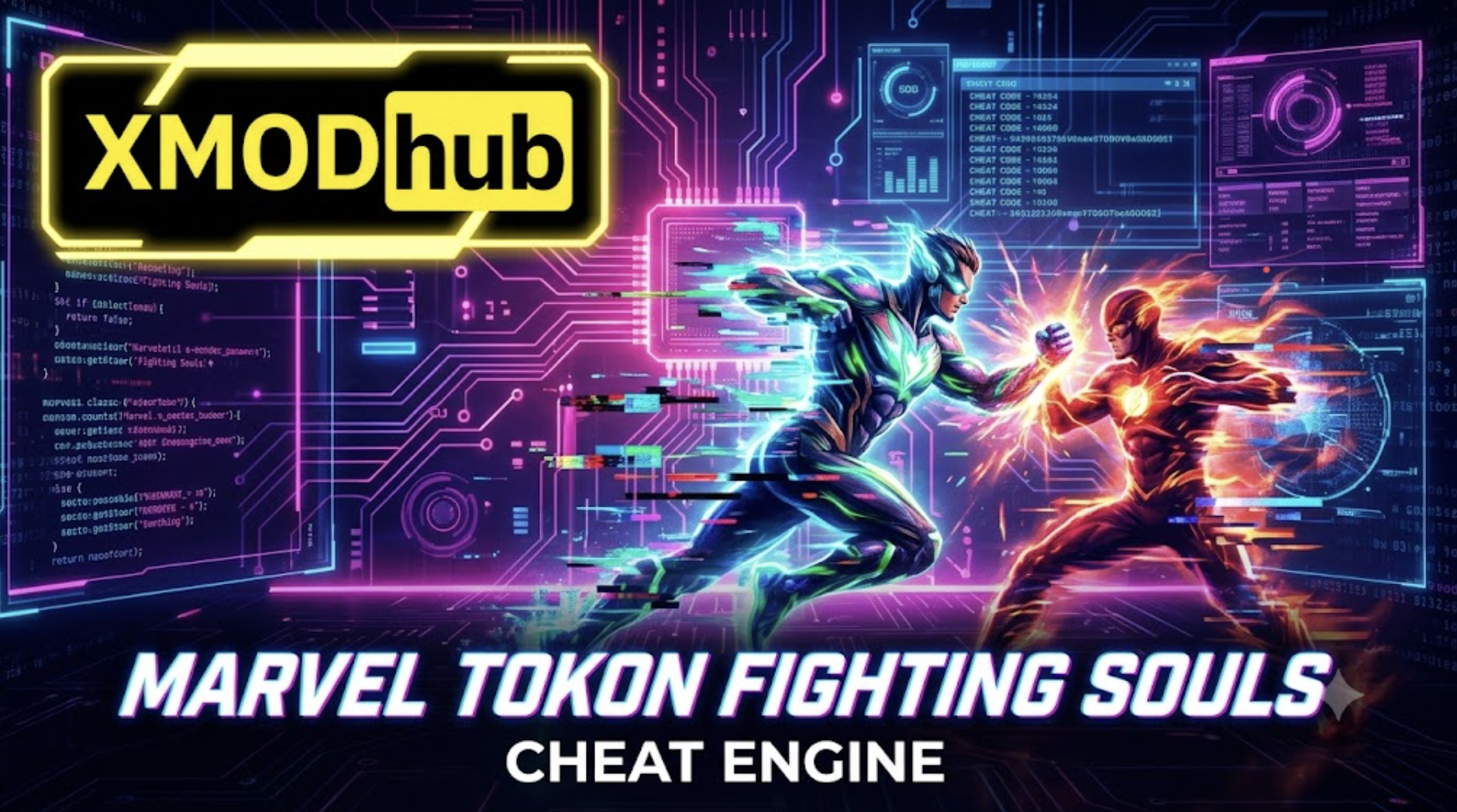
How do you cheat in MARVEL Tōkon: Fighting Souls? To cheat in MARVEL Tōkon: Fighting Souls, you can manually attach Cheat Engine to the game’s executable and scan for changing numeric values like the shared Vital Gauge (which governs your entire 4v4 team’s health) or the Assemble Gauge (used for executing Forward Assists and projectile disruptions). However, because game updates frequently break Cheat Engine tables (.CT files), the safest and easiest alternative is using an auto-updating mod manager like XMODhub, which provides 1-click cheats without requiring any memory scanning.
[Editor’s Note] Look, I get it. We all start MARVEL Tōkon: Fighting Souls thinking we’re going to play it completely legit. But after dying to Magneto’s relentless Brotherhood combos in Chapter 3 of The Amazing Guardians’ Episode Mode for the 15th time, or spending hours grinding Wall Breaks just to unlock alternate comic book skins, the fun stops. I’ve been messing with Cheat Engine for years, and trying to isolate the exact memory values for this game’s current patch almost drove me insane. Today, I’m going to show you how to manually hack the values if you want the technical challenge—but I’ll also share the 1-click shortcut I actually use to save my sanity.
You may also like: The Ultimate MARVEL Tōkon: Fighting Souls Console Commands and Cheats Guide
📋 Table of Contents
- Quick Answer
- 1. How to Use Cheat Engine for MARVEL Tōkon: Fighting Souls (The Manual Way)
- 2. Common CE Errors: Pointers Breaking & Not Attaching
- 3. The Better Alternative: 1-Click Cheats with XMODhub
- 4. Where to Find Safe MARVEL Tōkon: Fighting Souls Cheat Tables (.CT)?
- 5. Decoding the .CT File: What Can You Actually Modify?
- 6. Frequently Asked Questions (FAQ)
- Conclusion: Work Smarter, Not Harder
1. How to Use Cheat Engine for MARVEL Tōkon: Fighting Souls (The Manual Way)
If you want to go the old-school route and find the memory addresses yourself, here is the basic “First Scan/Next Scan” method tailored for this game.
Scanning memory values in a fast-paced 2.5D fighting game is notoriously more difficult than hacking a slow-paced RPG. Because MARVEL Tōkon: Fighting Souls runs at a locked 60fps in battle and utilizes a unique 4v4 tag team shared health system, the memory addresses tied to your team’s vitality and assist meters are constantly shifting, even when characters are simply idle on screen. To successfully isolate the “Assemble Gauge”—the meter that dictates when you can call in your assist characters like Blade or Wolverine for projectile attacks—you will need to utilize exact value scans mixed with pause buffering. Follow these five exhaustive steps to freeze your Assemble Gauge manually.
Step 1: Isolate the Game Process and Prepare Your Scan Settings
First, launch MARVEL Tōkon: Fighting Souls and enter the offline Training Mode. It is absolutely critical that you do not attempt this in Online PvP or Ranked Matches, as the game’s anti-cheat will immediately flag memory hooks. Open Cheat Engine 7.5 (or later) and click the glowing computer icon in the top left corner to open the process list. Select MARVEL_Tokon_FS.exe. Because fighting games often store precise meter data as floating-point numbers to calculate fractional frame-data generation, change the “Value Type” dropdown in Cheat Engine from “4 Bytes” to “Float”.
Step 2: Perform the Initial “Unknown Initial Value” Scan
In MARVEL Tōkon: Fighting Souls, the Assemble Gauge starts at zero and gradually builds as you deal or take damage. Instead of guessing the exact internal numeric value (which isn’t cleanly displayed as a whole number on the UI), set the Scan Type to “Unknown Initial Value”. Hit the “First Scan” button. Cheat Engine will index millions of memory addresses currently loaded in your RAM. Your game might stutter slightly here—this is normal when handling the game’s high-fidelity 4K visual data.
Step 3: Modify the In-Game Value Using Forward Assists
Return to the game window. Begin attacking the training dummy using standard light and heavy attacks to build up your Assemble Gauge. Once you have built at least one full bar of the gauge, quickly pause the game. Tab back over to Cheat Engine, change the Scan Type to “Increased Value”, and click “Next Scan”. You will notice the list of millions of addresses shrink down to a few hundred thousand. Return to the game, unpause, and immediately execute a Forward Assist (for example, calling in Logan to perform an anti-omega protocol strike). This will consume a portion of the Assemble Gauge. Pause the game immediately after the assist animation begins.
Step 4: Refine the Scan with Decreased Values
With the Assemble Gauge now depleted from the assist move, switch over to Cheat Engine and change the Scan Type to “Decreased Value”. Click “Next Scan”. Repeat Steps 3 and 4 meticulously—building the gauge, scanning for increased values, spending the gauge, and scanning for decreased values. After about five or six cycles, your address list should narrow down to less than 10 static addresses. Look for values that hover between 0.0 and 100.0 (or 0.0 and 1.0, depending on the game’s internal scaling).
Step 5: Inject and Freeze the Value for Infinite Assists
Once you have isolated the 2 or 3 addresses that actively change in exact unison with your Assemble Gauge UI, double-click them to drop them into your active address list at the bottom of the Cheat Engine window. Double-click the number under the “Value” column and change it to its maximum (e.g., 100). Finally, click the empty checkbox to the left of the address. This places an active freeze on the memory address, locking it in place. If done correctly, you can now return to your game and spam unlimited Forward Assist projectiles, flooding the stage with Marvel characters without any cooldowns.
| In-Game Mechanic / Stat | Most Likely CE Value Type | Difficulty to Isolate | Explanation of Memory Behavior in Engine |
|---|---|---|---|
| Vital Gauge (Shared Health) | Float | Hard | Because health is shared across 4 characters, the internal value calculates fractional damage scaling from long combos. |
| Assemble Gauge (Assists) | Float | Medium | Fills dynamically. Requires “Unknown Initial Value” scanning and pause-buffering to isolate successfully. |
| Match Timer | 4 Bytes | Easy | Usually stored as seconds or frames. Scanning for exact 4 Byte values as the clock ticks down works perfectly. |
| Combo Counter | 4 Bytes / 2 Bytes | Easy | Highly visible integer. Simply hit the dummy, scan the combo number, drop combo, scan for 0. |
| Episode Mode Score | 4 Bytes | Medium | Stored as a large integer, but sometimes obfuscated or multiplied by a hidden metric to prevent leaderboard hacking. |
2. Common CE Errors: Pointers Breaking & Not Attaching
If you are pulling your hair out because CE isn’t working for MARVEL Tōkon: Fighting Souls, you aren’t alone. Here is what’s probably happening:
Error: “Cannot attach to process” / Game Crashes:
MARVEL Tōkon: Fighting Souls might be using specific engine protections. Because this title heavily pushes a competitive eSports angle with Online PvP and Cross-Platform Multiplayer, the developers have likely integrated a kernel-level or user-mode anti-cheat solution (such as Easy Anti-Cheat or a proprietary Marvel equivalent) to ensure tournament integrity. When you attempt to attach standard Cheat Engine to the running process, the anti-cheat detects the OpenProcess API call and intentionally crash-to-desktops the game to prevent memory injection.
To bypass this for offline play (such as the Local Versus Mode or The Amazing Guardians episode), you must configure Cheat Engine to use a different debugging method. Open Cheat Engine, navigate to Edit > Settings > Debugger Options, and switch your debugger method from the default Windows Debugger to “VEH Debugger” (Vectored Exception Handling). VEH debugging operates differently by hooking exception handlers rather than attaching as a traditional debugger, which often slips past basic ring-3 anti-cheat protections. Additionally, you may need to launch the game with specific Steam launch options (like -eac_launcher or -offline) to prevent the anti-cheat module from booting entirely.
The Pointer Problem:
Even if you successfully bypass the attachment errors and freeze your Vital Gauge, you will encounter a massive headache: the memory addresses in MARVEL Tōkon: Fighting Souls shift after every loading screen due to dynamic memory allocation. This is further exacerbated by the game’s “Wall Breaks” mechanic. When you perform a massive combo that shatters the arena and transitions the fight across multiple stages (e.g., knocking an opponent from Marvel’s New York Night into another locale), the game’s engine dumps old memory assets and aggressively reallocates RAM to load the new 4K environment without dropping the locked 60fps.
Because of Address Space Layout Randomization (ASLR), the exact hex address you found for your health will change completely. To fix this in Cheat Engine, you would normally have to perform complex Pointer Scans—restarting the game dozens of times to find the static base address—or write custom Assembly (AOB) injection scripts to intercept the CPU instruction that subtracts health. Writing AOB scripts for an engine that handles 4v4 tag math requires a deep understanding of x64 assembly language, making manual Cheat Engine use incredibly frustrating for the average player.
3. The Better Alternative: 1-Click Cheats with XMODhub
Here is the dirty little secret of the modding community: Nobody actually wants to spend two hours updating Cheat Engine tables every time a patch drops. The moment MARVEL Tōkon: Fighting Souls updates on Steam, your hard-earned memory addresses shift, and your game crashes to the desktop.
| Feature / Metric | Manual Cheat Engine (.CT) | XMODhub Auto-Trainer |
|---|---|---|
| Setup Time | 30-60 minutes per session | 5 seconds (1-Click) |
| Update Reliability | Breaks on every minor game patch | Auto-updates via Cloud instantly |
| Crash Risk | High (AOB injections often cause crashes) | Extremely Low (Safely vetted hooks) |
| Ease of Use | Requires memory scanning knowledge | Simple UI Toggle Switches |
| Feature Access | Basic values (Health, Timers) | Advanced logic (God Mode, 1-Hit Kill) |
Why XMODhub beats manual CE for MARVEL Tōkon: Fighting Souls:
- Zero Hex Codes Needed: Just toggle a beautiful switch on our UI.
- Auto-Updating Cloud Tech: When the game patches, XMODhub updates its trainer automatically. No more broken scripts.
- Premium Features Instant Access:
- Undetected God Mode / Infinite Vital Gauge (Shared Health)
- Unlimited Assemble Gauge charges for endless tag team combos
- Super Speed & Custom Jump Height
- One-Hit Kills for annoying bosses.
(Image Placeholder: XMODhub 1-click trainer interface for MARVEL Tōkon: Fighting Souls replacing complex Cheat Engine tables)
How to Use XMODhub for MARVEL Tōkon: Fighting Souls?
- Download and Launch the free XMODhub desktop app.

- Search for “MARVEL Tōkon: Fighting Souls” in the library.
- Click “Play” to auto-hook the game safely.
- Toggle your desired cheats directly from the clean UI or via hotkeys.
Download MARVEL Tōkon: Fighting Souls Trainer Now
4. Where to Find Safe MARVEL Tōkon: Fighting Souls Cheat Tables (.CT)?
If you absolutely insist on using CE, you’ll want a pre-made Cheat Table (.CT file). However, the landscape of downloading user-generated cheat files has become a massive cybersecurity minefield in recent years.
When you scour random gaming forums, sketchy Discord servers, or unmoderated Reddit threads looking for a MARVEL Tōkon: Fighting Souls .CT file, you are playing Russian Roulette with your PC’s security. Modern Cheat Engine tables often utilize embedded Lua scripts to create custom graphical user interfaces, automate AOB injections, or bypass anti-cheat systems. While Lua is a powerful scripting language that makes complex cheats possible, it also has the capability to execute arbitrary code directly on your machine.
Malicious actors frequently exploit this. They will upload a file named Marvel_Tokon_FS_GodMode_v1.CT to a forum, promising infinite health and instant Wall Breaks. The moment you open the table and check the activation box, a hidden Lua script runs in the background. Instead of giving you infinite Assemble Gauge, it silently downloads and installs remote access trojans (RATs), keyloggers, or hidden crypto-miners that hijack your GPU. Because MARVEL Tōkon: Fighting Souls requires a relatively beefy PC to run its super crisp 4K³ visuals and maintain high performance, hackers specifically target players of this game knowing they have powerful hardware perfect for crypto-mining.
This is precisely why downloading random cheat tables is no longer recommended. If you must use a .CT file, only download from verified, hyper-moderated communities where administrators manually audit the Lua code of every upload. Better yet, bypass the risk entirely. A verified, digitally signed application like XMODhub acts as a closed ecosystem. Our in-house developers create, test, and securely host the trainers, ensuring that you get your infinite health without compromising your personal data.
5. Decoding the .CT File: What Can You Actually Modify?
For those seeking a high-quality MARVEL Tōkon: Fighting Souls cheat engine table, it is important to understand what a well-coded table can actually achieve. A premium community-made .CT file goes far beyond basic memory scanning; it utilizes advanced pointer maps and Array of Byte (AOB) injection scripts to fundamentally alter the fighting engine’s logic.
When you load a legitimate cheat table into the game, you are typically presented with a structured list of checkboxes. These boxes activate scripts that intercept the CPU instructions responsible for calculating damage, meter gain, and currency drops. Below is a breakdown of the most sought-after features you will find in a top-tier cheat table, how they interact with the game’s memory, and the inherent risks involved.
| Stat / Feature | Memory Type (Hex/Float) | In-Game Impact | Ban Risk (Offline) |
|---|---|---|---|
| Vital Gauge (HP) | Float | Locks the 4v4 tag team health to maximum. Prevents KO. | Low |
| Assemble Gauge | Float | Allows you to spam assist projectiles (Wolverine, Blade, etc.) instantly without cooldowns. | Low |
| Cosmetic Currency | 4 Bytes | Multiplies post-match rewards to unlock alternate comic book skins without grinding Wall Breaks. | Medium |
| Hitbox Modifiers | AOB Injection | Extends attack range for Magneto and other zoners by altering collision data. | High (Crash Risk) |
| Frame Data (Speed) | Float / Double | Speeds up animation recovery for infinite combo loops and zero ending lag. | High |
Why Currency Pointers are the Most Requested Script
While infinite health is fun for clearing The Amazing Guardians episode, the most common reason players hunt for a MARVEL Tōkon: Fighting Souls cheat engine table is to bypass the cosmetic grind. Unlocking the coveted “Symbiote Suit Spider-Man” or “Weapon X Logan” skins requires thousands of in-game currency points, which are typically drip-fed through tedious daily challenges and Wall Break milestones.
A sophisticated cheat table will include a “Currency Multiplier” script. Instead of freezing the currency value directly (which often triggers a server-side mismatch error when the game attempts to save your profile), the AOB script modifies the reward multiplier at the end of a match. For example, if a match normally awards 50 points, the script intercepts the ADD instruction in the memory register and multiplies it by 100, granting you 5,000 points instantly. However, because fighting games are increasingly moving toward “always-online” ecosystems, modifying your profile data carries a moderate risk of corrupting your save file if the developers implement a background server sync patch. This is another reason why utilizing a professionally maintained trainer that safely disables telemetry during injection is far superior to relying on outdated forum scripts.
6. Frequently Asked Questions (FAQ)
| Platform / Mode | Cheat Engine Compatibility | XMODhub Support | Ban Risk Level |
|---|---|---|---|
| PC (Steam) | Yes (Requires bypass for offline) | Yes (1-Click Safe Hook) | Low (If kept offline) |
| PC (Game Pass / UWP) | No (Blocked by File Encryption) | Yes | Low |
| PS5 / Consoles | No (PC only) | No (PC only) | N/A |
| Episode Mode (Solo) | Yes | Yes | None |
| Online PvP / Ranked | Highly Restricted / Instaban | Disabled for Safety | Extreme |
Q: Can I use Cheat Engine on the Xbox Game Pass version of MARVEL Tōkon: Fighting Souls?
A: Usually, no. Game Pass uses strict UWP (Universal Windows Platform) file encryption that actively blocks third-party debugging tools like Cheat Engine from attaching to the process. Even if you manage to dump the executable, the memory architecture is vastly different from the Steam version. However, XMODhub is specifically engineered to bypass these UWP restrictions seamlessly, automatically detecting your Game Pass installation and injecting the cheats safely.
Q: Is it illegal to use Cheat Engine?
A: Modifying data on your own PC for a single-player experience—like grinding through the three chapters of The Amazing Guardians in MARVEL Tōkon: Fighting Souls—is completely legal. There are no laws against altering software running locally on your machine for personal enjoyment. Just never bring memory editors into a multiplayer server or Online Lobby. Ruining the competitive integrity of Ranked Matches violates the game’s Terms of Service and will result in a permanent hardware ban.
Q: Will using Cheat Engine drop my FPS or slow down my PC?
A: During the “First Scan” phase, Cheat Engine allocates significant CPU and RAM resources to index millions of memory blocks. If you are playing MARVEL Tōkon: Fighting Souls at Ultra Settings in 4K, your system is already under heavy load. The scan can cause a severe CPU bottleneck, resulting in the game’s locked 60fps dropping to a slideshow momentarily. Furthermore, if you activate poorly written AOB injection scripts from a bad .CT file, the constant memory re-routing can introduce micro-stutters every time a Wall Break occurs or a tag-team assist is called. Active freezing of a single, localized address (like locking the Vital Gauge to 100) requires virtually zero CPU overhead, but the process of finding that address is incredibly resource-intensive.
Conclusion: Work Smarter, Not Harder
Learning how memory manipulation works in Cheat Engine is a cool flex. It feels incredibly rewarding to manually isolate hexadecimal values and bend the game to your will. But let’s be real—when you come home from a long day at work, you just want to experience the power fantasy of unlocking those pristine Alternate Costumes for Blade and Logan, wrecking enemy teams without taking a computer science class in memory offsets.
Why spend 45 minutes digging through hex codes, fighting game engine crashes, and dealing with shifting ASLR pointers every time the stage transitions, when you can click one button and instantly get God Mode? And the best part? XMODhub supports over 5,000+ PC games. Once you install the app, you can ditch the complicated, malware-ridden cheat tables for good and focus entirely on mastering the ultimate 4v4 tag-team combos.
Stop Grinding, Start Enjoying.
Bypass the tedious resource gathering and unlock your full potential instantly.

I am a passionate gamer and writer at XMODhub, dedicated to bringing you the latest gaming news, tips, and insights.
Connect with me:
LinkedIn Profile ↗