
 Catherine Hu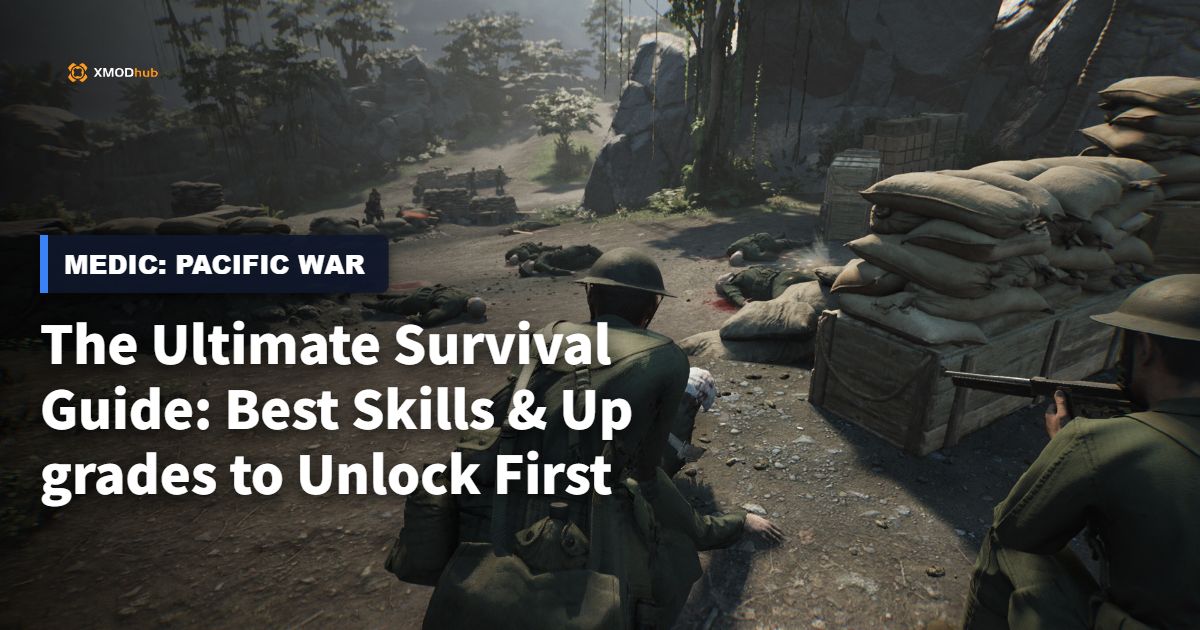
Picture this: You are pinned down in a muddy trench on Okinawa, the roar of artillery deafening your headset. Three of your squadmates are bleeding out from shrapnel wounds, and their survival timers are ticking down mercilessly in the UI. You sprint through the suppressive fire, dive into the mud next to the most critical casualty, and begin applying a tourniquet. But your base animation speed is agonizingly slow. The progress bar crawls. By the time you finally stop the arterial bleed, the other two soldiers have expired, and your mission rating plummets. This is the brutal, unforgiving reality of the early game experience. If you are searching for Medic: Pacific War: Best Skills & Upgrades to Unlock First, you have likely already experienced this exact nightmare. Surviving in this UE5-powered chaotic environment requires more than just fast reflexes; it demands an optimized progression path that maximizes your efficiency as a non-combatant lifesaver under extreme duress.
Editor’s Note:
“During my first 40 hours mastering the mechanics of Medic: Pacific War, I completely botched my skill tree by investing in carrying capacity rather than triage speed. I learned the hard way that holding 20 bandages means nothing if you don’t have the animation speed to apply them before your patient flatlines. Prioritizing action economy is the only way to beat the brutal RNG of incoming mortar fire.”
Quick Answer: TL;DR: The Short Answer
Mechanics Deep Dive: Understanding the Problem
When discussing Medic: Pacific War: Best Skills & Upgrades to Unlock First, we have to thoroughly deconstruct how the game’s underlying mechanics actively work against you. Because Medic: Pacific War is a pure medical simulation built on Unreal Engine 5 rather than a traditional first-person shooter, your “TTK” (Time To Kill) is replaced by “TTS” (Time To Stabilize). Every second you spend diagnosing a wound or fumbling with your medical kit is a second the enemy AI uses to reposition and rain mortar fire on your location. Let’s break down the fundamental errors players make when charting their early-game skill trees and explore the hidden mechanics behind these punishing systems.
The Triage Trap: Prioritizing Capacity Over Speed
One of the most common rookie mistakes in Medic: Pacific War is bee-lining for the “Heavy Carrier” upgrade branch. On paper, this seems entirely logical: the game starves you of medical supplies, so being able to carry more morphine, splints, and plasma IVs sounds like a fantastic investment. However, this fundamental misunderstanding of the game’s action economy will get your squad killed.
In the early game, the real bottleneck is not what you have in your bag, but how fast you can use it. The base triage animation—where your character physically assesses the wounded soldier, checks airways, and locates hemorrhage points—takes a staggering 4.5 seconds. If you are under suppressive fire, your character’s hands shake (a brilliant but punishing UE5 mechanic), adding a 20% penalty to all medical interaction timers. If you have not invested in the “Rapid Triage” and “Steady Hands” skills, you will find yourself locked in long, uninterruptible animations while the enemy zeroes in on your position.
By prioritizing speed upgrades, you are effectively granting yourself invincibility frames. Faster triage means you spend less time exposed in the open. It means you can stabilize a patient in a trench, quickly duck down to avoid a sniper round, and then initiate the drag animation. Always remember: in Medic: Pacific War, speed is your primary armor.
Ignoring the Stamina Economy in the Trenches
Medic: Pacific War features a highly realistic, physics-based dragging and carrying system. When a soldier goes down in the middle of a rice paddy or an exposed beachhead, you cannot treat them there; you must relocate them to hard cover. This is where the stamina economy comes into play, and where ignoring the physical conditioning skill tree leads to instant game overs.
The game calculates drag weight based on the wounded soldier’s gear, plus the mud and incline of the terrain. If you attempt to drag a heavily armored machine gunner up a muddy embankment with base stamina stats, your character’s stamina bar will deplete in mere seconds. Once stamina hits zero, you drop the soldier, your movement speed is penalized by 70%, and your vision blurs. You are now a sitting duck.
Players searching for Medic: Pacific War: Best Skills & Upgrades to Unlock First often overlook nodes like “Adrenaline Rush” and “Combat Conditioning.” These upgrades fundamentally alter the tick rate of your stamina regeneration. “Adrenaline Rush,” in particular, is a game-changer because it forces your stamina to regenerate even while your character is actively experiencing the “Suppression” debuff from nearby explosions. Without this skill, suppression halts stamina regen entirely, trapping you out in the open with a dying man in your arms.
The Mismanagement of Advanced Trauma Kits
The third major pitfall involves the allure of advanced medical interventions. The skill tree taunts you with high-tier unlocks like “Field Surgery,” “Chest Decompression,” and “Surgical Amputation.” While these sound incredibly heroic and are necessary for the late-game levels where artillery shreds your platoon, unlocking them too early is a massive detriment to your progression.
Here is the mechanical truth: performing advanced medical procedures in Medic: Pacific War requires extreme precision and takes an agonizing amount of time. If you unlock “Chest Decompression” before you have leveled up your basic “Tourniquet Application” or “Efficient Bandaging,” you will find yourself failing complex mini-games because the patient is bleeding out faster than you can relieve the tension pneumothorax. The game’s hidden medical algorithm checks for massive hemorrhage before it checks for airway and breathing complications (following the real-world MARCH protocol).
If you do not have the early-game skills to rapidly stop the bleeding, the advanced skills are effectively useless. Your patient will die of hypovolemic shock while you are busy preparing a needle decompression. The optimal path is to master the basics: unlock every upgrade related to stopping bleeding and restoring blood volume first. Only once your baseline stabilization time is under 15 seconds should you even consider looking at the advanced surgical nodes.
Best Alternative Methods and Advanced Tips
Even with the perfect skill tree progression, managing the sheer volume of casualties on the Pacific Front can be overwhelming. Before we dive into advanced gameplay tactics, you must address the elephant in the room: running out of supplies mid-firefight. For players struggling to maintain their inventory while trying out these optimized builds, learning how to master advanced inventory management and unlock hidden supply reserves is absolutely crucial for your long-term survival in the campaign.
Once your logistics are secure, you can start employing advanced mechanical exploits and alternative strategies to maximize your efficiency on the battlefield. When you are restricted by early-game skill limitations, positioning and triage logic become your most potent weapons.
The Ultimate Early-Game Skill Priority Matrix
To truly dominate the battlefield and ensure you are strictly following the optimal path for Medic: Pacific War: Best Skills & Upgrades to Unlock First, you need a precise blueprint. Spending your hard-earned Commendation Points blindly will result in immediate mission failures. Below is the definitive matrix detailing exactly which nodes to unlock, what they do, and why they are non-negotiable for early-game survival.
| Upgrade Classification | Specific Ability / Node | Item / Upgrade Name |
|---|---|---|
| Speed & Triage | Rapid Triage T1 | Cuts assessment animation by 50%. Essential for quickly identifying critical wounds. |
| Physicality | Adrenaline Rush | Bypasses the suppression debuff, allowing stamina regeneration while under heavy artillery fire. |
| Resource Efficiency | Efficient Bandaging | Speeds up dressing application and reduces the wound-reopening RNG when moving patients. |
| Surgical Control | Tourniquet Mastery | Instantly halts arterial bleeding. Crucial for completing the real-world MARCH protocol quickly. |
| Field Mobility | Low Profile Drag | Reduces the enemy AI detection radius by 40% while dragging bodies, keeping you unseen in mud. |
| Logistics | Cargo Pockets | Adds a slight bump to carrying capacity for morphine and bandages without sacrificing speed. |
Creating the ‘Ghost Medic’ Synergy Build
By combining specific nodes from the matrix above, you can create powerful meta-builds that break the game’s difficulty curve. The most popular community loadout is the “Ghost Medic” Synergy Build. This build pairs Adrenaline Rush with Low Profile Drag and the passive skill Mud Camouflage.
Instead of trying to out-heal the incoming damage, the Ghost Medic build focuses purely on extraction. When a soldier drops, you use the passive camouflage to crawl to them undetected. Adrenaline Rush ensures your stamina is capped, and Low Profile Drag allows you to pull the casualty 30 meters back to safety without ever triggering the enemy machine-gunner AI to fire upon your position. Once behind hard cover, your rapid triage skills take over. This synergy drastically increases survivability on notorious bottleneck levels like the Peleliu Airfield assault.
The Ultimate QoL Solution: Bypassing the Grind with XMODhub
Let’s be brutally honest: mastering the intricacies of Medic: Pacific War: Best Skills & Upgrades to Unlock First requires dozens of hours of trial, error, and watching good men die because a UI progress bar was a fraction of a second too slow. The early-game grind is punishing, and the suppressive fire mechanics can feel incredibly unfair when you are just trying to experience the gripping narrative of a WWII medic.
If you want to bypass the grueling early-game skill point grind and focus entirely on the cinematic, life-saving experience without the frustrating RNG of artillery strikes interrupting your animations, XMODhub is the ultimate solution. XMODhub offers a bespoke, rigorously tested trainer designed specifically for the unique mechanics of Medic: Pacific War.
Instead of worrying about stamina depletion while dragging a heavy soldier, you can toggle Infinite Stamina. Tired of failing the complex medical mini-games because the patient bleeds out too fast? Enable the Instant Triage & Heal feature to bypass the animation delays entirely. For those impossible beach-landing missions, activating God Mode ensures that your medic cannot be flinched, interrupted, or killed by random shrapnel while actively saving a life.
Follow these 3 simple steps to fix this instantly:

Frequently Asked Questions
A: No, the game features a permanent progression system. Once you commit a skill point to a node at the Field Hospital between missions, it is locked in. This is why following a strict guide for Medic: Pacific War: Best Skills & Upgrades to Unlock First is so critical to avoid bricking your campaign save file.
A: Yes. The ‘Morale Boost’ aura has a compounding effect. If you successfully stabilize two soldiers within a 10-meter radius, the nearby AI infantry will receive a double buff to their suppression resistance and accuracy, helping them push the enemy back and giving you more breathing room to operate.
A: You absolutely must unlock the ‘Waterproof Dressings’ passive skill. Heavy rain degrades the quality of standard bandages, increasing the chance of a wound reopening by 40%. This upgrade nullifies weather-based degradation entirely, preserving your hard-earned medical supplies.
A: Tourniquet application speed, without question. Morphine only stabilizes the patient’s pain/shock meter, delaying death slightly. A tourniquet actively stops the massive hemorrhaging that causes the fastest death states. Always prioritize stopping the bleeding over managing pain in the early game.
Final Verdict
Mastering the chaotic environment of the Pacific Front requires a fundamental shift in how you view progression. By recognizing that action economy and movement speed dictate your survival, and strictly adhering to the Medic: Pacific War: Best Skills & Upgrades to Unlock First outlined in this guide, you will transition from a panicked liability into a surgical lifesaver. Prioritize your triage speed, respect the stamina system, and ignore the shiny late-game surgical tools until your fundamentals are rock solid.
However, if you prefer to experience the emotional highs of saving lives without the brutal, punishing grind of modern indie survival mechanics, the XMODhub client is your ultimate companion. Supporting over 5000+ PC titles—including other hardcore military simulations like War Hospital and Hearts of Iron Ⅳ—XMODhub provides the exact Quality of Life adjustments you need to play the game exactly how you want. Stop letting slow animations cost you the mission.

I am a passionate gamer and writer at XMODhub, dedicated to bringing you the latest gaming news, tips, and insights.
Connect with me:
LinkedIn Profile ↗






 Nancy Miller