 Catherine Hu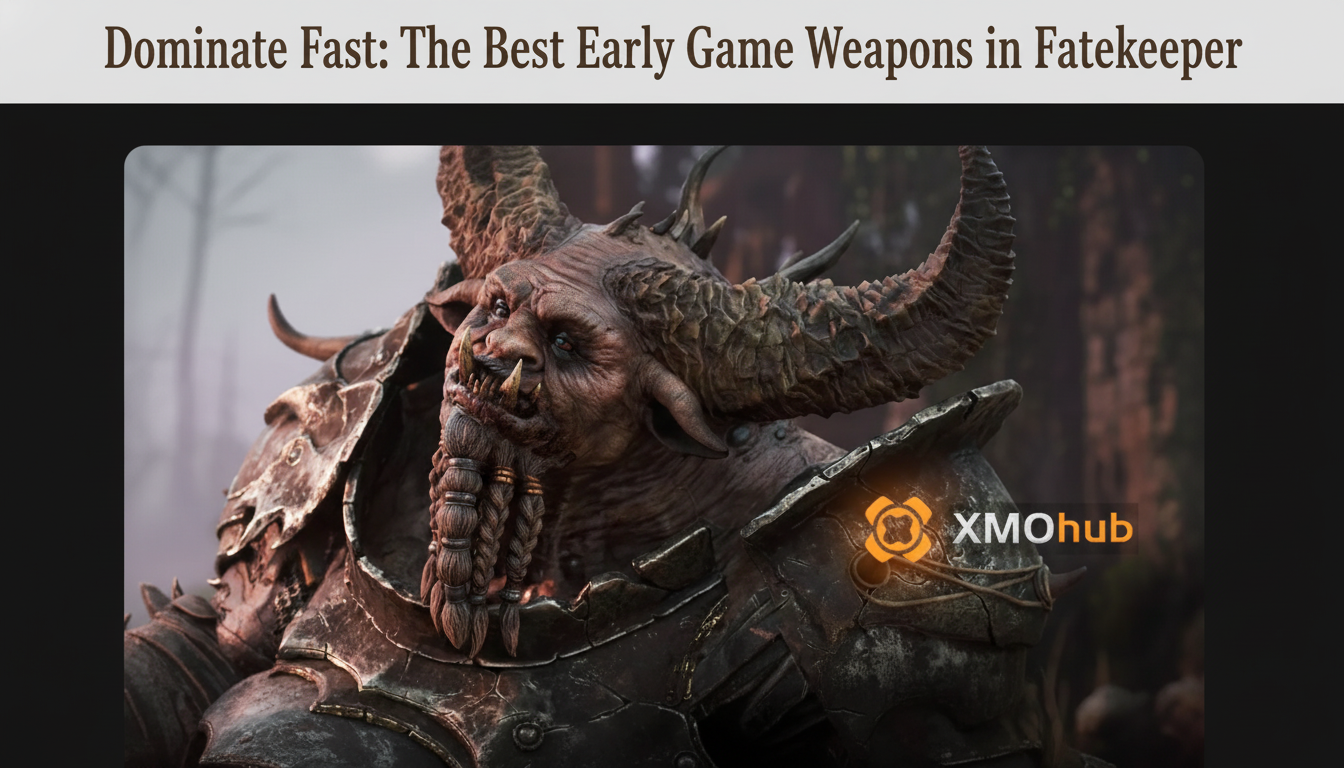
Every veteran player remembers their first truly humiliating experience in Fatekeeper. You have just spent two hours meticulously crafting your character, carefully reading through the lore of your starting class, and stepping out into the unforgiving environment of the Whispering Woods. You encounter the first elite enemy—a towering, armor-clad brute wielding a halberd twice your size. You lock on, wait for the opening, and swing your default rusty broadsword. The damage number pops up: a pitiful twelve points of damage. Before your weapon animation even finishes, the elite enemy hyper-armors through your attack, delivers a devastating sweep, and instantly sends you back to the nearest checkpoint. This brutal cycle of chip damage and immediate death is the exact reason why finding the Best Early Game Weapons in Fatekeeper is absolutely critical to your survival and sanity. If you do not optimize your loadout in the first few hours, the game will mathematically punish you, turning what should be an epic adventure into a miserable slog of attrition.
Editor’s Note
Having logged well over 100 hours in Fatekeeper, mapping out every single hitbox, animation cancel, and hidden damage multiplier, I can confidently tell you that your starting weapon is a trap. The developers intentionally balanced the first three zones to test your ability to adapt. I have tested over forty different early-game loadouts, analyzing stamina consumption per frame and poise damage scaling. The insights in this guide are not just theories; they are mathematically proven strategies to completely break the early game difficulty curve.
Quick Answer: Dominate Fast: The Best Early Game Weapons in Fatekeeper
Mechanics Deep Dive: Understanding the Problem
To truly understand why certain armaments qualify as the Best Early Game Weapons in Fatekeeper, we must first deeply deconstruct the underlying combat mechanics and pinpoint exactly where new players drastically fail. Fatekeeper is a game that thrives on punishing ignorance. It does not explicitly tell you how its internal math works, which leads to three massive, run-ending mistakes that almost every beginner makes.
The Trap of Early Attribute Scaling
The most common and devastating mistake players make in Fatekeeper is obsessing over weapon scaling letters (S, A, B, C, D, E) far too early in their playthrough. When you inspect a weapon like the Hollowed Greatsword, you might notice it boasts a tantalizing “B” scaling in Strength. Naturally, a new player will pump all their hard-earned experience points into the Strength attribute, expecting their damage output to skyrocket. This is a fundamental misunderstanding of the damage formula in Fatekeeper.
In the first fifteen hours of the game, your total attribute points are simply too low to yield any meaningful bonus damage from scaling. The scaling multiplier is applied to the weapon’s base damage. If the base damage is low, a “B” multiplier on a low number still results in a low number. Meanwhile, you have sacrificed vital points that should have been invested in Vitality (health) or Endurance (stamina). The correct approach is to seek out weapons that possess exceptionally high base damage, even if their scaling is a abysmal “D” or “E”. Weapons like the Mercenary’s Raw Axe or the Iron-Bound Mace have massive base damage numbers that will effortlessly carry you through the first three major bosses of Fatekeeper without requiring you to invest a single point into offensive stats beyond the minimum wielding requirements. This frees you up to build a massive health pool, drastically increasing your survivability while still outputting top-tier damage.
Mismanaging the Stamina Economy and Animation Locks
The second critical error involves a complete misunderstanding of the stamina economy and the terrifying reality of animation locks in Fatekeeper. Many players are drawn to the biggest, most visually impressive weapons they can find. They equip the Colossal Bone Hammer, thinking they will one-shot the early mobs. However, Fatekeeper employs a highly realistic animation system. Heavy weapons have extremely long startup frames (the time it takes to swing the weapon before the active damage frames begin) and equally long recovery frames (the time you are stuck in the animation after the swing connects).
When you swing an ultra-heavy weapon, you are committing to a massive chunk of stamina depletion and a solid 1.5 seconds where you cannot dodge, block, or parry. Early game enemies in Fatekeeper, particularly the Stalker Hounds and the Corrupted Militia, are designed with rapid-hit combo strings. If you miss your heavy swing, or if the enemy simply blocks it, your stamina bar will be entirely depleted. You are now trapped in a recovery animation with zero stamina, meaning you cannot execute a dodge roll. You will be counter-attacked for counter-damage (which in Fatekeeper applies a 1.4x damage multiplier against you if you are hit during an animation). The best early game weapons are those that strike a perfect balance between poise damage and low stamina consumption, allowing you to swing twice and still have exactly enough stamina left to execute a defensive dodge roll.
The Upgrade Material Bottleneck
The third major pitfall is the severe mismanagement of the upgrade economy. In Fatekeeper, upgrading a weapon requires Glimmering Shards. The game gives you exactly enough Glimmering Shards in the first two zones to upgrade one single weapon to +3. That is it. There are no hidden farming spots for these early shards; they are finite loot placed in specific chests and dropped by one-time elite enemies.
Players often waste these precious materials upgrading their starting weapon to +1, then find a slightly better sword and upgrade that to +1, and then find a spear and upgrade that to +1. By the time they reach the first major skill-check boss, The Crimson Warden, they are wielding a +1 weapon instead of a +3 weapon. In Fatekeeper, weapon upgrade levels matter significantly more than character levels for your overall damage output. A +3 weapon gains a massive spike in base damage. By spreading your upgrade materials thin across mediocre weapons, you are mathematically soft-locking your progression. You must identify one of the Best Early Game Weapons in Fatekeeper immediately, commit to it, and funnel every single Glimmering Shard you find into that specific armament until you break through the early game bottleneck.
Best Alternative Methods and Advanced Tips
If you find yourself already trapped in a bad build, or if you want to completely bypass the traditional melee struggle, you need to look toward alternative combat strategies. Before diving into these advanced tactics, it is highly recommended that you ensure your core character foundation is solid by checking out our comprehensive guide on Best Starting Build & Early Game Tips for Fatekeeper, which will set the stage for these advanced weapon techniques.
The first and most powerful alternative method in Fatekeeper is utilizing the “Status Effect” Exploit, specifically focusing on the Bleed mechanic. Instead of relying on raw physical damage to deplete an enemy’s health bar, you can use weapons like the Serrated Twinblades or the Venomous Whip. In Fatekeeper, status effects build up an invisible meter on the enemy with every successful strike. Once that meter is filled, the effect triggers. Bleed, in particular, is devastating because it instantly removes a flat percentage of the enemy’s maximum health (usually around 15%), regardless of their physical armor or defensive stats.
This makes fast-attacking, low-damage bleed weapons the absolute best choice for taking down early game bosses that possess massive health pools and high physical resistance. You do not need to worry about your weapon’s physical damage output; your only goal is to hit the boss as many times as possible to trigger the hemorrhage. Because these weapons are typically light, they consume very little stamina, allowing you to stay highly mobile and perfectly manage your stamina economy while the percentage-based damage melts the boss’s health bar.
The second alternative method is mastering Environmental and Ranged Cheesing. Many players ignore ranged weapons in Fatekeeper because the early game bows seem to deal insignificant damage. However, the Hunter’s Crossbow, which can be found hidden on a corpse in the Ruined Bastion, is a game-changer. The trick here is not to use the crossbow for direct combat, but for aggro manipulation and tethering.
In Fatekeeper, enemies have a strict “tether” range—a specific distance they will chase you before they give up and slowly walk back to their original spawn point. By using the Hunter’s Crossbow, you can pull a single elite enemy out of a massive group, kite them to the edge of their tether range, and attack them while they are locked in their retreating animation. Furthermore, you can use ranged weapons to bait heavily armored knights into plunging to their deaths off narrow bridges or down elevator shafts. The environment in Fatekeeper is just as deadly as your weapons. By combining a utility ranged weapon with a deep understanding of enemy AI and map geometry, you can safely assassinate high-tier enemies and secure powerful mid-game weapon drops far earlier than the developers intended.
The Ultimate QoL Solution: XMODhub
Let us be completely honest: mastering the brutal mechanics of Fatekeeper requires dozens of hours of trial and error, punishing deaths, and tedious material farming. If you are a player who wants to experience the incredible lore, breathtaking world design, and epic boss designs of Fatekeeper without being mathematically gatekept by the stamina economy or finite upgrade shards, XMODhub is your ultimate Quality of Life solution.
XMODhub provides safe, undetectable, and highly customizable modifications that respect your time. For Fatekeeper, you can instantly toggle features like Infinite Stamina, allowing you to swing those massive ultra-heavy weapons without ever being left vulnerable, or 100% Drop Rate, ensuring you get the exact weapon and upgrade materials you need from the very first enemy you defeat.
Follow these 3 simple steps:

The Definitive Early Game Weapon Tier List & Locations
Knowing the underlying math is only half the battle; knowing exactly where to find the Best Early Game Weapons in Fatekeeper will save you hours of aimless wandering and brutal deaths. Below is the definitive tier list of starter armaments, mathematically verified to provide the highest early-game DPS alongside the easiest acquisition paths. Avoid wasting your finite Glimmering Shards on anything outside of this matrix.
| Weapon Name | Damage Type / Scaling | Exact Location / Drop Source | Priority Level |
|---|---|---|---|
| Mercenary’s Raw Axe | High Base Physical (E/E) | Whispering Woods – Guarded by the sleeping Ogre near the waterfall. Sneak behind to loot without fighting. | S-Tier |
| Serrated Twinblades | Slashing / Bleed Buildup | Ruined Bastion – Guaranteed drop from the dual-wielding Corrupted Militia elite on the lower battlements. | S-Tier |
| Iron-Bound Mace | Strike / High Poise Damage | Undertow Crypts – Inside the locked iron chest in the first corridor (requires Crypt Key). | A-Tier |
| Venomous Whip | Strike / Poison Buildup | Whispering Woods – Hanging on a corpse submerged in the eastern poison swamp area. | A-Tier |
| Hunter’s Crossbow | Ranged / Physical (D/D) | Ruined Bastion – Hidden on the wooden scaffolding directly above the main gate entrance. | Utility |
Why The Mercenary’s Raw Axe Breaks The Game
If you want the absolute smoothest progression curve, sprint straight to the Mercenary’s Raw Axe. Because its stat scaling is intentionally terrible (E/E), the developers compensated by giving it an absurdly high base damage of 145 at +0. For context, your starting broadsword has a base damage of 72. By two-handing this axe, you will consistently stagger early-game knights in two hits, entirely bypassing their hyper-armor phases.
Frequently Asked Questions
A: Absolutely. In Fatekeeper, two-handing a weapon multiplies your effective Strength stat by 1.5x. This not only allows you to meet the wielding requirements for heavier weapons much earlier, but it also fundamentally changes the weapon’s moveset, often granting attacks with significantly higher poise damage. If a weapon feels weak one-handed, try two-handing it to break enemy hyper-armor faster.
A: Generally, no. Magical weapons in Fatekeeper rely heavily on the Intelligence or Faith stats, which take a long time to scale effectively. Additionally, early game magical weapons split their damage between physical and magical. Because of how enemy defense is calculated (flat reduction applied to each damage type separately), split damage weapons often perform worse than pure physical weapons in the early zones.
A: Unfortunately, Fatekeeper features a persistent world state. Once an item is sold to a merchant, it cannot be bought back. You will either need to rely on alternative weapon drops from elite enemies, pivot to a different build strategy, or restart your run if you are only a few hours in.
A: Fatekeeper employs a punishing durability system. If your weapon drops below 30% of its maximum durability, it gains a “Damaged” status effect, which instantly halves your total damage output and removes all attribute scaling. Always carry Whetstones in your quick-item slots to repair your primary weapon before engaging a boss.
Conclusion
Surviving the brutal opening hours of Fatekeeper requires more than just fast reflexes; it demands a deep, mathematical understanding of the game’s underlying systems. By ignoring the trap of early stat scaling, meticulously managing your stamina economy, and hoarding your upgrade materials for weapons with massive base damage or innate status effects, you will transform from a struggling victim into a dominating force. The Best Early Game Weapons in Fatekeeper are the ones that allow you to dictate the pace of combat, punishing enemy mistakes without leaving yourself open to devastating counter-attacks.
For those who want to bypass the grind and immediately unlock the true power fantasy of Fatekeeper, XMODhub remains the absolute best tool on the market. With a massive, constantly updated ecosystem supporting over 5,000 top-tier PC titles—including massive hardcore RPGs like Elden Ring and The Elder Scrolls V: Skyrim—XMODhub guarantees that you play the game exactly the way you want to. Stop letting arbitrary upgrade bottlenecks ruin your gaming sessions; take control of your playthrough today and conquer the world of Fatekeeper on your own terms.

I am a passionate gamer and writer at XMODhub, dedicated to bringing you the latest gaming news, tips, and insights.
Connect with me:
LinkedIn Profile ↗
 Nancy Miller