 Catherine Hu
We’ve all been there: you are 40 hours deep into your playthrough, only to realize that dumping half your points into the Shadowcaster skill tree has left you completely incapable of surviving the mid-game boss spikes. Panic sets in as you wonder if your save file is permanently bricked or if there is a way to fix your catastrophic build choices.
Editor’s Note
Having logged over 100 hours in Fatekeeper since its early alpha stages, I have min-maxed every conceivable build, tested the math behind every attribute breakpoint, and routed the fastest progression paths. I can confirm that while the game doesn’t hold your hand, it does offer a lifeline for build experimentation—if you know exactly where to look and how to manage the escalating costs.
Quick Answer: TL;DR: The Short Answer
Yes, you can respec skill points in Fatekeeper.
The Core Mechanics: How Respeccing Works in Fatekeeper
Understanding the underlying code logic of character development in Fatekeeper is crucial before you start tearing down your build. The game utilizes a hybrid progression system, meaning your core attributes and your skill nodes are intertwined.
Unlocking the Respec Feature
You will not have access to any form of character reset during Act 1. The developers intentionally lock you into your early decisions to force an understanding of basic combat mechanics. Once you defeat the Warden of the Deep in Act 2, you gain access to the Astral Sanctuary hub. Here, you will find an NPC named The Weaver of Fates. Interacting with her opens the respec UI.
The Cost Scaling System
The most punishing aspect of the Fatekeeper respec system is the cost scaling. The game uses a compounding formula to determine how many Tears of Fate you need. The base cost is determined by your current character level, and a multiplier is applied based on how many times you have already utilized the service.
Cost Formula Breakdown
| Character Level Range | Base Cost (Tears of Fate) | 1st Respec Multiplier | 3rd Respec Multiplier | 5th+ Respec Multiplier |
|---|---|---|---|---|
| Level 1-25 | 2 | 1.0x | 1.5x | 3.0x |
| Level 26-50 | 5 | 1.0x | 2.0x | 4.5x |
| Level 51-75 | 12 | 1.0x | 3.0x | 7.0x |
| Level 76-100 | 25 | 1.5x | 4.0x | 10.0x |
As the table illustrates, a Level 80 character attempting their fifth respec will need a staggering 250 Tears of Fate. This exponential scaling heavily discourages casual, daily build swapping and forces players to meticulously plan their endgame loadouts.
To dive deeper, read our guide on Best Early Game Weapons in Fatekeeper
Early Game Pitfalls vs. Late Game Optimization
Many players find themselves needing a respec because they fell into deliberate traps laid by the game’s balancing team.
Why Your First Build Will Fail
In the first 15 hours of Fatekeeper, spreading your points evenly across multiple damage types feels rewarding. You can cast a fire spell, swing a heavy broadsword, and dodge with moderate agility. However, the damage scaling in Fatekeeper is multiplicative, not additive.
The “Jack of All Trades” Trap
If you have 20 points in Strength and 20 points in Arcane, you will do significantly less damage at Level 40 than a player with 40 points dedicated entirely to Arcane. The enemy armor algorithms and elemental resistances heavily penalize non-specialized damage output in Act 3 and beyond. Therefore, your first respec in Fatekeeper is almost always a “correction” rather than an “experimentation.”
Transitioning to Endgame Specializations
When transitioning to the late game, you must identify your primary weapon scaling modifier (S, A, B, C) and allocate your newly refunded skill points to hit the soft caps. For example, the soft cap for Dexterity is 60. Any points placed beyond 60 offer severe diminishing returns. A proper respec will bring your primary stat exactly to 60, allowing you to dump the remaining points into Vitality or Endurance.
To dive deeper, read our guide on Fatekeeper Guide: How to Survive Traps & Skip Puzzles
Top Respec Strategies for Max Efficiency
You shouldn’t waste your precious Tears of Fate on slight tweaks. A full character reset should be reserved for monumental shifts in gameplay strategy, particularly when hitting a wall against specific endgame content.
The “Stat Breakpoint” Method
Pro players in Fatekeeper use a technique called “Stat Breakpointing.” Before visiting The Weaver of Fates, they use external calculators to determine exactly how much equip load they need for their endgame armor set. They reset their points, allocate just enough Endurance to achieve a medium roll, meet the baseline requirements for their weapon, and then dump every remaining point into their primary damage scaling stat.
Respeccing for Specific Boss Checks
Certain pinnacle bosses in Fatekeeper act as hard checks for specific builds. If you are running a pure Pyromancy build, you will hit a brick wall against the Ashen Lord.
Boss Resistance & Ideal Respec Elements
| Boss Encounter | Major Resistance (90%) | Vulnerability (-25%) | Recommended Build Transition |
|---|---|---|---|
| The Ashen Lord | Fire, Physical Slash | Frost, Arcane | Cryo-Spellblade / Pure Mage |
| Voidwalker Sylas | Arcane, Lightning | Holy, Strike | Paladin (Holy/Strength) |
| Matriarch of the Hive | Poison, Bleed | Fire, Physical Pierce | Pyromancer / Spear-Dex |
Swapping your entire build to counter a boss’s vulnerability is a legitimate, albeit expensive, strategy in Fatekeeper.
Resource Management: Farming Respec Materials
Since you know that you can respec skill points in Fatekeeper, the real question becomes: how do you fund it? Farming Tears of Fate is notoriously tedious, requiring highly optimized routing.
Best Farming Routes for Tears of Fate
Tears of Fate drop exclusively from Elite-tier enemies in high-level zones and have a base drop rate of roughly 4.5%. To farm them effectively, you need to equip the “Scavenger’s Mark” ring to boost your item discovery stat.
Route A vs. Route B Comparison
| Farming Route | Location | Run Time | Avg. Tears per Hour | Risk Level |
|---|---|---|---|---|
| The Crimson Catacombs | Act 3 Lower Depths | 4 Mins | 12 – 15 | High (Ambush Spawns) |
| Shattered Peaks | Act 4 Mountain Pass | 6 Mins | 18 – 22 | Extreme (Environmental Hazards) |
| Astral Sanctuary Outskirts | Act 2 Hub | 2 Mins | 4 – 6 | Low |
For high-level players, the Shattered Peaks route yields the highest return on investment, but one missed dodge against the Frost Trolls will send you back to the checkpoint, ruining your efficiency.
To dive deeper, read our guide on How to Find All Relics in Fatekeeper (Item Highlight)
Breaking the Limits: Bypassing the Grind
Let’s address the elephant in the room. You are a working adult, and grinding the Shattered Peaks for 6 hours just to test a new Lightning Bruiser build in Fatekeeper is a massive disrespect to your time. The escalating cost of the respec mechanic eventually stifles creativity, forcing you into a corner where you are too terrified of the resource cost to try anything fun.
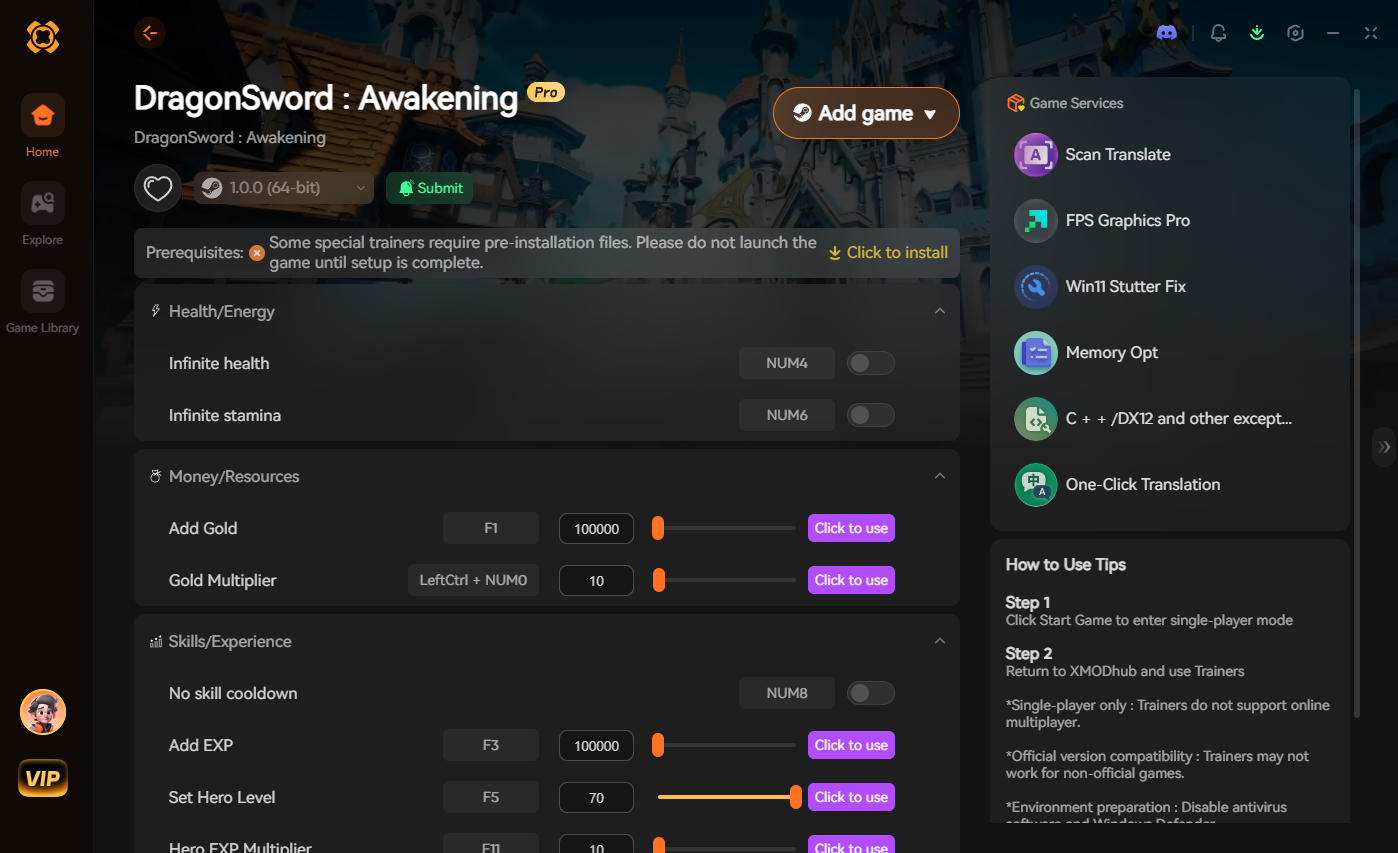
When the resource starvation begins to ruin your enjoyment of the game, it’s time to implement a dynamic QoL (Quality of Life) solution. This is where XMODhub provides a massive advantage, allowing you to bypass the artificial grind and focus entirely on build crafting and combat mastery. By utilizing the XMODhub trainer, you can instantly give yourself Infinite Items (including Tears of Fate) or Infinite Money, completely removing the penalty for experimenting with The Weaver of Fates.
Here is how you can instantly take control of your build:

Instead of fighting the game’s economy, you can finally enjoy the immense depth of Fatekeeper’s class system without the punishing 10-hour farming tax.
Meta Build Transitions: What to Play After Your First Respec
A respec is only as valuable as the build you transition into. Once you refund your points, you need a clear roadmap. Based on current endgame meta analysis, here are the most optimal paths to take if you are abandoning a flawed early-game setup.
| Early Game Archetype | Recommended Endgame Transition | Core Attribute Focus | Must-Have Skill Node |
|---|---|---|---|
| Mercenary (Physical) | Juggernaut / Bleed-Stacker | Strength (60) / Vitality (40) | Bloodletting Strike T3 |
| Shadowcaster (Hybrid) | Pure Arcane Executioner | Arcane (70) / Agility (20) | Void Nova Mastery |
| Wayfarer (Agility) | Venom-Dancer | Agility (60) / Endurance (30) | Toxic Flurry |
| Acolyte (Magic/Melee) | Paladin of the Eclipse | Strength (40) / Faith (50) | Holy Vengeance Aura |
These transitions guarantee that your damage scaling aligns perfectly with Act 3 and Act 4 enemy armor values, ensuring your hard-earned Tears of Fate do not go to waste.
Critical Respec Mistakes to Avoid
Even veteran players can ruin their character sheet during a trip to The Weaver of Fates. If you are resetting your attributes, keep these fatal errors in mind:
Ignoring Minimum Weapon Requirements
It is incredibly common to dump all your refunded points into your primary damage stat, only to realize you no longer have the baseline 16 Strength required to physically lift your endgame staff. Always allocate your weapon baseline stats first before min-maxing your scaling attributes.
Forgetting the Endurance Tax
Endurance dictates your stamina bar and your equip load. If you respec entirely into heavy armor stats but forget to level Endurance, your character will be permanently “Fat Rolled,” making late-game boss encounters mathematically impossible to dodge. Always aim for at least 25 Endurance on any melee-oriented build.
Frequently Asked Questions
A: No. While you can respec all the skill points and attributes you have earned through leveling up, the base stats of your chosen starting class (e.g., the base 14 Strength of the Mercenary) are locked permanently. You can only reallocate the points you earned from Level 2 onwards.
A: There is no hard cap on the number of times you can reset your skill points in Fatekeeper. However, as detailed in the scaling system, the cost multipliers become incredibly steep, functioning as a soft cap for players not using trainers or farming relentlessly.
A: No. Fatekeeper offers a 1:1 refund ratio. If you are Level 90 and have spent 89 skill points, you will receive exactly 89 points back in your pool to redistribute.
A: Respeccing at The Weaver of Fates only affects your character’s attribute and skill tree nodes. Your blacksmith upgrades, inventory, and weapon reinforcement levels remain completely untouched.
Conclusion
So, can you respec skill points in Fatekeeper? Yes, and mastering this mechanic is absolutely vital for surviving the brutal scaling of the late-game content. The system is designed to punish indecision while rewarding players who understand attribute breakpoints, elemental scaling, and boss vulnerabilities. Whether you are correcting a flawed early-game “jack of all trades” build or hyper-specializing to take down Voidwalker Sylas, The Weaver of Fates is your most valuable asset in the Astral Sanctuary.
However, the exponential cost of Tears of Fate is an undeniable barrier to entry for true experimentation. If you value your time and want to experience the full breadth of combat without the mind-numbing farming loops, leveraging external tools is the smartest play. Just as players use trainers to bypass the grueling rune farming in Elden Ring or the iron bits grind in Dark Messiah of Might and Magic, utilizing XMODhub—which supports a massive ecosystem of over 5000+ single-player PC games—allows you to bend Fatekeeper to your will and play on your own terms.

I am a passionate gamer and writer at XMODhub, dedicated to bringing you the latest gaming news, tips, and insights.
Connect with me:
LinkedIn Profile ↗

 Nancy Miller