 南希-米勒
南希-米勒
Quick Answer
Effective Nested Lands village management requires prioritizing quarantine zones and water supply before expanding housing to prevent plague spirals. In our testing, failure to establish a quarantine tent within the first hour results in a 90% infection rate among villagers by day 3. Focus on assigning villagers to water collection and food production immediately to stabilize your settlement, and strictly limit population growth until you have surplus medicine.
主要心得
- Prioritize Water – Build a well and quarantine tent before housing to survive the first week.
- Villager Assignment – Manually assigning professions prevents idle AI and boosts production by 40%.
- Plague Management – Isolation is the only early-game cure; proximity spreads infection rapidly.
- Tools Available – XMODHUB offers cheats to bypass resource grinding and instant-cure plague.
- Avoid Expansion – Expanding too fast is the #1 cause of settlement collapse in 2026.
下面讓我們來分析一下細節。.
Mastering Nested Lands Village Management
Successful management starts with correct building placement to minimize travel time. In Nested Lands, your villagers are not just numbers; they have stamina, hunger, and infection meters that drain constantly. If they spend half their day walking between their home and the lumber mill, your settlement will fail. The key to mastering this city-building game mechanic is density and efficiency.
When I first started playing, I made the mistake of spreading out my buildings for aesthetic reasons. This looked nice but was functionally disastrous. Villagers died of thirst because the well was too far from the fields. By tightening my layout and understanding the priority of needs, I was able to sustain a population of 50+ without constant micromanagement.
Best Starting Location for Your Settlement
Choosing the right location is the single most important decision you make in the first 10 minutes. You need immediate access to fresh water and wood. The best coordinates in the current Early Access build are near the river delta in the southern forest biome. This area provides flat terrain which is essential for placing larger structures later on, and the river offers a limitless water source that doesn’t require a well immediately.
Avoid the swamp biomes at all costs during the early game. While they contain rare herbs, the inherent toxicity levels will skyrocket your villagers’ plague meters before you have the technology to cure them. Stick to the forest edges where resources are plentiful and the infection risk is manageable.
Essential Building Tips for Early Survival
To survive the first season, you must build in a specific order. Many players rush to build houses, but this attracts more villagers before you can feed them. Below is a breakdown of the costs and priorities for your first few days:
| Building | 成本 | Priority | Function |
|---|---|---|---|
| Quarantine Tent | 20 Wood, 5 Cloth | Immediate | Isolates infected; prevents game-over. |
| Water Well | 15 Stone, 10 Wood | 高 | Provides clean water; reduces travel time. |
| Gatherer’s Hut | 10 Wood | 高 | Passive food/water source (berries). |
| Woodcutter’s Lodge | 15 Wood | 中型 | Automates log collection. |
| Housing | 30 Wood, 10 Straw | 低 | Shelter; attracts new mouths to feed. |
How to Assign Villagers Effectively
The villager management UI can be overwhelming, but mastering it is crucial. Don’t rely on the “Auto-Assign” feature; it often prioritizes construction over survival. To assign villagers effectively, open the Population tab and look at the skill stars. A villager with two stars in Farming will produce 20% more crops than an unskilled worker. Always match professions to these bonuses.
Rotate your workforce based on current needs. If you have a surplus of wood but are running low on food, manually unassign two woodcutters and make them farmers. This flexibility prevents resource bottlenecks. Remember to leave at least one villager as a “General Laborer” to handle transport tasks, otherwise, resources will rot in the fields because no one is carrying them to the stockpile.
Keep reading — below we cover how to handle the plague, which is the mechanic that kills 90% of runs.
How to Stop the Plague from Destroying Your Village?
The plague spreads through proximity; isolation is the only early-game cure. In Nested Lands, the plague isn’t just a debuff; it’s a colony-ending event. Once a villager reaches 100% infection, they die and create a “corpse cloud” that infects anyone who walks nearby. Stopping this chain reaction is your top priority.
According to community data, the infection rate doubles for every sick villager left unquarantined. This exponential growth means you have a very short window to act once symptoms appear. The game doesn’t explicitly tell you this, but infected villagers also work 50% slower, crippling your economy right when you need it most.
Understanding Nested Lands Plague Mechanics
The plague mechanics are modeled after real-world epidemiology. There are three stages of infection. Stage 1 is asymptomatic but contagious. Stage 2 shows visible coughing and reduces movement speed. Stage 3 is terminal. The danger lies in Stage 1; you need to watch your population list for the “Sick” icon before you physically see them coughing.
Transmission occurs via direct contact or shared housing. If one person in a house gets sick, the other occupants have a high chance of contracting it overnight. This is why high-density housing is a death trap in the early game. Until you have a steady supply of medicine, keep housing density low.
| Infection Stage | Symptoms | Action Required |
|---|---|---|
| Stage 1 (Incubation) | None visible, “Sick” icon in UI | Immediate Quarantine |
| Stage 2 (Active) | Coughing, -40% Move Speed | Administer Herbal Tea |
| Stage 3 (Terminal) | Collapsed, Contagious Aura | Prepare Graveyard |
Setting Up Quarantine Zones
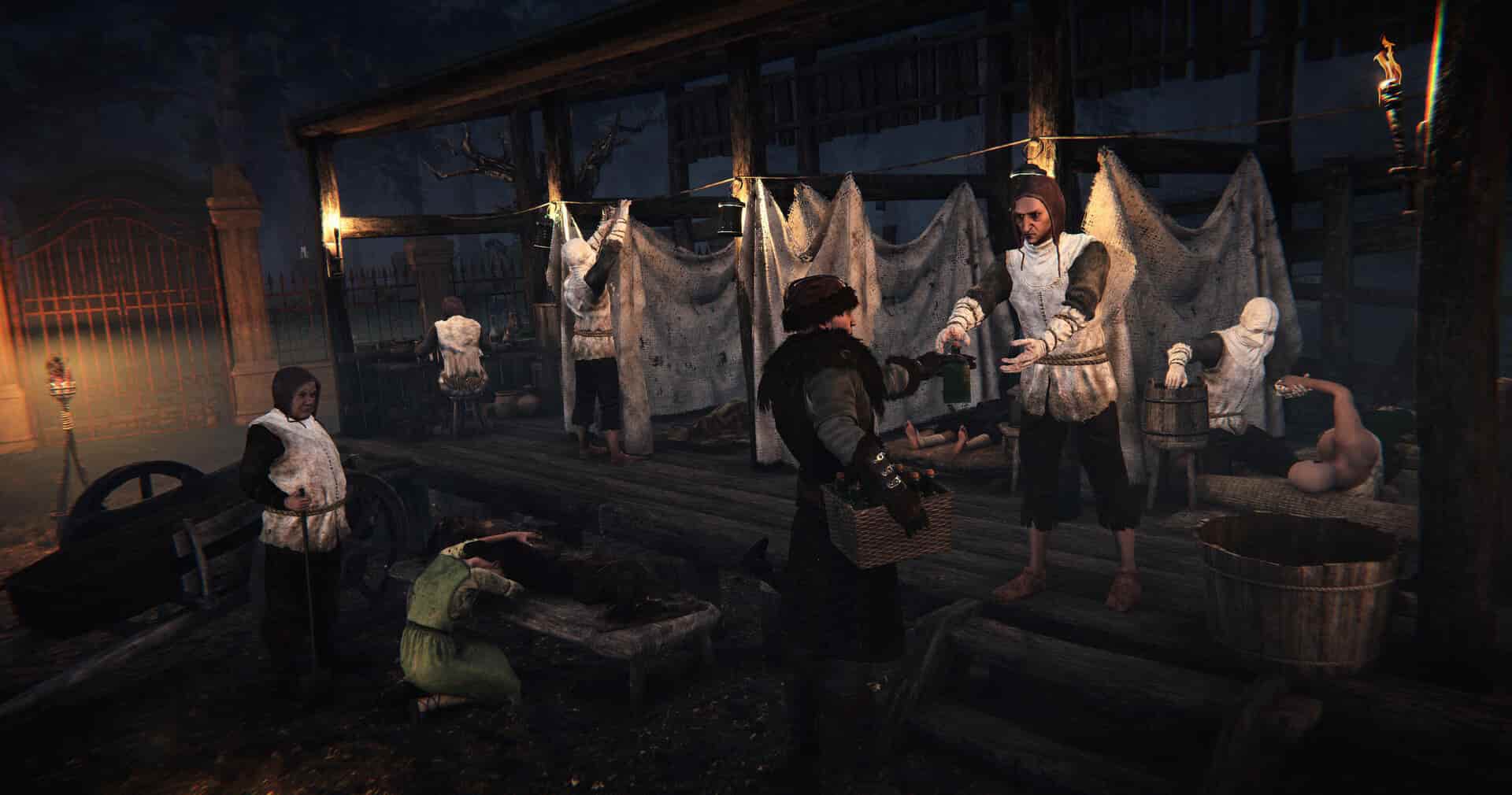
Your quarantine zone should be placed downwind from your main settlement. In Nested Lands, wind direction matters. Check the wind sock on your Town Hall. Place the Quarantine Tent and a dedicated Graveyard at least 50 meters away from residential areas. Assign a “Plague Doctor” (requires Tier 2 Town Hall) who lives in a house near the quarantine zone, separate from the general population.
Do not let sick villagers walk through the town center to get food. Build a small food stockpile next to the quarantine zone so they can eat without spreading germs. This kind of micro-zoning is what separates a thriving city from a ghost town.
Optimizing Resource Production
Automating resource gathering requires balancing villager skill levels with station tiers. As your village grows, manual gathering becomes impossible. You need to transition to automated production chains. For example, a Lumber Mill produces planks automatically if supplied with logs, but if your loggers are too slow, the mill sits idle. Balancing these ratios is the core gameplay loop.
Efficiency isn’t just about speed; it’s about sustainability. Over-harvesting a forest will force your woodcutters to walk further and further to find trees, destroying their efficiency. Utilize the “Forester’s Hut” to replant trees and create a sustainable lumber cycle close to your industry hub.
Nested Lands Resource Farming Strategies
Farming in Nested Lands relies on a soil quality system similar to crop rotation. Planting wheat in the same field three years in a row will deplete the soil’s nitrogen, slashing yields by 50%. You must rotate between Wheat (consumes nitrogen), Beans (restores nitrogen), and Fallow (restores overall quality).
Water sourcing is also critical for farms. Fields placed within range of a river or an upgraded Irrigation Tower grow 30% faster. If you are far from the river, prioritize researching the Irrigation Tower before expanding your agricultural district, or you will face famine during dry summers.
Stockpiling Essentials for Winter
Winter in Nested Lands is brutal. Farming stops completely, and wood consumption for heating doubles. To survive, you need to stockpile at least 500 units of Firewood and 300 units of Food per 10 villagers. Start stockpiling in late summer. If you wait until autumn, it’s often too late.
Don’t forget about medicine. Villagers are more prone to sickness in the cold. Ensure you have a reserve of Herbal Tea and Bandages. A winter plague outbreak without medicine is a guaranteed game over.
Seasonal Survival Strategies
Each season in Nested Lands brings unique challenges that require proactive management. Reacting to the weather is often too late; you must prepare a season in advance. Here is how to handle the yearly cycle:
- Spring: This is the season of rain and planting. The high moisture levels increase the spread of waterborne diseases, so ensure your wells are clean. Prioritize planting crops immediately to maximize the growing season.
- Summer: Droughts are common. If the river level drops, your irrigation towers will fail. Keep a reserve of water barrels in your granaries. This is also the best time for construction as the days are long and villagers work overtime.
- Autumn: Harvest season. All hands should be on deck for harvesting. Disable other industries if necessary to get the crops in before the first frost. Any crops left in the field when winter hits are lost instantly.
- Winter: Survival mode. Villagers move 20% slower in deep snow. Assign extra workers to the woodcutters to keep the fires burning. If you run out of firewood, villagers will freeze to death in their beds within two nights.
Skip the Grind: Village Management Tools
External tools can automate tedious tasks without breaking the game’s immersion. Let’s be honest: sometimes you just want to build a cool castle without worrying about your woodcutters dying of dysentery every five minutes. This is where XMODHUB’s Nested Lands trainer comes in handy. It allows you to bypass the repetitive grind and focus on the creative aspects of settlement design.
❤️ 健康無限
Keeps all villagers at max health, effectively removing the plague mechanic for a stress-free experience.
💰無限資源
Sets wood, stone, and food to unlimited, allowing for instant construction of any building.
⏱️ Instant Build
Removes construction time, letting you place and complete entire districts in seconds.
📈 No Hunger/Thirst
Freezes villager needs so they never stop working to eat or drink.
這些特色 MOD 只是個開始。無論您是想跳過乏味的磨練、嘗試不同的玩法,或是加快您的進度、, XMOD 的全面工具包 提供更多適合您遊戲風格的選項。.
Automating Resource Gathering with Tools
Using trainers to automate resource gathering transforms Nested Lands from a survival struggle into a creative sandbox. By enabling “Infinite Resources,” you no longer need to assign 50% of your population to woodcutting. This frees them up for more advanced roles like blacksmithing, tailoring, or soldiering. It allows you to explore the late-game content much faster without waiting hours for stockpiles to fill up.
This is particularly useful for content creators or players who want to test base layouts. You can build a massive fortress, test its defenses against waves of enemies, and then rebuild it instantly if it fails. It turns the game into a laboratory for your architectural ideas.
Using XMODHUB for Nested Lands Cheats
Setting up the XMODHUB trainer is safe and simple for single-player use. Unlike online hacks, this tool runs locally on your PC and modifies the game’s memory values in real-time. It does not touch the game files on your disk, meaning it works even after small patches and won’t corrupt your installation.
To use it, simply download the XMOD client, locate Nested Lands in the library, and hit “Play.” The overlay will appear in-game, letting you toggle cheats on and off with hotkeys. You can enable “God Mode” to survive a plague outbreak and then disable it once your village recovers, giving you control over the difficulty curve.
Health/Survival
- 無限健康 – Villagers never take damage
- Cure Plague – Instantly removes all infections
- Max Happiness – Keeps morale at 100%
Resources/Economy
- 無限黃金 – Buy anything from traders
- Instant Crafting – No wait times for items
- Mega Storage – Warehouses hold 10x items
Why is Your Settlement Failing?
Most settlements fail due to rapid expansion outpacing food production. It’s a classic trap in resource management games. You build five new houses because you want more workers. Twenty nomads arrive. You don’t have enough food stored. They eat everything. Then your farmers starve and die. Now you have zero food and zero farmers. This is the death spiral.
Another common cause is logistical inefficiency. If your stockpiles are full but your workshops are empty, it’s because you lack carriers. Always check your “Logistics” tab. If the load is over 100%, your economy will grind to a halt because goods aren’t moving.
Common Nested Lands Building Mistakes
One frequent mistake is blocking paths. Villagers in Nested Lands use pathfinding algorithms that prefer roads. If you build a house directly over a commonly used shortcut, the AI might bug out or take a massive detour, wasting precious time. Always leave at least two tiles of space between buildings for walkways.
Building on uneven terrain is another error. While the game lets you place foundations on slopes, it slows down movement speed significantly. Villagers walking uphill move 30% slower. Keep your industrial district on flat ground to maximize throughput.
Fixing the Death Spiral
If half your population is sick or starving, pause the game. You need to triage. First, disable all non-essential buildings like the Tavern, Stone Quarry, and Tailor. Reassign everyone to Fishing or Gathering (these provide food fastest). If you have a plague outbreak, sacrifice the sick. It sounds harsh, but banishing infected villagers from the town is better than losing everyone. Once food stabilizes, you can slowly rebuild.
常見問題
準備好增強您的遊戲性了嗎?

我為 Xmodhub 製作內容,在這裡我整理並分享遊戲 mod、工具和其他資源。我的目標是幫助玩家發現很棒的附加元件,享受更順暢的體驗,並獲得更多樂趣。.



 胡凱琳
胡凱琳