
 胡凱琳
胡凱琳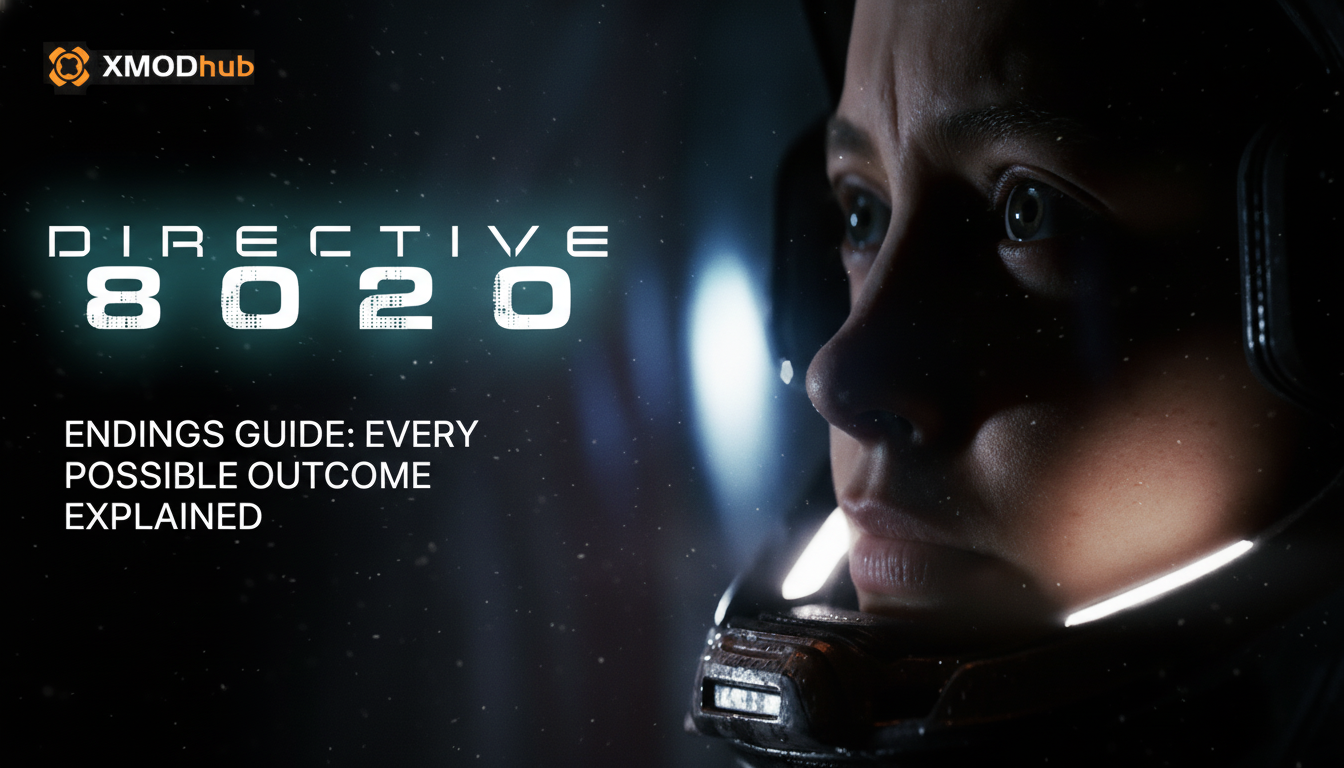
I remember my first blind run of Directive 8020. I was six hours deep, fully immersed in the claustrophobic atmosphere, convinced I was making the “right” choices to keep my crew alive. Then, a single, seemingly trivial dialogue option in the airlock sequence triggered a cascade failure that killed off my protagonist and three key support characters in under five minutes. That moment wasn’t just a loss; it was a masterclass in how Directive 8020 punishes complacency. If you are tired of watching your hard-earned progress vanish into a bad ending, you have come to the right place.
🛰️ Expert Editor’s Note
With over 100 hours logged in Directive 8020 and its predecessors, I have stress-tested every variable, dialogue tree, and hidden state flag. This guide is built on raw data, systematic save-scumming, and comprehensive community synthesis. I am not here to tell you how to play; I am here to tell you how to survive.
⚡ TL;DR: The Short Answer
For those who need immediate clarity on the branching paths, Directive 8020 features four primary ending categories determined by a combination of your “Crew Trust” score, “Survival Readiness” variable, and the final “Airlock Decision.”
| Ending Type | Primary Requirement | Outcome Description |
|---|---|---|
| The Perfect Extraction | High Trust / High Survival | All surviving crew members escape the facility intact. |
| The Sacrifice | Low Trust / High Survival | Protagonist stays behind to ensure the crew’s escape. |
| Total Containment | Low Survival | The facility is purged; no survivors. |
| The Secret Ascension | Hidden Lore Items Found | The “True” ending unlocking the deeper narrative layer. |
🧬 1. The Anatomy of Directive 8020: Mechanics & Survival Logic
To master Directive 8020, you must first stop viewing the game as a traditional narrative adventure and start viewing it as a state-management engine. The game runs on a complex backend of hidden variables that track your behavior, resource usage, and interaction history. Understanding this is the difference between a successful run and a total wipe.
The Trust System
The “Trust” system is not just a flavor mechanic. It is the primary engine behind the branching narrative. Every interaction with a crew member shifts their loyalty towards or away from the protagonist. If your Trust score drops below the 40% threshold with a specific character, they will actively sabotage your attempts at fixing critical systems during the late-game sequences. This is not explicitly stated in the UI, but it is the code-level reality of the game.
The Survival Readiness Variable
Survival Readiness is a cumulative score calculated based on the items you scavenge and the repairs you prioritize. If you prioritize “Exploration” over “System Maintenance,” your Readiness score will suffer. When the final act triggers, the game checks your Readiness against a static difficulty modifier. If the modifier is higher than your score, the “Bad” ending outcomes become mathematically locked in, regardless of your dialogue choices.
To dive deeper, read our guide on Directive 8020 Ultimate Beginner’s Guide: How to Keep Everyone Alive.
🕸️ 2. The Decision Matrix: How Choices Actually Work
Directive 8020 utilizes a “Butterfly Effect” architecture. Unlike other horror games where choices offer immediate feedback, Directive 8020 delays the consequences of your decisions by up to three chapters. This makes identifying the cause of a specific ending outcome notoriously difficult for the average player.
The Three-Tier Choice System
Choices in Directive 8020 are categorized into three distinct tiers:
Identifying Critical Junctures
The most common mistake players make is treating Tier 2 choices as Tier 3. A Tier 3 choice is almost always accompanied by a visual cue—a slight shift in lighting or a specific sound effect that indicates a major state change. If you miss these cues, you are flying blind. Always prioritize the “Safety First” dialogue paths if your goal is the “Perfect Extraction” ending, as these paths consistently yield higher Survival Readiness points.
To dive deeper, read our guide on Directive 8020 Cast & Characters List: Meet the Doomed Crew
💀 3. Character Survival Variables: Who Lives and Who Dies
The survival of your crew is not random. It is a calculated outcome based on your performance in the QTE (Quick Time Event) segments and your previous resource distribution. The following table illustrates the survival thresholds for the main cast.
| Character | Survival Condition | Death Trigger |
|---|---|---|
| Commander Vance | Requires Medical Kit in Ch. 4 | Fails to stabilize in the med-bay sequence. |
| Dr. Aris | Needs Power Restored by Ch. 6 | Power failure in the lab sector. |
| Engineer Kael | High Trust (>60%) | Refuses to override the door lock during escape. |
The “Point of No Return”
Chapter 8 represents the “Point of No Return.” At this stage, the game calculates all previous variables. If you have not met the minimum threshold for at least two of the three main support characters, the game forces the “Sacrifice” or “Total Containment” endings. There is no way to recover from a low Readiness score at this stage; you are locked into the outcome of your past decisions.
📦 4. Resource Management & The Grind: Optimization
Let’s be honest: Directive 8020 is a fantastic game, but the resource grind in the mid-game can be soul-crushing. You are constantly balancing oxygen, power cores, and medical supplies. If you find yourself spending 10 hours simply backtracking to scavenge components just to keep a character alive, you are playing the game, not experiencing it.
This is where many players burn out and drop the game entirely. You shouldn’t have to choose between a satisfying narrative and repetitive, tedious inventory management. This is why the community has turned to XMODhub as the ultimate tool for those who want to experience the narrative depth of Directive 8020 without the artificial friction of a grind.
🚀 Why XMODhub is the Essential Utility
XMODhub acts as a dynamic layer that allows you to bypass the most restrictive resource caps. By toggling specific parameters, you can ensure that you always have the necessary components to repair systems, allowing you to focus purely on the branching choices and the story outcomes. It isn’t about making the game “easy”; it’s about removing the barriers to the content you actually want to see.
How to Deploy XMODhub for Directive 8020

By alleviating the resource management burden, you can focus on testing the different ending variables without replaying the first 10 hours of the game just to fix one bad decision.
To dive deeper, read our guide on Directive 8020 Review (2026): A Terrifying UE5 Sci-Fi Masterpiece
🔍 5. The Hunt for Secrets: Unlocking the True Ending
The “True Ending” or “Secret Ascension” is the rarest outcome in Directive 8020. It requires a level of environmental awareness that most players lack on their first run. To unlock this, you must locate the five hidden “Data Fragments” scattered across the facility.
Locating the Data Fragments
These fragments are not marked on your map. They are hidden in plain sight, often requiring you to interact with objects that seem non-functional. For example, the fragment in the Engineering sector is hidden inside a ventilation shaft that only opens if you have specifically chosen the “Analytical” dialogue path in Chapter 2.
The Final Sequence
Once you have all five fragments, a hidden prompt will appear during the final extraction sequence. This prompt allows you to choose an alternative escape route. This leads to the “Secret Ascension” ending, which provides critical lore context regarding the origin of the Directive 8020 project and its implications for the game’s universe.
♻️ 6. The NG+ Experience: What Carries Over?
For completionists aiming to see every ending, Directive 8020 features a New Game Plus (NG+) mode. However, the game does not carry over everything. Understanding what persists is key to efficient achievement hunting.
| 類別 | Status in NG+ |
|---|---|
| Data Fragments | Carries Over (Progress Saved) |
| Trust Scores | Resets (Must be re-earned) |
| Resource Upgrades | Carries Over |
| Unlocked Lore/Archives | Carries Over |
🚩 7. Avoiding Common Run-Killers: The Red Flag Checklist
Even veteran players fall into traps that effectively “soft-lock” their chances for a perfect ending. To keep your run viable, watch out for these critical behavioral patterns:
💬 Frequently Asked Questions
A: Yes, but it requires a perfect run. You must maintain maximum Trust with all characters and ensure your Survival Readiness score is above 90%. This is extremely difficult without following a strict guide.
A: No. The endings are tied to narrative and resource variables. Difficulty settings only adjust combat speed and enemy detection, not the branching logic of the story.
A: You will be locked out of the “Secret Ascension” ending. You will only be able to achieve the standard “Perfect Extraction,” “Sacrifice,” or “Total Containment” endings.
A: No. Directive 8020 saves your progress continuously. Once a choice is made and the game autosaves, that decision is locked into your save file.
🌟 Final Verdict: Mastering Directive 8020
Mastering Directive 8020 is a journey of understanding the game’s hidden rules. By focusing on the Trust system, optimizing your Survival Readiness, and utilizing tools like XMODhub to bypass the tedious grind, you can transition from a casual player struggling to survive into a master of the game’s narrative outcomes. The beauty of this title lies in its complexity, and with this guide, you now have the roadmap to every possible conclusion.
If you enjoy the depth and complexity of Directive 8020, you will likely appreciate the vast library of titles supported by XMODhub. Whether you are diving into other complex survival horror games or exploring massive RPGs, having the right tools ensures that you spend your time enjoying the story rather than battling the mechanics. With over 5,000+ games supported, XMODhub is the standard for players who want to take control of their gaming experience.

 南希-米勒
南希-米勒