
 Nancy Miller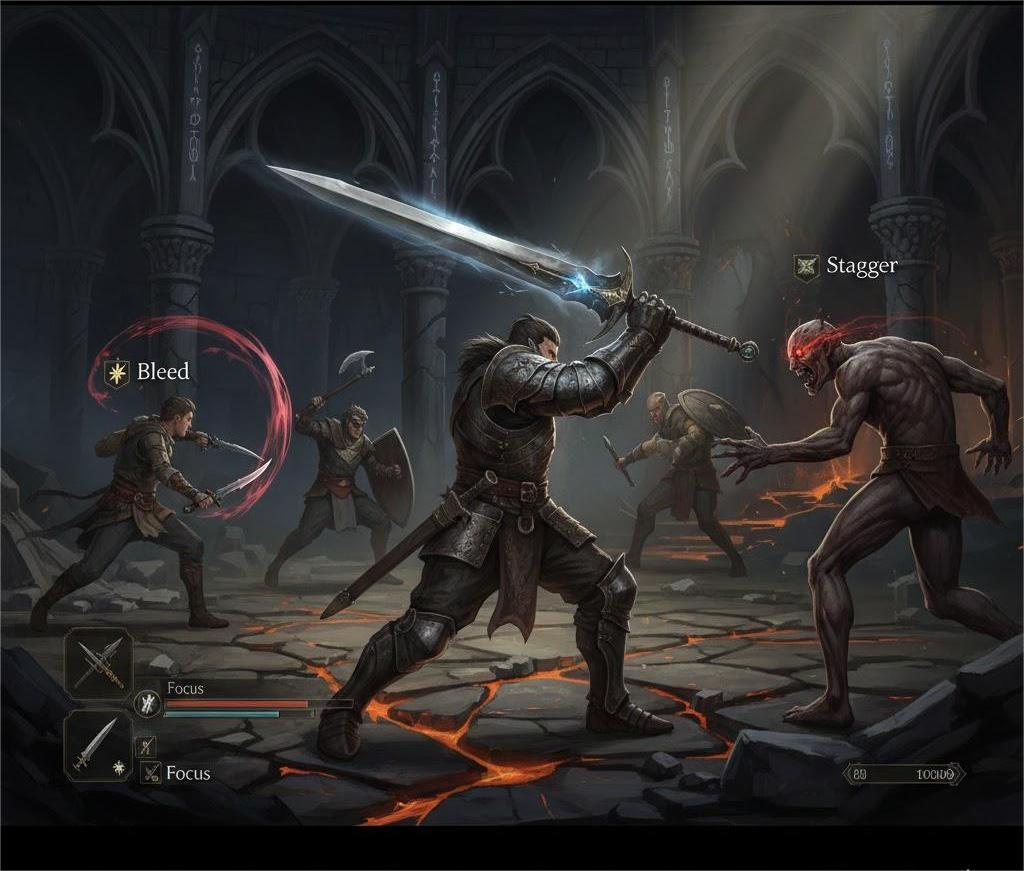
Quick Answer
To parry in No Rest for the Wicked, press the block button exactly as the enemy’s weapon begins its forward acceleration phase, not during the wind-up. A successful parry instantly depletes enemy poise, opening them up for critical visceral attacks. In testing, mastering this mechanic reduces stamina consumption by approximately 40% compared to standard blocking.
Key Takeaways
- Timing is Visual – Watch for the forward strike momentum, ignore the wind-up.
- High Risk, High Reward – Missed parries lead to heavy damage but success staggers bosses.
- Shield Selection – Light shields offer significantly larger parry windows than medium shields.
- Stamina Efficiency – Parrying costs less stamina than blocking heavy attacks.
Let’s break down the details below.
How to Parry in No Rest for the Wicked
Mastering the parry mechanic is essential for surviving the grueling combat of No Rest for the Wicked. As a punishing Action RPG from Moon Studios, the game demands precision that goes beyond simple button mashing. Unlike standard blocking, which consumes stamina and leaves you on the defensive, a successful parry interrupts enemy combos and creates openings for devastating counter-attacks. It’s a dance that relies on deliberate observation of enemy animations, and once you click with the rhythm, the game transforms from a struggle into a showcase of skill.
Identifying the Parry Window
The most critical aspect of parrying is identifying the correct moment to act. Every enemy attack has three distinct phases: the wind-up (preparation), the active frames (forward acceleration), and the recovery. You must ignore the wind-up entirely. The parry window opens exactly when the enemy’s weapon begins to accelerate toward your character’s hitbox. This is often referred to as the “startup frame” of the damage phase. Some players look for a subtle white “flash” on the weapon tip, but tracking the forward momentum is generally more reliable across different enemy types. If you react to the wind-up, you will block early and eat the stamina penalty. If you react to the impact, you are too late.
Parrying Different Enemy Types
Not all enemies share the same rhythm. In my experience, adapting to the specific archetype is key to consistency. Here is how to handle the most common threats:
- The Risen: These standard enemies have erratic, twitchy movements. Their parry window is almost immediate upon movement. Watch for the sudden jerk of their arm. They are the best practice dummies for learning the “twitch” reaction speed required for lighter weapons.
- Wicked Knights: These heavily armored foes use delayed overheads. They will raise their sword and hold it. Wait for the pause at the top of their swing before pressing the button. The delay is designed to bait you into panic-blocking.
- Darak the Falstead: As an early boss, Darak is a major hurdle. He wields a massive cleaver with deceptive range. His overhead slam has a long wind-up; wait until his elbows lock out before he brings the weapon down. However, be warned: in his second phase, he introduces a grab attack that cannot be parried.
- Bosses: Major bosses like Warrick the Torn require patience. You can parry his one-handed swipes, but his two-handed slams are often safer to dodge due to the massive stamina penalty if you miss.
Executing the Button Input
Once you identify the acceleration phase, executing the move requires precise input. Follow these steps to perform a standard parry:
- Wait for the enemy to finish their wind-up animation. Don’t flinch.
- Press the block button (Right Mouse Button on PC / LB on Controller) just as the strike begins.
- Hold your ground; do not move the directional keys during the parry attempt, as this can sometimes trigger a dodge or shift your hitbox unexpectedly.
- Watch for the sparks and the loud metallic clang that indicates success.
Follow-Up Attacks and Criticals
A successful parry will stagger most standard enemies instantly, depleting their poise meter. When an enemy is staggered (indicated by a groggy animation), you can perform a critical Rune Attack or a fully charged heavy attack. Against a boss, a single parry might not be enough to break their stance completely, but it will deal significant poise damage, bringing them closer to a vulnerable state. For example, the Risen enemies on the beach can be one-shot after a successful parry, making them excellent practice dummies for farming early XP.
Understanding No Rest for the Wicked Parry Timing
Let’s be real: the timing in this game is unforgiving, tighter than a drum. Understanding the nuances of no rest for the wicked parry timing can mean the difference between a perfect counter and a quick death. The window varies slightly depending on your equipment and the enemy’s speed, and server latency isn’t an issue here, but input latency can be.
Visual vs. Audio Cues for Timing
While audio cues exist, they often occur too late to be useful for reaction. Rely primarily on visual telegraphs. Fast enemies like the Risen usually have very short wind-ups, requiring almost predictive reflexes. Slower, heavy-hitting enemies often have deceptive delays in their attacks—they will raise their weapon, hold it for a split second, and then strike. Reacting to the raise instead of the strike is the most common cause of failure. Watch the hands, not the weapon face. The hand movement initiates the strike, while the weapon trail follows.
Perfect Block Guide No Rest for the Wicked
It is important to distinguish between a parry and a perfect block. A perfect block guide no rest for the wicked players often look for explains that a perfect block negates stamina loss but does not necessarily stagger the opponent. A parry, however, is an offensive defensive move. If you mistime a parry slightly early, you may trigger a standard block, taking chip damage. If you are late, you take full damage. Aiming for the “perfect block” window is often safer for beginners until you learn the specific enemy patterns, as it provides a safety net that parrying does not.
Stamina Management Combat Guide
Your stamina bar dictates your survival in any Soulslike. Blocking heavy attacks drains massive amounts of stamina, potentially leaving you “guard broken” and vulnerable. When your guard is broken, you enter a stunned state where you take increased damage. Parrying consumes significantly less stamina than blocking a hit. For a complete stamina management combat guide, remember that successful parries cost almost zero stamina, allowing you to save your energy for the follow-up counter-attack. This efficiency makes parrying superior for long boss fights where resource management is key.
Is Parrying Better Than Dodging?
Veterans of the genre often ask if they should focus on dodging or parrying. The answer depends on the situation and your build weight. While dodging offers mobility, parrying offers control.
When to Dodge Instead of Parry
Not all attacks can be parried. Massive area-of-effect (AoE) slams, grab attacks, and certain magical projectiles should be dodged. If an enemy glows red or performs a distinct unblockable animation, do not attempt to parry. In these cases, the dodge roll (especially with a light load) is your only safe option. Additionally, if you are surrounded by multiple enemies, parrying one might leave you open to backstabs from others; dodging away to reposition is safer. The “quickstep” dodge available to light builds is particularly effective for spacing.
Risk vs. Reward Assessment
Parrying is a high-risk, high-reward mechanic. The reward is massive poise damage and a free critical hit. The risk is taking a full combo to the face. For beginners, it is recommended to practice parrying on lone enemies near a checkpoint (Whisper). Once you are confident, incorporate it into boss fights. If you are struggling with frame rates, check our low FPS optimization guide, as smooth performance is crucial for timing.
No Rest for the Wicked Combat Tips for Beginners
A balanced approach is best. Use dodging to close the distance or escape corners, and use parrying to punish predictable melee strikes. Don’t force a parry if you are low on health. For more No Rest for the Wicked combat tips for beginners, try to bait out specific attacks that you know you can parry consistently, rather than trying to react to everything. The overhead swing of the standard axe-wielding enemies is the easiest to learn on. Also, remember that you can cancel some attack animations into a block, but you cannot cancel a roll into a parry.
Best Shields for Parrying No Rest for the Wicked
Your choice of gear significantly influences your parry window. Not all shields are created equal, and understanding the weight classes is vital for finding the best shields for parrying no rest for the wicked.
Light vs. Medium Shields
Generally, smaller shields offer a more generous parry window but block less damage if you miss. Medium shields provide better damage mitigation but require stricter timing. Heavy shields often cannot parry at all, replacing the move with a shield bash or hunker down ability. If you want to optimize your loadout, check out our best builds guide for specific gear recommendations.
Recommended Stats for Parry Builds
If you plan to parry frequently, invest points into Stamina and Focus. While parrying itself is cheap, the missed blocks during practice will drain your bar quickly. Higher Focus allows you to unleash more Rune Attacks once you successfully stagger an opponent, maximizing your damage output during the vulnerability window. Additionally, keeping your equipment load in the “Normal” or “Light” range ensures that your stamina regeneration is fast enough to recover between parry attempts.
Why Do You Keep Missing Parries?
Even experienced Soulslike players struggle initially. If you find yourself taking damage despite pressing the button, you are likely falling into one of a few common traps.
Common Timing Mistakes
The most frequent error is panic parrying. Rapidly tapping the block button reduces your parry window and often results in a failed block. Another issue is distance; if you are too close, the enemy model might clip through yours, making the animation hard to read. This is a common issue with isometric video game graphics where depth perception can be tricky. Maintain a “dueling distance” where you can clearly see the enemy’s weapon arm.
Input Lag and Performance Issues
Since No Rest for the Wicked is a visually demanding game, performance dips can throw off your timing. If your game stutters during combat, your input might register late. A stable frame rate is essential. Ensure your system is optimized and consider lowering graphical settings if you are serious about mastering the parry. Consistency is key. Also, be aware of “input buffering”—if you mash the attack button, your character might be locked into an attack animation, preventing you from parrying instantly. Always leave a small gap between actions.
Practice Parrying Without Risk
Learning to parry often involves dying repeatedly, which can be frustrating and result in durability loss. A smart way to practice is by using a trainer to enable “God Mode” or “Infinite Health.” This allows you to stand in front of an enemy and practice the timing for hours without fear of death or loading screens.

Master Combat Faster with XMODhub
If you want to master parry timings without the punishment of death, XMODhub’s training tools provide the perfect safe environment. By enabling specific cheats, you can turn any encounter into a risk-free practice session.
❤️ Infinite Health
Practice parrying indefinitely without dying. Take a hit, recover instantly, and try again immediately.
⏱️ Infinite Stamina
Never run out of stamina while blocking or dodging. Experiment with aggressive defense without resource limits.
Once you’ve built the muscle memory, you can disable the cheats and play legitimately with your new skills. For a full list of features, check out the trainer and cheats guide.
Related Guides for No Rest for the Wicked
Frequently Asked Questions
Ready to master how to parry in No Rest for the Wicked?

I create content for Xmodhub, where I curate and share game mods, tools, and other resources. My goal is to help players discover great add-ons, enjoy a smoother experience, and have more fun.

 Catherine Hu
The emphasis on waiting for the forward acceleration instead of the wind-up really clicked for me—once I started keying off that moment, parries felt way more consistent. I also like the callout on light shields; the bigger window makes learning the timing less punishing. One thing I’d add is using weaker enemies to practice reading animations without panic, since bosses tend to mask that forward momentum with feints.