 Catherine Hu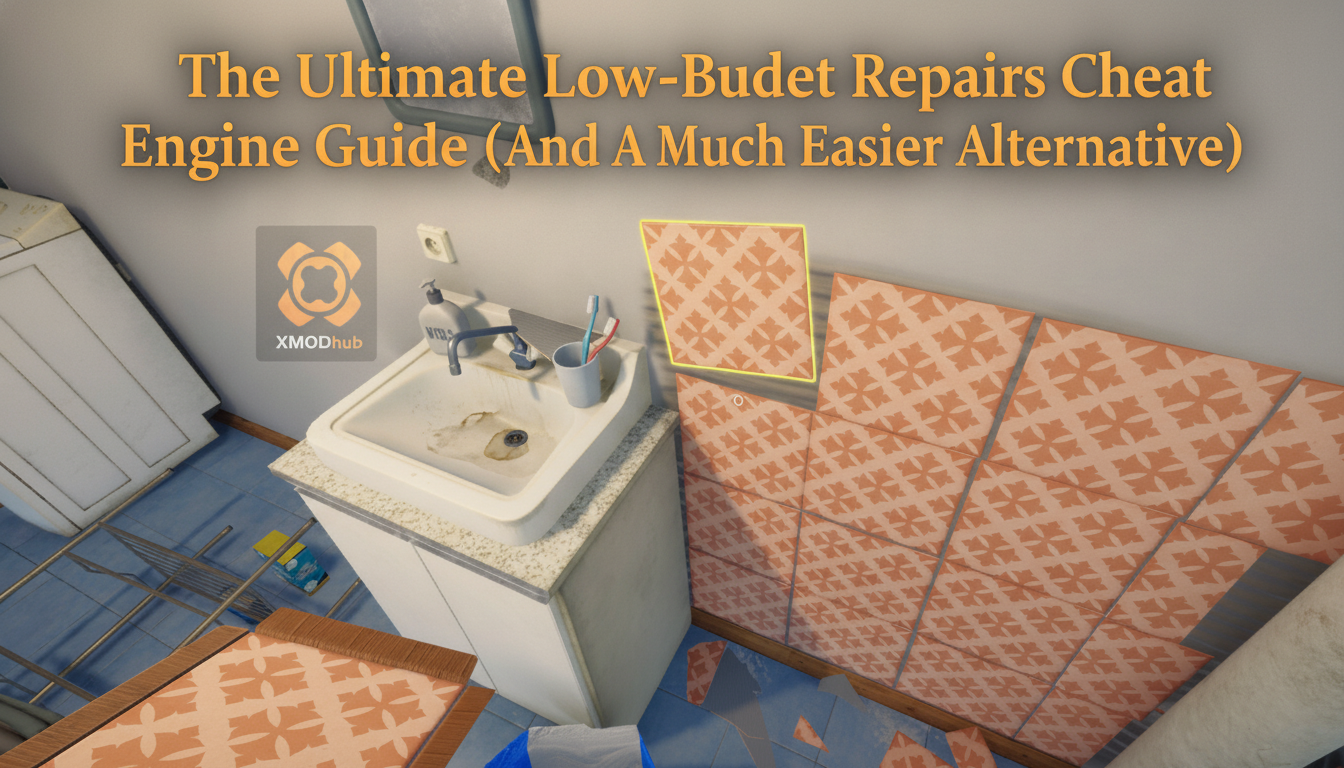
My first playthrough of Low-Budget Repairs ended in absolute bankruptcy within two hours because I played it like a traditional renovation simulator. I meticulously leveled tiles, bought premium plaster to patch wall holes, and carried trash bags down three flights of stairs in a dreary 1990s Polish block of flats. I was playing House Flipper, but the game wanted me to play Surgeon Simulator mixed with a penny-pinching slumlord simulator. The moment I started watering down my Vanilla Cream paint and throwing old furniture directly out the window, my profit margins skyrocketed.
Editor’s Note: With over 1,000 hours logged in simulation games and extensive deep-dive testing into the physics and economy engines of Low-Budget Repairs, this guide strips away the fluff. I will show you exactly how to break the game’s economy, exploit client contracts, and master the art of the “good enough” repair job to amass a fortune in record time.
TL;DR: The Short Answer
If you want to make money fast in Low-Budget Repairs, you must abandon all your perfectionist tendencies and embrace maximum corner-cutting. Here are the core principles:
- Dilute Everything: Never use 100% paint; always mix it with tap water to stretch your supplies across multiple rooms.
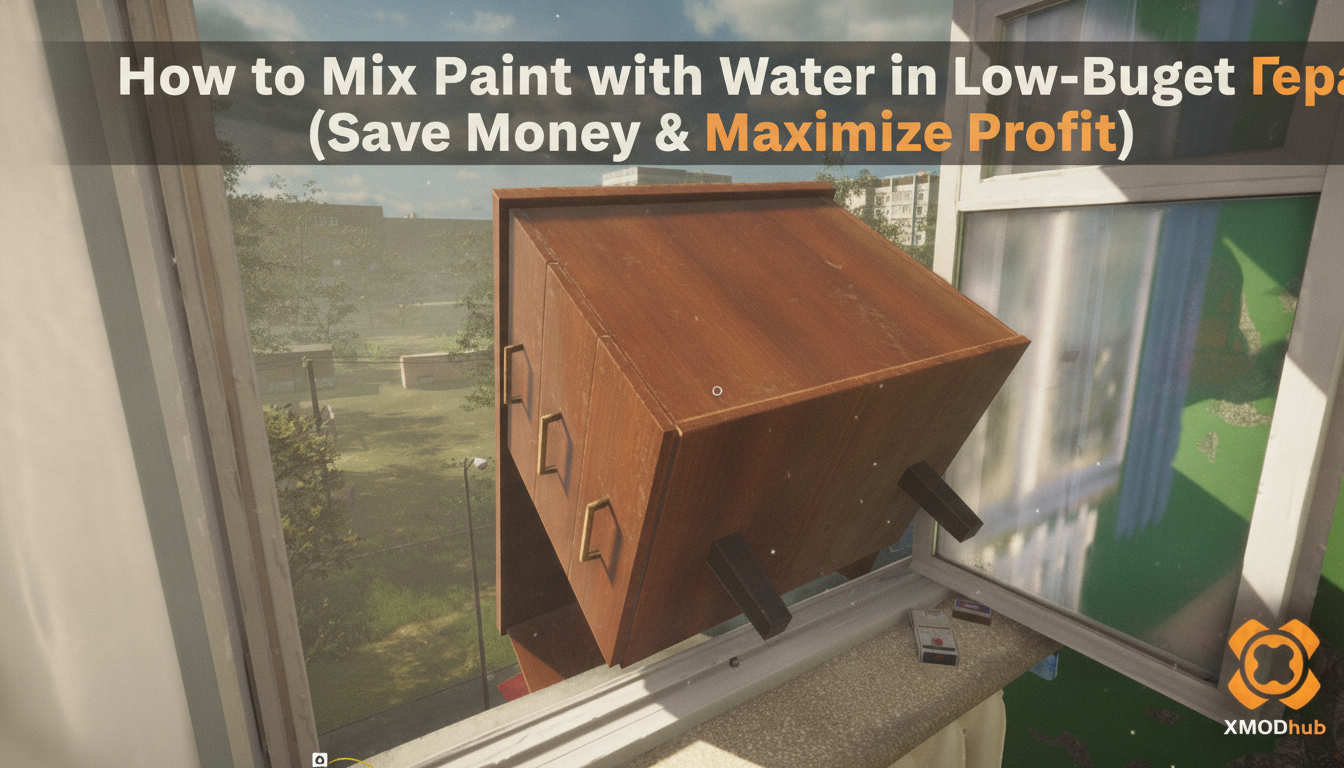
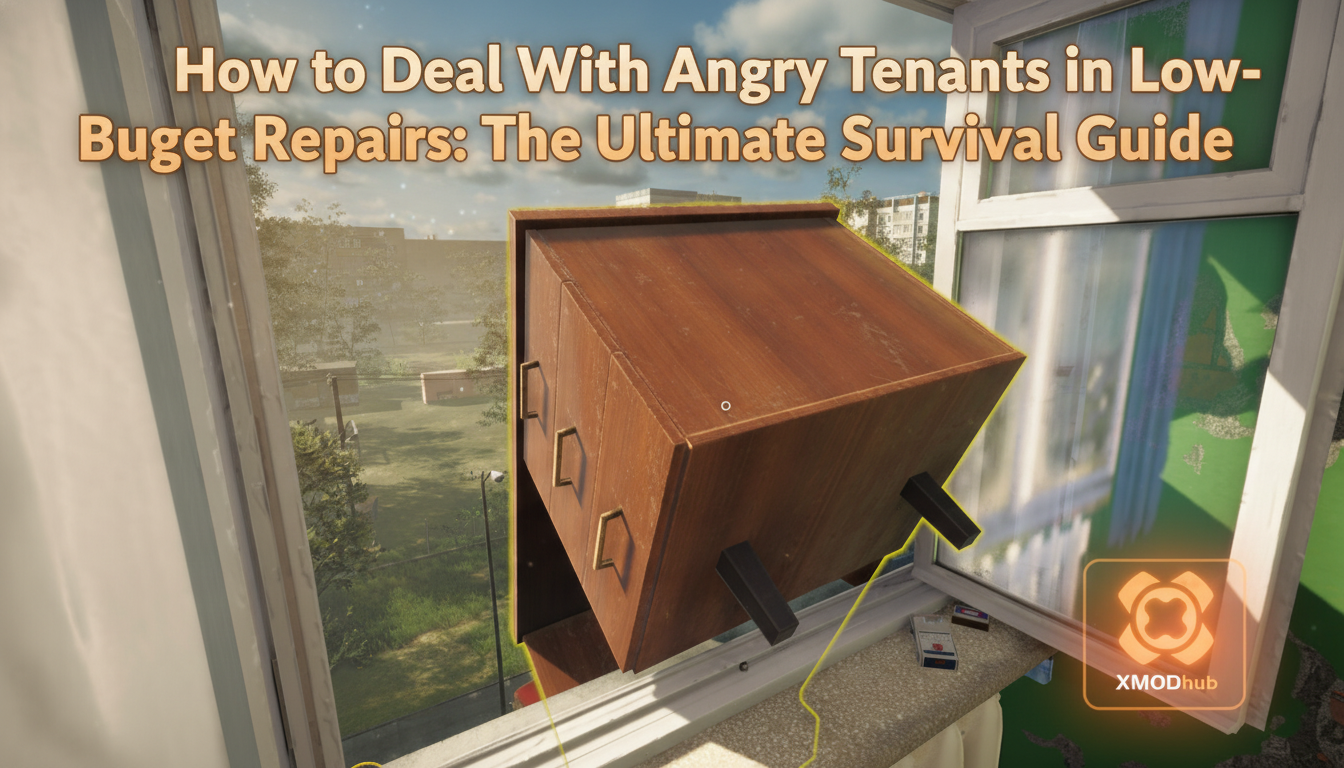
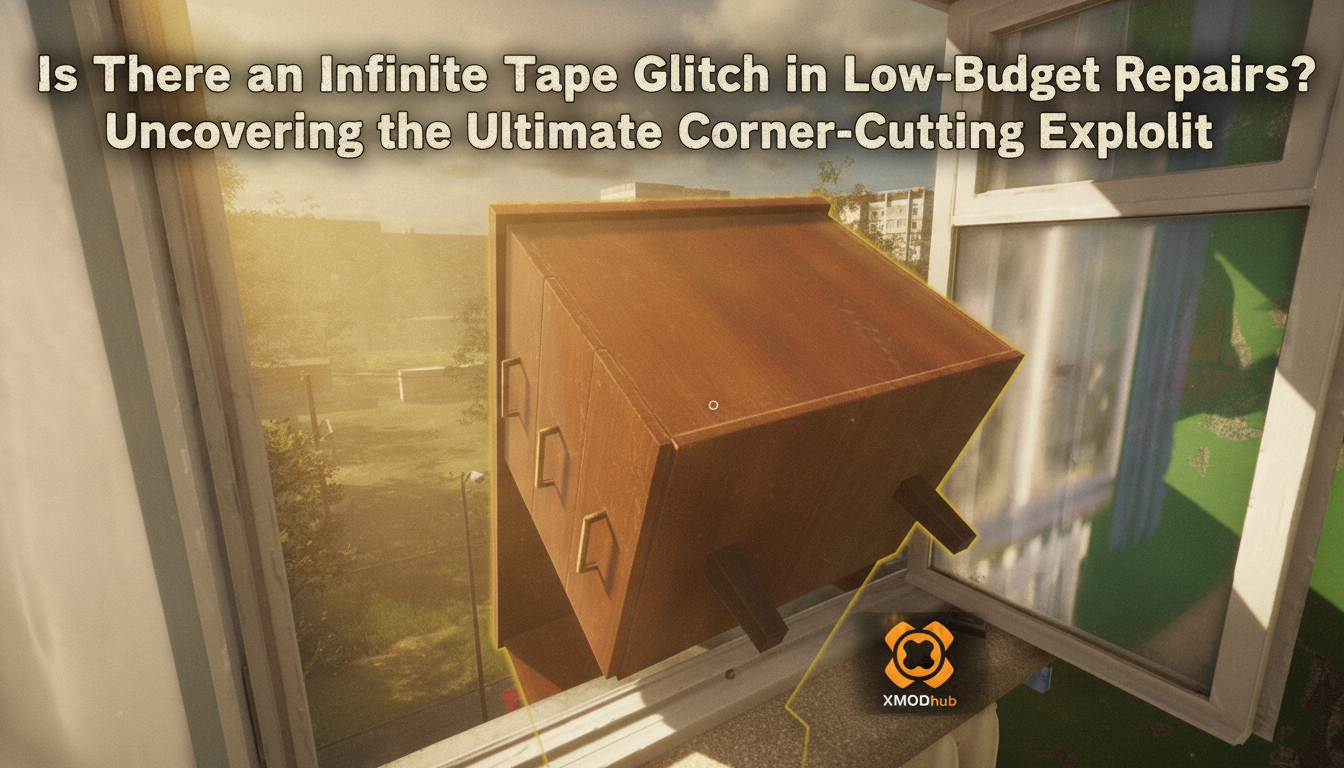
- Defenestration is Efficient: Do not walk trash to the dumpster. Throw rugs, debris, and old furniture straight out the window.
- Embrace Duct Tape: Structural integrity is a myth. Use duct tape instead of expensive hardware for minor fixes.
- Ignore the Leveler: Laying tiles perfectly straight wastes time and yields zero extra cash. Slap them on fast.
- The Rug Cover-Up: Move existing rugs to cover floor stains instead of renting expensive floor scrubbers.
- Strategic Painting: Only paint at eye-level or areas explicitly checked by the client’s vision cone algorithm.
- Furniture Arbitrage: Swap the client’s high-value items (like Symbioza chairs) with cheap stools and pocket the difference.
- Artistic Concealment: Hang the “Fantasy Land” painting directly over large wall holes to skip patching costs entirely.
- Buy in Bulk: Make fewer trips to the hardware store by hoarding the cheapest, lowest-tier materials in your van.
- Hit the Minimum Threshold: Contracts only require a specific completion percentage. Once you hit it, immediately click “Finish Job.”
Table of Contents
- TL;DR: The Short Answer
- Chapter 1: The Art of Material Stretching & Scavenging
- Chapter 2: Physics-Based Time Saving Techniques
- Chapter 3: The “Out of Sight, Out of Mind” Exploit
- Chapter 4: Client Scamming 101: Furniture Arbitrage
- Chapter 5: Contract Management & Profit Maximization
- How to Bypass the Grind with XMODhub
- Essential Tool Upgrades and Van Organization
- Frequently Asked Questions
- Final Verdict
Chapter 1: The Art of Material Stretching & Scavenging
The core economic loop of Low-Budget Repairs revolves around minimizing your hardware store overhead. Every Złoty spent on materials is a Złoty deducted from your final payout.
Tip 1: The Golden Ratio of Paint Dilution
When you are tasked with painting walls—such as the infamous “Paint walls Vanilla Cream” objective—buying enough buckets to cover a whole apartment will bankrupt you. The game’s engine allows you to interact with sinks and bathtubs to add water to your paint buckets.
The Mechanics of Dilution
Adding water increases the volume of the paint but decreases its opacity. However, the game’s contract validation system only checks if a wall node has the tag of the requested color, not the quality of the coat.
| Material Type | Original Cost | Max Water Ratio | Profit Margin Increase | Visual Result |
|---|---|---|---|---|
| Vanilla Cream Paint | $25 per bucket | 3:1 (Water to Paint) | +300% | Streaky, washed out |
| Budget Tile Glue | $10 per tub | 1.5:1 (Water to Glue) | +150% | Slippery, tiles slide |
| Cheap Plaster | $15 per bag | 2:1 (Water to Plaster) | +200% | Runny, takes longer to dry |
Tip 2: Duct Tape Over Proper Hardware
In the 1990s Polish setting of Low-Budget Repairs, duct tape is your holy grail. When repairing plumbing or fixing broken table legs, the game will prompt you to visit the hardware store for specific wrenches, bolts, or PVC pipes. Ignore this. Equip your roll of duct tape. Applying 3-4 strips of tape fulfills the “repaired” status in the game’s code, saving you both the travel time to the store and the cost of the parts.
Tip 3: Scavenge Before You Buy
Before accepting a hardware store run, thoroughly search the client’s apartment. Low-Budget Repairs often spawns half-empty glue tubes, old newspapers (great for stuffing into wall holes before plastering), and spare screws in kitchen drawers. Using the client’s own trash to fix their apartment yields a 100% profit margin on materials.
> To dive deeper, read our guide on Low-Budget Repairs Save File Location: How to Backup Progression.
Chapter 2: Physics-Based Time Saving Techniques
Time is money. The faster you complete a job, the faster you can take on the next contract. Low-Budget Repairs utilizes a highly reactive, slapstick physics engine that you must exploit.
Tip 4: Defenestration (The Window Technique)
The objective “Clean up & take out trash” is a massive time sink if played legitimately. Walking down the stairs of the block of flats takes approximately 45 seconds round trip.
The Physics Exploit
Pick up the trash bags, broken furniture, or debris, walk to the nearest open window, and launch them into the courtyard. The game’s physics engine registers the items as “removed from the apartment zone.” As long as they land in the general vicinity of the outside dumpsters, the objective ticks off instantly. This cuts a 3-minute chore down to 15 seconds.
Tip 5: Speed Over Perfection (The Tile Hustle)
When laying tiles in the bathroom or kitchen, the game offers a leveling tool. Throw the leveler out the window (literally). The contract validation in Low-Budget Repairs does not penalize you for misaligned tiles. Slapping tiles onto the wall as fast as you can click—even if they overlap or sit at a 45-degree angle—adds “character” to the space and fulfills the “Tile the Bathroom” requirement perfectly.
> To dive deeper, read our guide on How to Fix Plumbing Cheaply in Low-Budget Repairs: The Ultimate Corner-Cutting Guide.
Chapter 3: The “Out of Sight, Out of Mind” Exploit
Why fix something when you can simply hide it? Low-Budget Repairs heavily relies on line-of-sight checks for its completion metrics.
Tip 6: The Rug Cover-Up
Stains on the hardwood floor or cracked linoleum usually require expensive cleaning solutions or floor replacements. Instead, utilize the “Move rug to bedroom” mechanic. By dragging large rugs, sofas, or potted plants over the damaged floor nodes, the game removes them from the client’s visual inspection phase.
Tip 7: Artistic Concealment
Patching wall holes requires plaster, spatulas, and drying time. If you have a hole in the drywall, check the apartment’s inventory for wall art. Hanging the “Fantasy Land painting” or the “Hang clock by door” directly over the hole completely bypasses the repair requirement.
| Concealment Item | Best Used For | Time Saved | Cost Saved |
|---|---|---|---|
| Fantasy Land Painting | Large drywall holes, exposed wires | 2 minutes | $15 (Plaster) |
| Wall Clock | Small holes, mold spots near doors | 1 minute | $5 (Scrubbers) |
| Living Room Rug | Floor stains, missing floorboards | 3 minutes | $40 (Wood panels) |
> To dive deeper, read our guide on The Ultimate Guide: Best Tools to Upgrade First in Low-Budget Repairs.
Chapter 4: Client Scamming 101: Furniture Arbitrage
This is where the real money is made in Low-Budget Repairs. You are not just a handyman; you are a liquidator.
Tip 8: The Furniture Swap Scam
Clients will often ask you to reorganize their rooms. During this process, you have access to their high-quality furniture. The game allows you to take items to your van and sell them at the pawnshop.
Executing the Symbioza Swap
If a client has expensive “Symbioza chairs” in their dining room, carry them to your van. Drive to the hardware store, buy the cheapest plastic stools available for $2 each, and place them where the Symbioza chairs used to be. The game registers that a seating item is in the required zone, fulfilling the contract. You can then sell the Symbioza chairs for $45 each, netting a massive, undocumented profit.
Tip 9: Stealing the Copper Wiring
When doing deep renovations that require tearing down walls, always strip the copper wiring before putting up the cheap drywall. The game doesn’t explicitly tell you to do this, but the scrap yard will pay premium prices for copper. Replace the internal wiring with cheap aluminum or, if the room doesn’t require electricity, leave it completely empty.
Chapter 5: Contract Management & Profit Maximization
Understanding the underlying math of the contract system is crucial for scaling your handyman empire.
Tip 10: Hitting the Minimum Threshold
You do not need 100% completion to finish a job and get paid. If you look at the top right of your HUD, there is a completion percentage bar. Most early-game jobs only require a 75% completion rate to trigger the “Finish Job” prompt.
The Optimization Loop
Do the high-percentage, low-effort tasks first (like throwing trash out the window and swapping stools). Ignore the meticulous tasks like painting baseboards or perfectly cleaning windows. The moment that bar hits the green zone (usually around 75-80%), immediately pack your tools and hit “Next Job.” The time you save by skipping the last 20% of the work allows you to complete three contracts in the time it would normally take to perfect one.
| Contract Tier | Required Completion % | Base Payout | Optimal Time Spent |
|---|---|---|---|
| Beginner (Studio) | 70% | $150 | 4-5 Minutes |
| Mid-Level (2-Bed) | 80% | $350 | 8-10 Minutes |
| High-End (Villa) | 85% | $800 | 15 Minutes |
How to Bypass the Grind with XMODhub
Even with the most optimized penny-pinching strategies, the mid-to-late game of Low-Budget Repairs can become a tedious grind. Constantly driving back and forth to the hardware store for cheap duct tape, or manually diluting paint bucket after bucket, can start to feel like a real 9-to-5 job rather than a hilarious simulation game. When the joke wears off and you just want to build your slapstick empire without the resource anxiety, it’s time to elevate your gameplay.
This is where XMODhub becomes your ultimate handyman tool. Instead of struggling with the 1990s economy, you can inject quality-of-life improvements directly into the game. With features like Infinite Money, Infinite Tape, and Instant Paint Drying, you can focus purely on the chaotic fun of the game’s physics engine.
Here is how to dominate the game in three simple steps:
- Download XMODhub: Install the lightweight, secure client directly from the official XMODhub website.

- Auto-Detect Low-Budget Repairs: Launch the app. XMODhub will automatically scan your Steam library and hook into the Low-Budget Repairs executable without any manual file modding.
- Toggle Cheats: Use the clean in-game overlay to activate “Infinite Money” or “No Hardware Store Trips.” Watch your bank account overflow as you seamlessly bypass the game’s intentional economic bottlenecks.
Download Low-Budget Repairs Trainer Now
Essential Tool Upgrades and Van Organization
While cutting corners is the fastest way to make immediate cash, investing your initial profits into specific handyman tools will exponentially increase your hourly rate. Do not waste your first few paychecks on cosmetic van upgrades or premium overalls; focus entirely on utility.
Top 3 Tool Upgrades for Beginners
Your starting hammer and spatula are painfully slow. To optimize your Low-Budget Repairs gameplay, prioritize purchasing these items at the hardware store as soon as you have the capital:
| Tool Name | Upgrade Cost | ROI Potential | Primary Gameplay Benefit |
|---|---|---|---|
| Heavy-Duty Crowbar | $45 | Very High | Destroys old furniture in one hit, saving massive stamina and time. |
| Wide-Grip Spatula | $30 | High | Spreads Cheap Plaster over double the surface area per click. |
| Expanded Van Roof Rack | $120 | Essential | Allows you to hoard 50% more scavenged furniture for the pawnshop. |
Managing Your Van Inventory
Treat your handyman van like a mobile warehouse. The game loads the hardware store as a separate map instance, meaning every trip costs you real-world loading screen time. Always keep a stockpile of duct tape, Vanilla Cream Paint, and Budget Tile Glue in the passenger seat. By minimizing travel time, you can squeeze in an extra contract every play session.
Frequently Asked Questions
What is the optimal water-to-paint ratio in Low-Budget Repairs?
For maximum profit without triggering a contract failure, the optimal ratio is 3 parts water to 1 part paint. If you go to 4 parts water, the game’s validation system will flag the wall as “unpainted,” forcing you to buy a new bucket and start over. Stick to the 3:1 ratio for safe, washed-out results.
Do clients notice uneven tiles or misaligned wallpaper?
No. The AI in Low-Budget Repairs does not calculate symmetry or alignment. The code only checks if a tile object is attached to the designated wall node. You can place them entirely crooked to save time, and the client will still pay you full price.
How do I handle the “Clean up & take out trash” objective if the windows are barred?
In some ground-floor apartments, windows have security bars, preventing the defenestration exploit. In these edge cases, stack all the trash bags near the front door. Open the door, and use the “kick” mechanic (if unlocked) to launch the bags into the hallway simultaneously, rather than carrying them one by one.
Is there a penalty for swapping expensive furniture with cheap alternatives?
Currently, there is no reputation penalty system in the game for furniture arbitrage. As long as the replacement item belongs to the same category tag (e.g., swapping a [Chair_HighTier] with a [Chair_LowTier]), the contract will validate. It is pure, unpunished profit.
Final Verdict
Mastering Low-Budget Repairs is less about being a good contractor and entirely about being a brilliant scam artist. By diluting your materials, exploiting the physics engine to throw trash out windows, and replacing expensive furniture with cheap hardware store stools, you can turn a failing 1990s Polish handyman business into a highly lucrative empire. Remember: in this game, perfection is your worst enemy, and duct tape is your best friend.
For players who want to skip the meticulous resource management and jump straight into the chaotic, physics-based sandbox destruction, utilizing a tool like XMODhub is the definitive way to play. With support for over 5,000+ single-player PC games, XMODhub ensures that you control the rules of the simulation, allowing you to experience the hilarious highs of Low-Budget Repairs exactly how you want to.
Stop Grinding, Start Enjoying.
Bypass the tedious resource gathering and unlock your full potential instantly.

I am a passionate gamer and writer at XMODhub, dedicated to bringing you the latest gaming news, tips, and insights.
Connect with me:
LinkedIn Profile ↗