 Catherine Hu
I still remember my first five hours in DragonSword: Awakening—I was stubbornly trying to solo a Level 15 Armored Drake using basic attack strings, completely ignoring the companion tag-team mechanics, and getting absolutely obliterated into a game-over screen. You cannot brute-force your way through this game with just good reflexes and dodge rolls. DragonSword: Awakening demands a fundamental understanding of its elemental synergies and party management; otherwise, the reawakened Dragon will turn your playthrough into a relentless nightmare.
Editor’s Note: With over 1,000 hours logged across the early access beta and the full 1.0 release of DragonSword: Awakening, I have mapped every inch of the Unreal Engine 5 Continent of Orbis, mathematically tested every Status Ailment multiplier, and optimized the ultimate companion loadouts. This isn’t just a basic walkthrough—it is a comprehensive, data-driven masterclass designed to take you from a struggling recruit to a world-saving veteran.
TL;DR: The Short Answer
If you need to hit the ground running in DragonSword: Awakening, here are the absolute core principles you must understand:
- It is a Premium Single-Player Experience: DragonSword: Awakening is a strict Buy-to-Play (B2P) action RPG. There are no gacha mechanics, no microtransactions, and no forced multiplayer. Every companion and weapon is unlocked purely through gameplay.
- Combat Revolves Around Tag-Teams: Staying on one character is a death sentence. You must constantly swap companions to trigger “Status Ailment” chain reactions for massive burst damage.
- Exploration is Seamless: Powered by Unreal Engine 5, the Continent of Orbis has no loading screens between zones. If you can see a mountain, you can travel to it.
- Companions are Progression: Unlocking new companions via side quests is mandatory, as their unique elemental affinities act as keys for both combat encounters and environmental puzzles.
Table of Contents
- TL;DR: The Short Answer
- Navigating the Continent of Orbis: Open-World Fundamentals
- Mastering the Tag-Team Combat System & Status Ailments
- Companion Recruitment & Early Game Party Composition
- Resource Management & Weapon Optimization
- Mid-Game Power Scaling & Advanced Boss Strategies
- Decoding the Accessory and Artifact System
- Frequently Asked Questions
- Final Verdict
Navigating the Continent of Orbis: Open-World Fundamentals
The transition into DragonSword: Awakening’s world can be overwhelming. The vibrant anime aesthetics mask a brutally unforgiving landscape filled with high-level roaming elites.
Understanding the Seamless UE5 Map
The Continent of Orbis is broken down into distinct biomes, but because the game utilizes Unreal Engine 5’s World Partition system, there are no loading screens. This means aggroing an enemy in the starting plains can result in them chasing you all the way into the corrupted marshlands if you don’t break line of sight.
The Stamina Economy in Exploration
Unlike traditional action RPGs, your traversal stamina and combat stamina are linked. Sprinting for 15 seconds to close the gap on an enemy camp means you will initiate combat with zero stamina for dodging (i-frames). Always stop sprinting at least 50 meters away from an engagement zone to allow the base 25-stamina-per-second regeneration to kick in.
> To dive deeper, read our guide on The Ultimate Guide: How to Unlock All Characters Fast in Dragon Sword: Awakening.
Mastering the Tag-Team Combat System & Status Ailments
The crown jewel of DragonSword: Awakening is its spectacular Status Ailment tag-team action. If you are playing this game like a traditional hack-and-slash, you are leaving 80% of your damage potential on the table.
The Primer and Detonator Mechanic
Combat is built on a “Primer” and “Detonator” logic. One character applies a base elemental status (the Primer), and you instantly tag in a specific companion to hit that afflicted enemy with a contrasting element (the Detonator). Tagging during an active attack animation cancels your recovery frames and grants a 0.4-second invulnerability window.
Elemental Synergy Multipliers
Applying a status ailment fills a gauge under the enemy’s health bar. Once flashing, the enemy is susceptible to a Tag-Team Finisher.
| Primer Element | Detonator Element | Resulting Status Ailment | Damage Multiplier | Tactical Effect |
|---|---|---|---|---|
| Ignite (Fire) | Gale (Wind) | Scorched Earth | 225% Base DMG | Strips enemy hyper-armor for 5 seconds. |
| Frost (Ice) | Impact (Blunt) | Shatter | 300% Base DMG | Massive burst damage, but resets the stagger bar. |
| Shock (Lightning) | Hydro (Water) | Supercell | 150% Base DMG (AoE) | Chains lightning to up to 4 nearby enemies. |
Animation Canceling for Frame Advantage
When you press the D-Pad (or number keys on PC) to swap companions, the incoming character performs an “Entry Strike.” If timed perfectly on the exact frame your primary character’s heavy attack connects, the Entry Strike gains a guaranteed Critical Hit. Mastering this timing is mandatory for the late-game dragon generals.
> To dive deeper, read our guide on Dragon Sword: Awakening Tier List: Best Characters to Main.
Companion Recruitment & Early Game Party Composition
Because DragonSword: Awakening is a premium B2P title, you do not pull for characters on a banner. You must earn their loyalty by finding them in the open world and completing their specific, often multi-stage, questlines.
Building Your Core Trio
You can have three active members in your party at once (One controlled by you, two on standby for tag-assists). A balanced early-game team requires a fast attacker (Primer), a heavy hitter (Detonator), and a utility/support character.
Top Tier Early Game Companions
Do not skip the side quests in the first hub city. The following companions can carry you through the first 30 hours of the 60-year dragon threat storyline.
| Companion Name | Weapon Type | Elemental Affinity | Ideal Role | Unlock Location |
|---|---|---|---|---|
| Kaelen | Dual Daggers | Gale (Wind) | Primer / Combo Builder | Whispering Woods (Main Quest Chapter 2) |
| Elara | Greatsword | Ignite (Fire) | Detonator / Finisher | The Rusty Anvil Tavern (Side Quest: “Forged in Ash”) |
| Sylas | Catalyst | Hydro (Water) | Support / Crowd Control | Sunken Ruins (Requires Level 12) |
The “Tag-Cooldown” Trap
Every time you swap a companion, they go on a 12-second global cooldown before they can be tagged in again. If you panic-swap, you will lock yourself out of your elemental detonators when a boss enters its vulnerable stagger phase. Always keep one companion ready for the stagger window.
> To dive deeper, read our guide on Best Team Comps & Status Effect Synergy Guide.
Resource Management & Weapon Optimization
DragonSword: Awakening features a robust, old-school RPG economy. Gold (Orbis Coins) is scarce, and crafting materials require targeted farming of specific enemy types.
The Weapon Ascension Grind
Weapons max out at Level 50, but they hit “Ascension Walls” every 10 levels. To break these walls, you must hunt elite monsters for rare drops. The drop rates are fixed, but the encounters are challenging.
Essential Crafting Materials Breakdown
Understanding what to hoard early on will save you hours of backtracking.
| Material Name | Rarity | Primary Source | Used For |
|---|---|---|---|
| Dragon-Vein Ore | Uncommon | Mining nodes in volcanic regions. | Level 10-20 Weapon Ascensions. |
| Chimera Tail-Spike | Rare | Dropped by Elite Chimeras in the Plains. | Upgrading Companion passive skill trees. |
| Pure Aether Core | Epic | Dungeon Boss guaranteed drops. | Level 40-50 Final Weapon Ascensions. |
Managing Your Orbis Coins
Do not spend your gold on consumable health potions. The game provides a refillable “Estus-style” healing flask that upgrades via exploration. Save every single Orbis Coin for weapon upgrading fees, which scale exponentially after Level 30.
Mid-Game Power Scaling & Advanced Boss Strategies
Around the 40-hour mark, when the narrative reveals the true nature of the dragon that awakened after 60 years, the game experiences a massive difficulty spike. Enemies gain elemental shields that can only be broken by specific tag-team status ailments, and their damage output can easily one-shot under-leveled companions.
Bypassing the Ascension Material Grind with XMODhub
When you reach the mid-game, you might find yourself hitting a brutal progression wall. Farming 50 Chimera Tail-Spikes just to make your party viable for the Chapter 5 boss can disrupt the incredible pacing of the story. If you are tired of the repetitive grind and just want to experience the UE5 open world and narrative without the artificial time-sink, XMODhub is the ultimate solution.
Instead of spending an entire weekend farming ores, you can streamline your single-player experience safely. Here is how to implement it:
- Download XMODhub: Install the client from the official site.
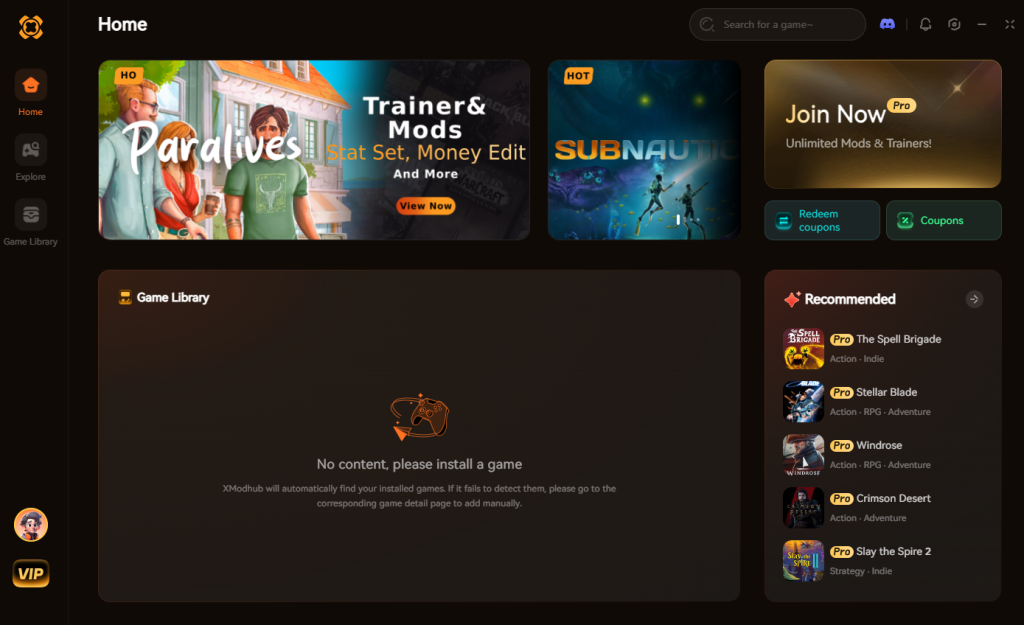
- Auto-Detect DragonSword: Awakening: Launch the game, and XMODhub will instantly recognize the process.
- Toggle Cheats: Use the overlay to activate features like Infinite Orbis Coins, 100% Drop Rate Multipliers, or God Mode (Infinite Health) to completely bypass the tedious resource grind and get back to the spectacular combat.
Download DragonSword: Awakening Trainer Now
Positioning and I-Frame Exploitation
For those pushing through legitimately, late-game bosses have massive AoE attacks that cover half the arena. Your standard dodge roll only has 12 i-frames (at 60fps). However, the Tag-Swap animation has 24 i-frames. High-level play requires you to use your companion swaps not just for damage, but as extended defensive dodges through otherwise unavoidable boss ultimate attacks.
Decoding the Accessory and Artifact System
One of the most frequently overlooked mechanics by beginners is the Artifact Loadout System. While weapons dictate your raw base damage, your Accessories and Artifact Sets govern your elemental scaling and cooldown reductions. You can equip up to four artifacts per companion, and matching sets yield massive passive bonuses that can make or break a difficult boss encounter.
Best Early-Game Artifact Sets
Do not blindly equip artifacts just because they have a higher rarity tier. A perfectly synergized 2-star green artifact set will mathematically outperform a mismatched set of 4-star purple artifacts. Below is the definitive data for the most optimal early-game sets you should be farming in the Sunken Ruins and Whispering Woods dungeons.
| Artifact Set Name | 2-Piece Set Bonus | 4-Piece Set Bonus | Best Companion Role |
|---|---|---|---|
| Crimson Dragon-Scale | +15% Ignite Damage | Critical hits reduce Tag-Swap cooldown by 1.5s. | Detonator / Finisher |
| Whispering Zephyr | +10% Movement Speed | Gale applications permanently strip 10% enemy defense. | Primer / Combo Builder |
| Tears of the Leviathan | +20% Max Health | Swapping in heals the entire active party for 5% Max HP. | Support / Crowd Control |
| Warlord’s Iron Resolve | +15% Stagger Resistance | Executing a Tag-Team Finisher grants a 500 HP shield. | Tank / Frontline |
By equipping Elara with the Crimson Dragon-Scale set and Kaelen with the Whispering Zephyr set, you create a self-sustaining loop where Kaelen shreds the enemy’s armor, and Elara detonates the status ailment while simultaneously resetting her own cooldowns.
Frequently Asked Questions
Is DragonSword: Awakening a Free-to-Play or Gacha game?
No. DragonSword: Awakening is a premium, Buy-to-Play (B2P) PC action RPG. There are no gacha mechanics, energy systems, or in-game cash shops for characters. All companions and gear are unlocked through standard gameplay and exploration.
Does the game feature multiplayer or co-op?
Despite heavy community requests for a multi-world system, DragonSword: Awakening is strictly a single-player experience. The “tag-team” mechanics refer to swapping between AI companions that you recruit and control, not playing with other real people.
How do I heal my companions in combat?
Companions slowly regenerate health while they are swapped out and resting in the reserve slots. Additionally, triggering specific Status Ailments (like Hydro + Gale) can proc party-wide healing buffs depending on your unlocked skill trees.
Why is my game stuttering on PC?
DragonSword: Awakening runs on Unreal Engine 5 and utilizes Nanite and Lumen. Ensure the game is installed on a Gen4 NVMe SSD. Running this game on an HDD will cause severe traversal stutter due to the seamless open-world asset streaming.
Final Verdict
Mastering DragonSword: Awakening requires a shift in how you approach action RPGs. You are not just managing one hero; you are conducting a symphony of elemental combos, perfectly timed tag-team swaps, and deep status ailment synergies. By exploring the breathtaking UE5 Continent of Orbis, carefully recruiting the right companions, and strategically managing your stamina and resources, you can conquer the ancient dragon threat.
For players who want to experience the rich anime aesthetics and thrilling combat without being bogged down by the mid-game material grind, utilizing tools like XMODhub provides a seamless way to tailor the difficulty to your lifestyle. With support for over 5,000 single-player PC games, it remains the most reliable way to reclaim your time and play exactly how you want. Now, grab your sword, build your ultimate team, and save Orbis.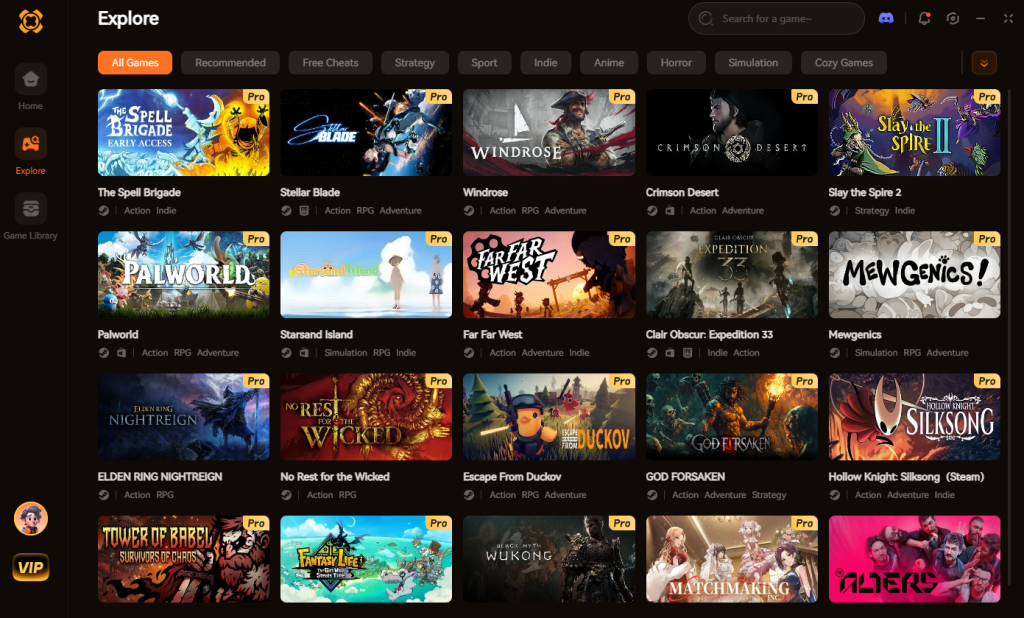
Stop Grinding, Start Enjoying.
Bypass the tedious resource gathering and unlock your full potential instantly.

I am a passionate gamer and writer at XMODhub, dedicated to bringing you the latest gaming news, tips, and insights.
Connect with me:
LinkedIn Profile ↗